Market Research Agency Phoenix

Looking for a market research agency with expertise in Phoenix? Kadence helps organizations understand audiences, test concepts and build strategy in the fifth-largest city in the United States. Over 30 years of global experience, applied to one of America's fastest-growing and most dynamic Sun Belt markets.

Download our agency credentials

Phoenix's explosive growth has transformed it from a regional center into a major national market. The metropolitan area's combination of scale, demographic diversity, affordability and economic expansion creates a consumer landscape that rewards research designed for its specific dynamics.

The Phoenix market landscape

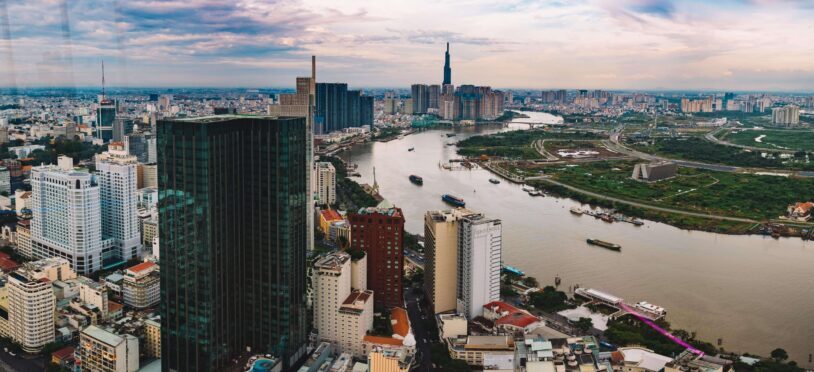
The Phoenix metropolitan area, known as the Valley of the Sun, is home to over five million people and continues to grow rapidly. Corporate relocations, migration from California and the Midwest, and a business-friendly environment have fueled expansion across sectors including technology, financial services, healthcare, aerospace and manufacturing.

Semiconductor manufacturing has become a defining industry. Intel's long-standing presence has been joined by TSMC's major fabrication plant investment, positioning the Phoenix area as a growing hub for advanced chip manufacturing. This creates a significant technical workforce alongside the area's traditional economic drivers.

The metro's demographic profile is increasingly diverse. The Hispanic and Latino community represents roughly a third of the population, with significant Mexican American, Central American and South American communities. Native American communities, particularly from the Salt River Pima-Maricopa Indian Community and Gila River Indian Community, maintain a presence within the metropolitan area.

The Valley's suburban character is pronounced. Scottsdale, Tempe, Chandler, Gilbert, Mesa, Peoria and Surprise each have distinct consumer profiles, income levels and brand dynamics. The differences between affluent Scottsdale and the more affordable East Valley communities are substantial, and research that treats the metro as a single market misses important segmentation opportunities.

Phoenix's climate directly influences consumer behavior. Seasonal population fluctuations from snowbirds, outdoor activity patterns and the dominance of car-dependent suburban lifestyles all shape how consumers interact with brands and make purchasing decisions.

Our Global Expertise for Phoenix

Kadence operates from offices across Asia, Europe and the Americas, with our US presence anchored by teams in New York and San Francisco. Our global network spans London, Tokyo, Singapore, Shanghai, Jakarta, Mumbai, Bangalore and beyond.

For Phoenix-based organizations expanding internationally, particularly in technology and semiconductor manufacturing, our network provides seamless coordination and local expertise in each market.

We’re consistently recognised as a leading market research agency across multiple markets.

AURA Innovation of the Year award

Innovation of the Year

Finalist

— The AURAs, 2021
Agency of the Year Awards, 2021

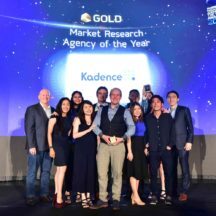
Market Research Agency of the Year

Winner – Gold

— Agency of the Year Awards, 2021
Marketing Interactive Agency of the Year, Winner - Gold, 2021

Consultant of the Year

Winner – Gold

— Agency of the Year Awards, 2021
Kadence team collecting Agency of the Year award

Consultant of the Year

Winner

— Agency of the Year Awards, 2020
Agency of the Year Awards, 2020

Market Research Agency of the Year

Finalist

— Agency of the Year Awards, 2020
Quirks Supplier of the Year Kadence International

Market Research Supplier of the Year

Winner

— Marketing Research & Insight Excellence Awards – 2019
Kadence International Market Research Agency of the Year Singapore

Market Research Agency of the Year

Winner

— Agency of the Year Awards, 2019
Kadence International is Highly Commended for Global Agency of The Year

Global Agency of the Year

Highly Commended

— Market Research Society Awards, 2019
Market Research Society's Operations Awards, 2019

Best Data Collection (face-to-face)

Finalist

— Market Research Society's Operations Awards – 2019
Best Data Collection, Finalist — Market Research Society's Operations Awards, 2019

Best Data Collection (telephone)

Finalist

— Market Research Society's Operations Awards, 2019
MRS Opperations Awards Trophy

Best Training and Development

Highly Commended

— Market Research Society's Operations Awards, 2019
MRS Young Researcher of the Year

MRS Young Researcher of the Year

Finalist

— MRS, 2023
ESOMAR Best Congress Paper

ESOMAR Best Congress Paper

Winner

— ESOMAR, 2023

FAQs

How diverse is Asia Pacific culturally?

The short answer is that Asia is incredibly rich and nuanced from a cultural standpoint: the multitude of religious beliefs, histories, languages, and other cultural markers means that each market is more different than similar. This can make Asia Pacific market research challenging without the right partner to help you understand the intricacies of each country. That said, though, the ‘urban Asia’ experience is similar to some extent, and popular culture does form the basis to link up a couple of the Asian markets, so there can be ways to seek out common threads amidst the vibrancy of difference.

Do I need to do all my market research in Asia in local / vernacular languages?

As a rule yes. By conducting research in the local language, consumers will have the capability and confidence to express their thoughts and feelings toward the brands, products or services in question. Unlike some market research agencies in Asia, Kadence has a range of languages in-house thanks to our network of Asian offices, so local language moderation is a service we can provide. That said, it is possible to carry out research in English in some markets (e.g. Singapore, India, Philippines), depending on the subject matter and education level of the respondents you want to reach.

For large Asian markets like China and India, how many cities do we need to cover with our research?

We recommend at least a combination of 1st tier and 2nd tier cities, as well as 3rd tier and rural locations, if possible. On top of getting a read on geographic and demographic differences in the reactions to your products and services, lifestyle / intra-market attitudinal variations exist, so the wider you are able to carry out your research, the more comprehensive your resulting understanding of the market will be.

Are there certain research approaches or methodologies that work better in one Asian market, compared to another?

Yes. Cultural differences between Asian markets mean that you need to carefully consider your methodology. For instance, we find that in-depth interviews, rather than group-based discussions, can work better for some topics in markets like Japan, where there can be a tendency to ‘self-censor’. In contrast, the one-on-one format lends itself better to building trust and establishing bonds between interviewer and respondent, often leading to more productive conversations. 

You’ll also need to consider the technological infrastructure of the markets you’re researching. In India, for instance, you’ll need to take a mobile first approach for reaching those outside metros and tier 1 cities. This is also true of mobile-first markets like Indonesia and China. Whilst cultural considerations can be diverse and numerous, we’re on hand to help, based on our long history of conducting market research in Asia.

Does the sequence of which markets I do my research first in Asia matter?

Unless there are specific roll-out plans that have strategic importance for your product or service across markets, our experience has taught us that any order comes back down to organizational preference. Your internal stakeholders may want to start the research in a market that is a stronghold for the brand to establish ground understanding, then venture into unfamiliar grounds to gather ‘new news’, or vice versa. Ultimately, Kadence is flexible in terms of how / when / where to start a piece of research, and in the absence of real preference, is willing to provide our suggestions and justifications for any arrangements.

FAQs

Why is Phoenix an increasingly important market for consumer research?

Phoenix's combination of rapid growth, demographic diversity, economic expansion and Sun Belt appeal makes it one of the most strategically significant US markets. The metro's evolving consumer base reflects broader national trends around migration, suburban growth and demographic change.

What industries does Kadence research in Phoenix?

We work with organizations across Phoenix's key sectors, including semiconductor manufacturing, technology, financial services, healthcare, aerospace, real estate and consumer goods. Our researchers understand the competitive dynamics specific to the Valley of the Sun.

How do seasonal population changes affect research in Phoenix?

Phoenix attracts a significant snowbird population during winter months, temporarily expanding the consumer market. Research design needs to account for whether the target audience includes seasonal residents or focuses solely on the year-round population.

Please select the type of enquiry