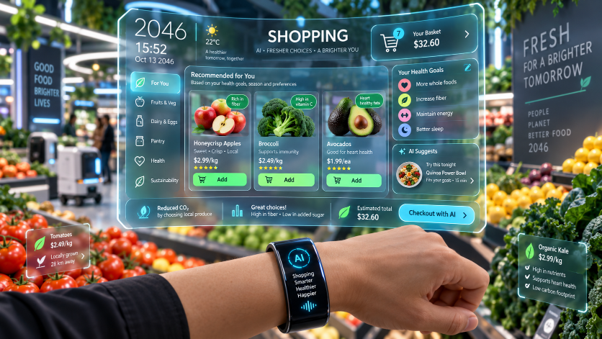

The economics of food are shifting on several fronts at once. In the US, store brands reached a record $282 billion in sales last year, with private-label sales growing almost three times as fast as national brands. Shopping behaviour is changing just as quickly: nearly 94% of grocery shoppers now buy both online and in-store, while ecommerce accounted for close to three-quarters of total grocery dollar growth.
Health is changing the basket, too. Research found that US households reduced grocery spending by an average of 5.3% within six months of starting a GLP-1 medication, showing how advances in healthcare can translate directly into changes in food demand.
These pressures differ, but they converge on the same question: what should a food company now be expected to deliver? Value is no longer only about price, convenience is no longer only about speed, and the boundaries between food, health, and tech are becoming harder to define.
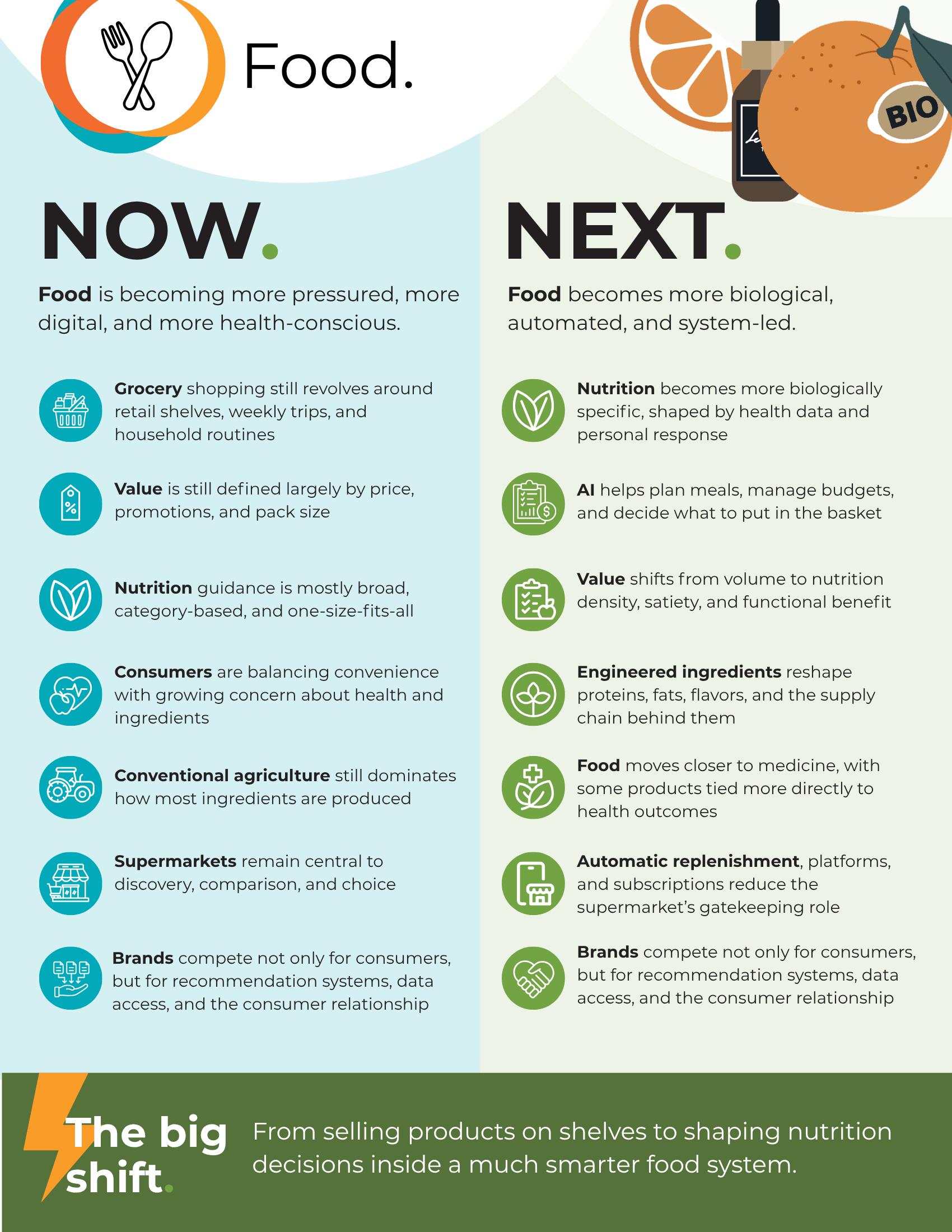
Over the next 20 years, those pressures could reshape almost every part of the food system, from how ingredients are produced to who influences what ends up in the household basket. Some of that change will come from technology, some from health, and some from the growing constraints on how and where food can be produced.
14 shifts that could reshape food
1. Personal nutrition becomes biologically specific
Most nutrition advice is still designed for populations. Over the next 20 years, it could become far more individual. Glucose response, microbiome, hormones, genetics, medications and health history may all influence what someone is advised to eat, moving food away from broad dietary rules and closer to recommendations built around the person.
 Image credit: Zoe
ZOE is already pushing in this direction. Its model combines microbiome testing, health information, and machine learning to recommend foods based on an individual’s biological responses. It offers an early example of how nutrition could shift from asking whether a food is broadly healthy to whether it is appropriate for a particular person.
2. Food and medicine move closer together
Food is already part of the management of diabetes, cardiovascular disease, obesity, and other chronic conditions. Over the next two decades, that relationship could become more formal, with some foods prescribed, monitored, and adjusted against measurable health outcomes. That would push parts of the food industry closer to healthcare, where efficacy, evidence, and outcomes carry far more weight.
3. Appetite becomes a commercial variable
GLP-1 drugs have already shown that medicine can change how much people eat and what they buy. Future treatments may influence appetite even more precisely, potentially affecting not only obesity but a wider range of metabolic conditions. For food companies, that could mean serving consumers who eat smaller portions, snack less often, and expect considerably more nutrition from the food they do consume.
4. AI becomes the household food manager
Meal planning, grocery shopping, budgeting, nutrition, and stock management are still mostly separate tasks. They may not stay that way. A household food system could eventually know what is in the fridge, what needs using, what everyone should eat, what the weekly budget is, and which products to reorder, making many routine food decisions without the consumer actively shopping at all.

Samsung is already building pieces of that system. Its latest smart refrigerators can recognise food, keep track of ingredients, recommend recipes and support grocery planning. The technology is still limited compared with what a fully autonomous household food manager could become, but the direction is clear: the refrigerator is starting to move from storage appliance to decision-making interface.
5. Nutrition density replaces volume as a measure of value
For decades, value in grocery shopping has often meant more food for less money. That may become less compelling if consumers eat smaller portions and pay closer attention to what each serving delivers. Protein, fibre, micronutrients, satiety, and other functional benefits could become part of the value equation, particularly if appetite-suppressing drugs and healthy-ageing priorities continue to grow.
6. Brands start competing for the algorithm
If AI increasingly plans meals and builds grocery baskets, consumers may no longer choose every brand themselves. Recommendation systems could compare price, nutrition, allergens, ingredients, previous purchases, household preferences, and potentially health data in seconds. For brands, that creates a new layer of competition: products will still need to appeal to people, but they may also need to perform well against the criteria machines use to build the shortlist.
7. Food becomes increasingly engineered
Some of the biggest changes in food may happen before anything reaches the supermarket. Precision fermentation, cellular agriculture, and synthetic biology could produce proteins, fats, flavours, and other ingredients with less dependence on livestock, crops, climate, and geography.
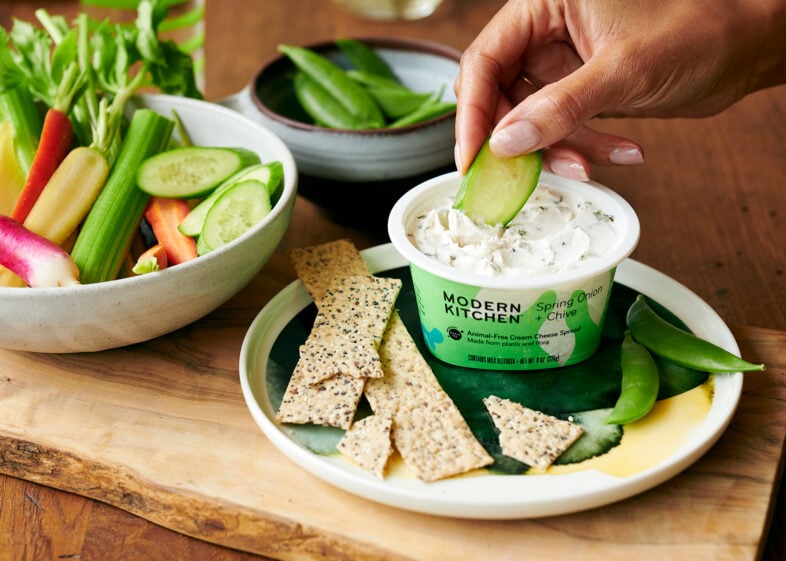
Perfect Day offers an early glimpse of what that could look like. It produces whey protein through precision fermentation rather than cows, allowing familiar products such as dairy alternatives, cream cheese, and ice cream to use proteins made in a completely different way. For consumers, the finished product may look ordinary. The transformation is happening further back in the supply chain.
8. The fixed food product starts to disappear
Mass food manufacturing depends on standardisation: millions of people buy the same formulation. More flexible production could challenge that. A shake, snack or prepared meal might eventually be produced with different levels of protein, fibre, micronutrients or carbohydrates depending on the person buying it. Personalisation would move from choosing among products to changing the product itself.
9. The supermarket becomes less central to grocery discovery
Supermarkets will still matter, but they may become less important for routine decision-making. Automatic replenishment, subscriptions, direct ordering and AI-managed purchasing could quietly handle staples in the background. That leaves physical stores with a different role: fresh food, discovery, services, experience and the products consumers still want to see or choose for themselves.
10. Ageing becomes one of food’s biggest growth markets
Longer lives will create a much larger market for food designed around maintaining muscle, bone strength, cognitive health, metabolic health and independence. The old idea of “senior nutrition” is likely to look increasingly dated. Healthy-ageing products could begin targeting consumers decades earlier, long before they think of themselves as old.
11. Climate resilience changes the ingredient map
Climate change will not affect every crop or region equally. Heat, drought, flooding and water scarcity could make some familiar ingredients less reliable or much more expensive. Food companies may increasingly reformulate around crops and production systems that can withstand those pressures, changing both where ingredients come from and which ingredients become economically viable.
12. Agriculture becomes less tied to geography
Farming will remain fundamental to the food system, but not every ingredient will need to come from a field. Controlled-environment agriculture, fermentation and other production technologies could allow more food to be produced close to where it is consumed, regardless of season or local growing conditions. For some ingredients, the future production map may be shaped as much by infrastructure and energy as by soil and climate.
13. “Ultra-processed” becomes too blunt a category
The debate over ultra-processed food is likely to intensify, but the label itself may become less useful as food technology advances. A heavily engineered food could be nutritionally poor, or it could be designed specifically to improve protein intake, glucose response or gut health. Regulators, researchers and consumers may eventually need better ways to judge a product than how extensively it has been processed.
14. Some of the biggest food companies may not start as food companies
Health platforms, pharmaceutical companies, AI businesses, biotech firms and technology companies could all take a larger role in deciding what people eat. If those businesses control the health data, recommendation systems, household interfaces or new production technologies, traditional manufacturers may find themselves supplying the product while someone else owns the relationship with the consumer.
That may be one of the biggest strategic shifts of all: the future of food may be shaped as much by who controls the decision as by who makes the food.
What this means for food brands
As more food decisions are shaped upstream by AI, health platforms, and automated retail systems, brand strength at the shelf may no longer be enough. The strategic advantage could shift toward companies that control data, recommendation systems, formulation capabilities, or services around the product. That would change where food companies need to build capability, from product development and distribution into areas such as data access, personalisation, health evidence, and platform partnerships. For established food businesses, that raises a harder question: how much of the consumer relationship can they afford to leave in someone else’s hands?
Which trends deserve investment?
Not every shift in food will move at the same speed, and not every one will matter equally across categories, markets, or consumer groups. The commercial challenge is working out which changes are already influencing behaviour, which are likely to scale, and which are still more interesting than important.
Research can help brands separate those signals. Consumers may welcome more personalised nutrition but resist handing over health data. They may say they want healthier food, but then reject the trade-offs in taste, price, or convenience. AI could take more control of the grocery basket, but its influence will vary by household, market, and shopping occasion. The real test is not whether an idea sounds plausible, but whether consumers will adopt it at a price, level of effort, and degree of change that can support a viable business.
And timing matters too. A technology can be strategically important without being ready for mass investment, while a smaller shift in pack size, formulation, or shopping behaviour may already be changing demand. Understanding where consumers are ready to move, what is holding them back, and which needs remain poorly served gives brands a much clearer basis for deciding where to experiment, where to invest, and where to wait.
At Kadence, we help food brands understand where consumer behaviour is headed, which emerging opportunities have real demand behind them, and where the market is not yet ready. From testing new propositions to tracking changes across markets, our research helps businesses make better decisions about what comes next.
Talk to Kadence about where the food industry is heading NEXT.
FAQs
What is the future of the food industry?
The food industry is likely to become more personalised, automated and closely linked with health. AI, biotech, precision nutrition and new production methods could change how food is made, recommended, purchased and consumed.
What are the biggest food trends shaping the next 20 years?
Major shifts include personalised nutrition, AI-managed shopping, food and medicine converging, appetite-changing drugs, engineered ingredients, climate-resilient production and greater competition for control of the consumer relationship.
How will AI change the food industry?
AI could help households plan meals, manage budgets, track inventory and choose products. It may also influence which brands are recommended, making product data, nutrition, price and evidence more important.
How will health trends affect food brands?
Consumers are paying more attention to protein, metabolic health, ageing, gut health and nutrient density. As food moves closer to healthcare, brands may need stronger evidence, more flexible formulations and a clearer role in supporting health outcomes.
How can food brands prepare for future trends?
Brands need to understand which shifts are already changing behaviour, where consumers are ready to adopt new ideas and which barriers could slow adoption. Research can help identify where to invest, where to experiment and where the market is not ready yet.