
McKinsey says outdoor sportswear sales in China doubled in the five years to 2025. That is an impressive number, but on its own, it tells us less than it seems to. More people are spending on outdoor apparel and products, certainly. The harder question to answer is what they are actually buying them for. The wider sports footwear and apparel market is also substantial. iiMedia Research puts it at RMB 598.6 billion (US$89 billion) in 2025 and forecasts RMB 896.3 billion (US$133 billion) by 2030.
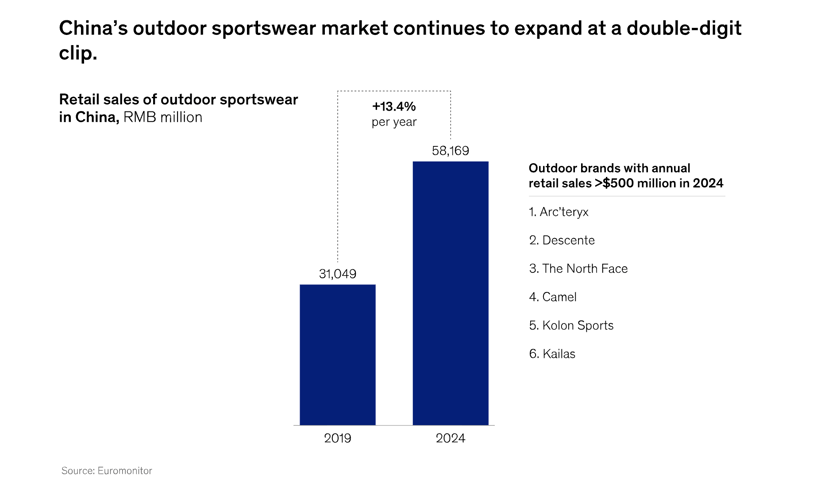
Image Credit: McKinsey
In China, the line between outdoor activity and everyday life has become much less tidy. “Light outdoor” activities such as urban cycling, park-based recreation, and short trips sit somewhere between sport and leisure, while the same jacket or pair of trail shoes may be used for a weekend hike, a commute, or simply because the wearer likes the look. iiMedia Research adds another clue: in its 2026 report, more than seven in ten surveyed consumers said they wanted outdoor clothing that could work for commuting as well as outdoor use. The published summary does not provide enough detail to treat that figure as nationally representative, but it does point to a broader shift in how consumers think about the category.
That creates a problem for brands because the product can still be counted as outdoor sportswear even when the consumer buying it no longer resembles the traditional outdoor customer. If companies continue to size the market through participation in hiking, running, or camping, they risk missing some of the people actually driving sales.

China is changing what “outdoor” means
Traditional outdoor participation explains only part of what is happening. In China, the category is increasingly being shaped by activities that fall somewhere between exercise, leisure, and everyday life.
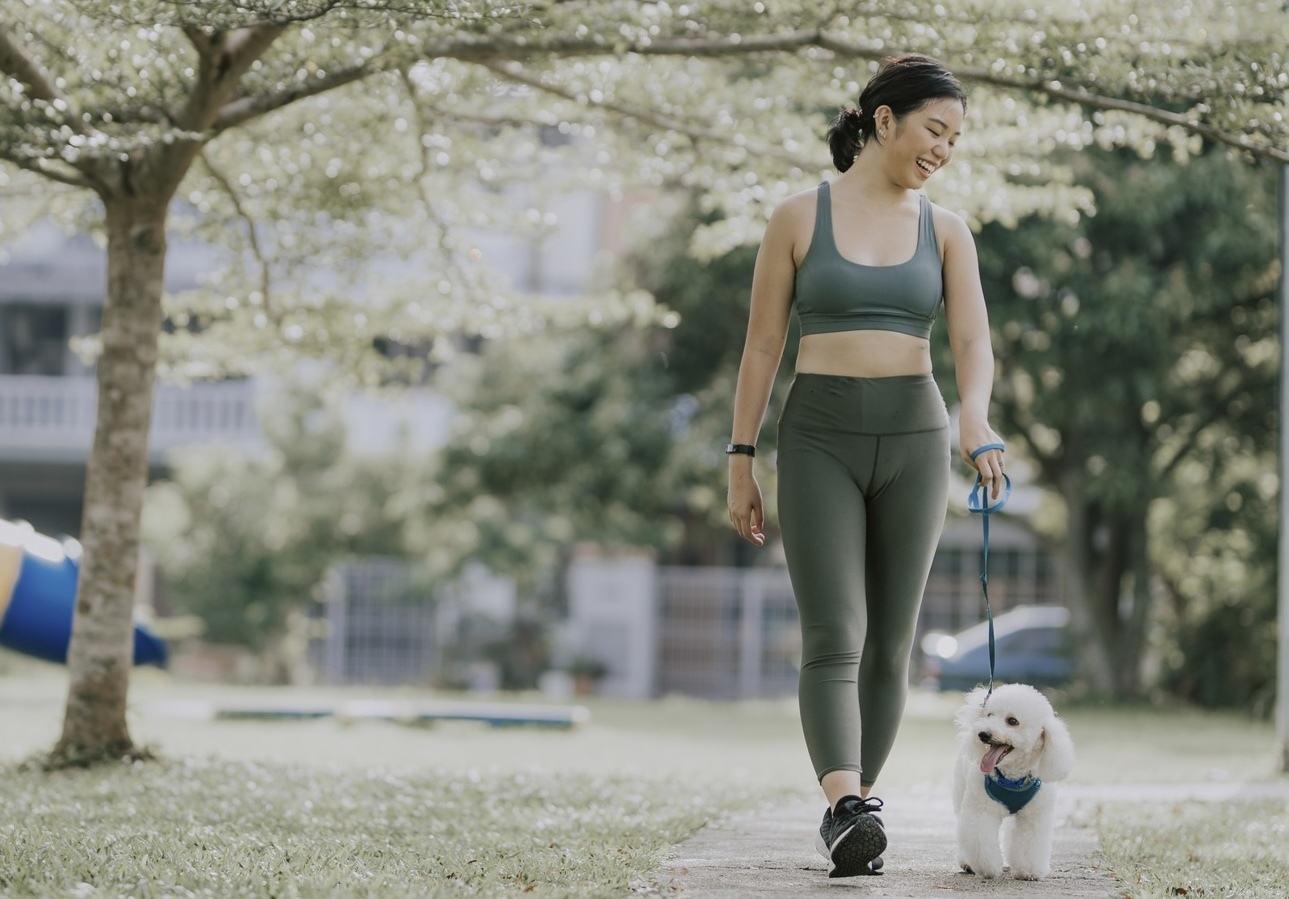
That is what makes “light outdoor” useful for understanding the market. A Saturday cycle in Shanghai, a walk through a Beijing park, or a short trip out of Hangzhou does not require the same level of commitment as trail running or serious hiking, but it still creates demand for clothing and footwear that feels functional, comfortable, and adaptable. In iiMedia’s 2026 survey, 43.2% of respondents said they participated in urban outdoor leisure, close to cycling at 45.8% and hiking at 44.7%.
The same products are also moving across more occasions. A technical jacket bought for a weekend trip can become part of a weekday wardrobe, while trail shoes may be chosen as much for comfort and style as terrain.
For brands, that loosens the link between participation and purchase. Growth can increasingly come from buyers who traditional participation-led research was never designed to capture.
When the product crosses categories, the business model has to catch up
Salomon’s XT-6 shows how quickly the market around a product can change even when the product itself does not. It launched as a technical trail shoe, then moved into Salomon’s Sportstyle range for a more fashion-oriented audience while keeping its technical features.
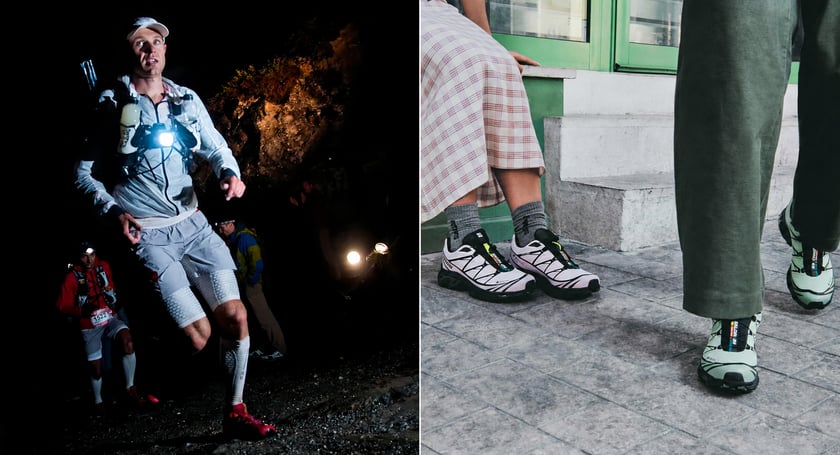
In China, that crossover is translating into real commercial growth. Salomon grew 35% globally in 2025 to more than US$2 billion in sales, with footwear growth led by Greater China and APAC. The majority of the 39 Salomon stores opened in the fourth quarter were also in Greater China.
The same product can now compete across outdoor, sportswear, fashion, and everyday wear, while the customer buying it may have very different reasons for doing so.
|
If growth is coming from… |
The implication changes |
|
More people taking up outdoor sports |
Technical credibility, specialised product, participation growth |
|
Existing consumers spending more |
Premiumization, loyalty, frequency, share of wallet |
|
Everyday and lifestyle adoption |
Audience, channels, product mix, media, competitor set |
Those are very different growth stories. A brand can see the same sales curve and make the wrong call if it misreads what is behind it. It may expand technical assortment when consumers are buying versatility, benchmark itself only against outdoor brands when the purchase is being won by fashion or outerwear, or assume existing customers are spending more when a new audience has entered the category.
The data can be right and the conclusion can still be wrong
This is where measurement becomes more difficult.
Finance often classifies the product. If a jacket sits in the outdoor category, the revenue counts as outdoor revenue.
Consumer research often classifies the person. If a tracker begins by asking whether someone hikes, trail runs or camps, a buyer who purchased that same jacket for commuting may never enter the sample at all. Both datasets can therefore be accurate while describing different markets.
That can create a false sense of stability. Sales may be climbing while participation looks relatively flat. Brand consideration among self-defined outdoor consumers may barely move, even as new buyers enter from outside the traditional audience.
The problem is not necessarily bad data. It is the assumption that every dataset is measuring the same market. For brands making decisions about China, this can distort market sizing, competitor analysis, product strategy, and investment. The customers driving the next phase of growth may be the ones the research was never designed to see.

The question is no longer just how big the category is
The more useful questions are where the growth is coming from, which occasions are driving it, and which consumers sit outside the traditional definition of an outdoor buyer.
Brands also need to know what those consumers are comparing the product with. A technical jacket bought for hiking competes with other outdoor brands. The same jacket bought for commuting or everyday wear may be compared with sportswear, fashion or outerwear instead.
That changes how brands should think about the market. Category size alone is not enough if the category itself no longer reflects the way people are buying.
China’s outdoor sportswear sales have grown fast enough to attract attention. The harder question is what that growth actually represents. If consumer behaviour has moved beyond the definitions companies still use to measure the market, the risk is not failing to see the growth. It is building a strategy around the wrong explanation for it.
FAQs
Why have China’s outdoor sportswear sales doubled?
The available sales data do not identify a single cause. Growth could come from more participants, higher spending by existing customers, everyday adoption of technical products or a combination of all three.
What does “light outdoor” mean in China?
“Light outdoor” describes accessible activities such as urban cycling, park recreation and short trips that require less commitment than serious hiking or trail running. These occasions often overlap with everyday leisure.
Why can’t sales data explain what is driving the growth?
Sales records identify the product, price and channel but rarely show why it was bought, what alternatives the customer considered or how it was ultimately used.
How can existing consumer research miss part of the market?
Research that recruits people through outdoor participation can exclude customers who buy technical clothing for commuting or everyday wear. Weighting cannot restore buyers who were never included.
How can market research help outdoor brands enter China?
Research can connect purchases to the occasion, the alternatives considered and what buyers do next. This helps brands distinguish participation-led growth from everyday adoption and decide whether wider expansion is justified.