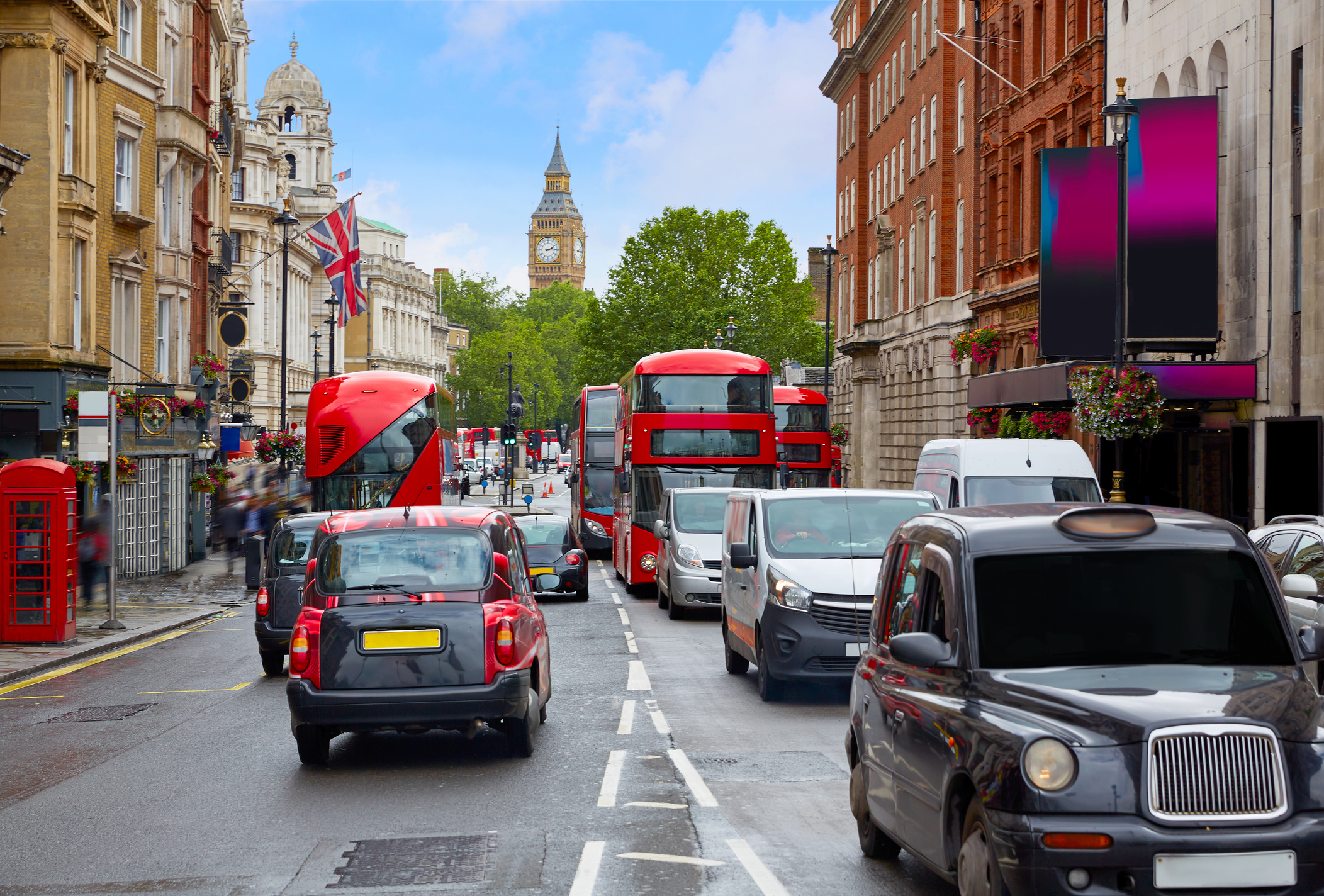

London is preparing for a transport experiment that many of its residents say they do not want.
More than 100,000 people joined ride-hailing company Uber and self-driving company Wayve’s interest list in eight weeks, while 42 per cent of Londoners oppose autonomous passenger vehicles and fewer than a third say they are likely to use one.
The divide is opening as the technology moves from demonstration to service. Waymo is testing the service with trained specialists behind the wheel as it works toward a fully autonomous ride-hailing launch. Uber and Wayve are preparing their own service after Transport for London granted private-hire licenses to several of Wayve's vehicles.
London is a hard place to mistake novelty for need. The Tube, buses, black cabs, private-hire cars, cycling, and walking already compete for every journey. Consumers know what a trip should cost, how long it should take, and what they expect when something goes wrong. A driverless car is entering a market dense with alternatives, in a city where the black cab is as recognisable as the red bus.
Cost sits well below safety in the polling. In the London Assembly’s YouGov survey of 1,053 Londoners, nearly half worried about how an autonomous vehicle would respond to an unexpected situation or emergency. Four in ten cited collision risk and a similar share technical failure. Just 12 per cent named cost as one of their main concerns, while only 17 per cent trusted autonomous-vehicle companies to collect and analyse their personal data.
Those judgments are being made before commercial robotaxis have launched in Britain, leaving operators with two numbers that could mislead them in opposite directions. What remains unknown is whether opposition will soften once passengers experience the service.
A waiting list is not a market
Uber and Wayve’s first volunteers have already crossed a threshold that many in London have not. They sought out autonomous driving before it became routine, making them useful for testing an early service and risky for forecasting a mature one.
Curiosity can produce impressive launch numbers: cars fill, first rides generate social posts, and passengers photograph the empty driver’s seat. None of that reveals how many journeys survive once the empty seat is no longer interesting.
Los Angeles offers a useful case study. Waymo opened its service there to everyone in November 2024. More than a year later, a 2026 USC survey found that only 5 per cent of Los Angeles County residents had used autonomous ride-hailing in the previous year, compared with 28 per cent who had used ride-hailing services such as Uber or Lyft.

The customer may not be the early adopter
Across the US, age tracks closely with trust in robotaxis. In a 2026 TaskUs survey, 29 per cent of Gen Z respondents said they fully trusted a robotaxi to handle an unexpected situation. Among Baby Boomers, the figure dropped to 11 per cent.
London does not produce the same neat progression. The London Assembly research found that people aged 35 to 49 were among the groups significantly more likely to support autonomous passenger vehicles, say they would use them, and trust the companies handling their data.
The survey did not tell us why. But it raises a more commercially useful question than which generation likes new technology most: who has a strong enough reason to change an established behaviour?
Los Angeles shows how unexpected that reason can be. Younger residents were more likely to have used autonomous ride-hailing, but USC also found a marked difference in how women assessed personal safety. Only 13 per cent rated conventional driver-operated ride-hailing as safe or very safe from harassment or crime, compared with 21 per cent for autonomous ride-hailing. Among men, the difference was negligible.
Removing the driver can take away reassurance for one passenger and discomfort for another. A Londoner with little interest in autonomous driving may prefer it when travelling alone late at night. Someone else may value privacy for a business call, but avoid it with young children.
What experience changes
A 2026 US study using three waves of a nationally representative panel between 2023 and 2025 followed the same consumers as autonomous vehicles became more familiar. People who gained firsthand experience with autonomous vehicles subsequently showed a significantly greater increase in trust. Greater awareness without use did not produce a statistically significant effect.
In the TaskUs survey, 23 per cent of people living where robotaxis were available said they fully trusted them, compared with 4 per cent elsewhere. More than a third of respondents in robotaxi cities had ridden in one. Those cities and their residents differ in many ways, but experience is too important a variable to bury inside an overall adoption score.
San Francisco offers a glimpse of a market further along. Waymo began offering autonomous rides to San Franciscans in 2021; fully autonomous rides followed in late 2022, and the service opened to everyone in June 2024. In a 2026 poll of registered voters, 42 per cent described self-driving cars as a good thing, while 18 per cent considered them a bad thing. The questions and samples differ from London’s, so the figures cannot be treated as a before-and-after conversion story. They do, however, show that a city where driverless cars have been part of the streetscape for years can sustain a very different public response from one waiting for commercial service to begin.
How to predict the adoption and acceptance of emerging transportation
A longitudinal London study should recruit consumers before the commercial rollout and continue to follow them after first use. It needs enthusiasts, undecided consumers, and people who currently oppose the technology. A panel built primarily from an interest list would start with the hardest barrier already removed.
The first measurement should attach concerns to actual journeys. Worrying about an emergency is one thing. Refusing a robotaxi with a child in the car, in heavy traffic, or when making an unfamiliar journey is another. Safety, privacy, access to human help, waiting time, and price become more useful when consumers have to trade them against a real need.
Then put people in the car.
A passenger worried about the driver's absence may find the ride reassuring. Someone who assumed human help would not matter may think differently when the vehicle stops somewhere unexpected. Pick-up location or waiting time may suddenly matter more than collision risk.
A fear that largely disappears after one journey may be better addressed by encouraging trial than by spending heavily trying to argue it away. A frustration that appears only after use belongs in the product.
A week later, the questions become harder. Did the passenger book again? After a month, which journeys went to a robotaxi and which went elsewhere? When another mode won, was it availability, waiting time, fare, route coverage, habit or the nature of the journey? Does someone who chooses one for a short local trip also choose it when heading to Heathrow with luggage?
Where operators can provide it with appropriate consent, behavioural data should sit beside what consumers report. Booking frequency, journey type, time of day, waiting time and switching behaviour can expose the gap between accepting the technology and choosing the service.
Lapsed users may be particularly valuable. Someone who willingly tried a robotaxi and then stopped has already crossed the perceived-risk barrier. The reasons for leaving are more likely to expose where the service itself is failing.
Price should also be tested again after experience. It matters relatively little in London’s current polling, when safety remains unresolved. Once a robotaxi feels ordinary, consumers may begin making the same unforgiving calculations they make about every other way of crossing the city. Would they wait five minutes longer to save money? Pay more for immediate availability? Choose remote human support in an emergency? Prefer a driver when carrying luggage, or travelling with children?
Those decisions can also reveal where the market appears first. Robotaxis may become compelling for late-night travel before commuting, for solo journeys before family trips, or for short connections before airport runs.
London’s rollout offers a brief window to understand how consumers adopt an unfamiliar transportation experience before it becomes routine. The same research approach applies whenever a company asks people to adopt a new experience: combine pre-trial attitudes with real use, behavioural data and repeat-user and lapsed-user research to identify where trial converts, where the experience loses people and which occasions create genuine demand.
The question worth answering sits one journey beyond launch: who books the car a second time?
FAQs
Will Londoners actually adopt robotaxis once they experience them?
Early polling cannot answer that. The more useful measure is how attitudes and behaviour change after first use, particularly whether safety concerns fall and passengers choose the service again.
Do early sign-ups give a reliable indication of market demand?
Not on their own. Interest lists overrepresent people already willing to experiment. The stronger signal is repeat behaviour once novelty has faded and robotaxis must compete with Uber, black cabs and public transport.
Which consumers are most likely to become regular robotaxi users?
Age matters, but journey needs may matter more. Late-night travel, privacy, travelling alone, family journeys and airport trips can produce very different choices within the same demographic group.
What should companies measure before launching unfamiliar technology?
Track consumers from pre-trial attitudes through first use, repeat use and lapse. This shows which barriers disappear through experience, which require product changes and where genuine demand begins to form.