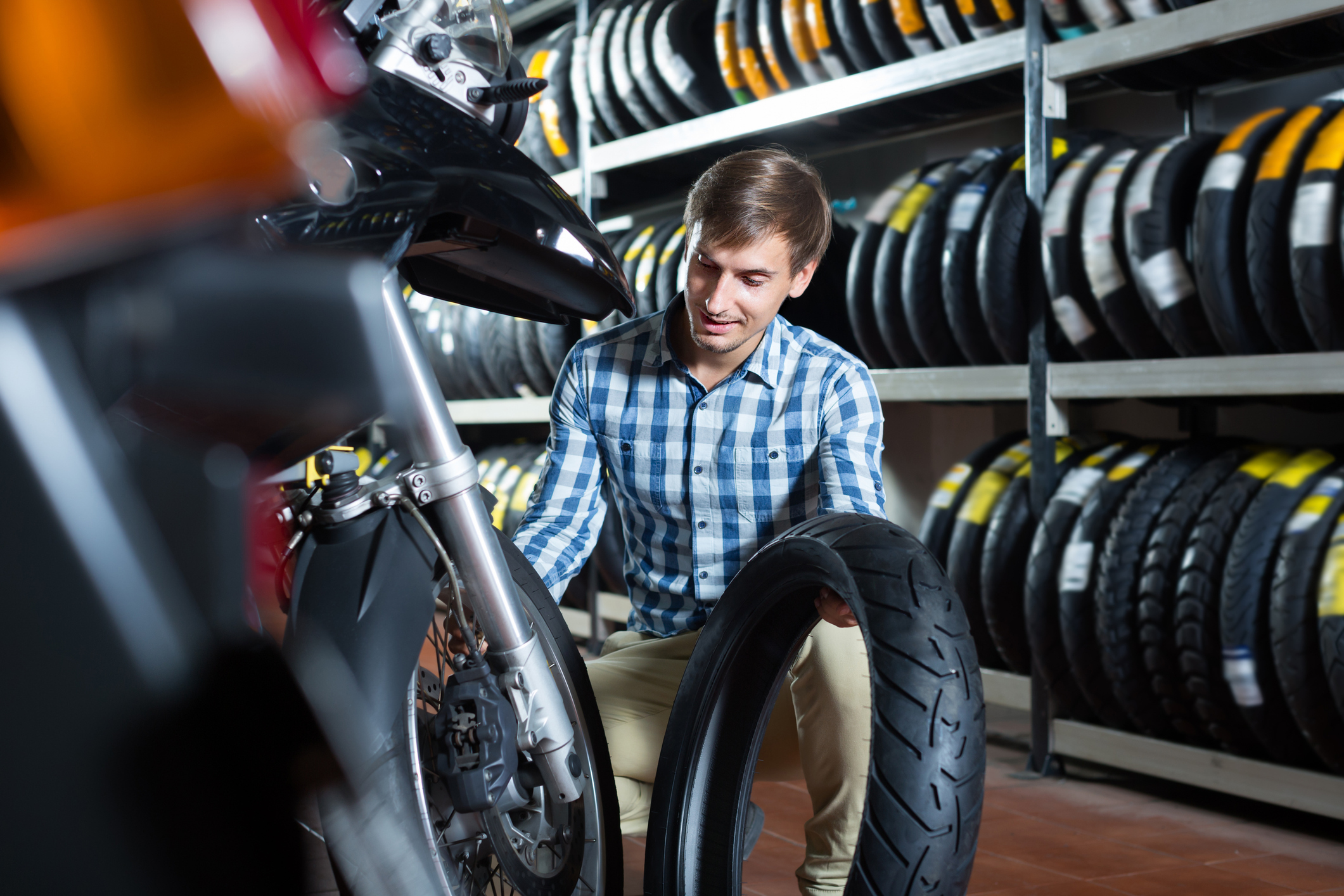

The most important sale in two-wheelers may be the one that happens after the vehicle has already been bought.
A rider who returns to the brand for servicing, parts, upgrades, warranty support, or trade-in is still in the market. The question is whether the brand has stayed close enough to shape what happens next.
In a category where acquisition costs are high and replacement cycles can stretch, the post-sale relationship is one of the few places where brands can maintain profits, improve customer retention, and secure future sales.
Many two-wheeler companies still treat the aftermarket as a support function. That view is too small for a category where ownership is active and often essential to daily life. A delayed part can weaken loyalty faster than a competitor’s campaign, while the right post-sale support can turn service, accessories, and resale into reasons to stay with the brand.
Electric growth raises the stakes. The International Energy Agency said global electric two-wheeler sales rose to almost 10 million in 2025, accounting for about 14% of total two-wheeler sales worldwide. As more riders enter the category, brands will have to prove battery support, software reliability, and long-term value after the sale.
The showroom may win the first transaction, but the aftermarket decides whether the brand remains part of the rider’s next decision.

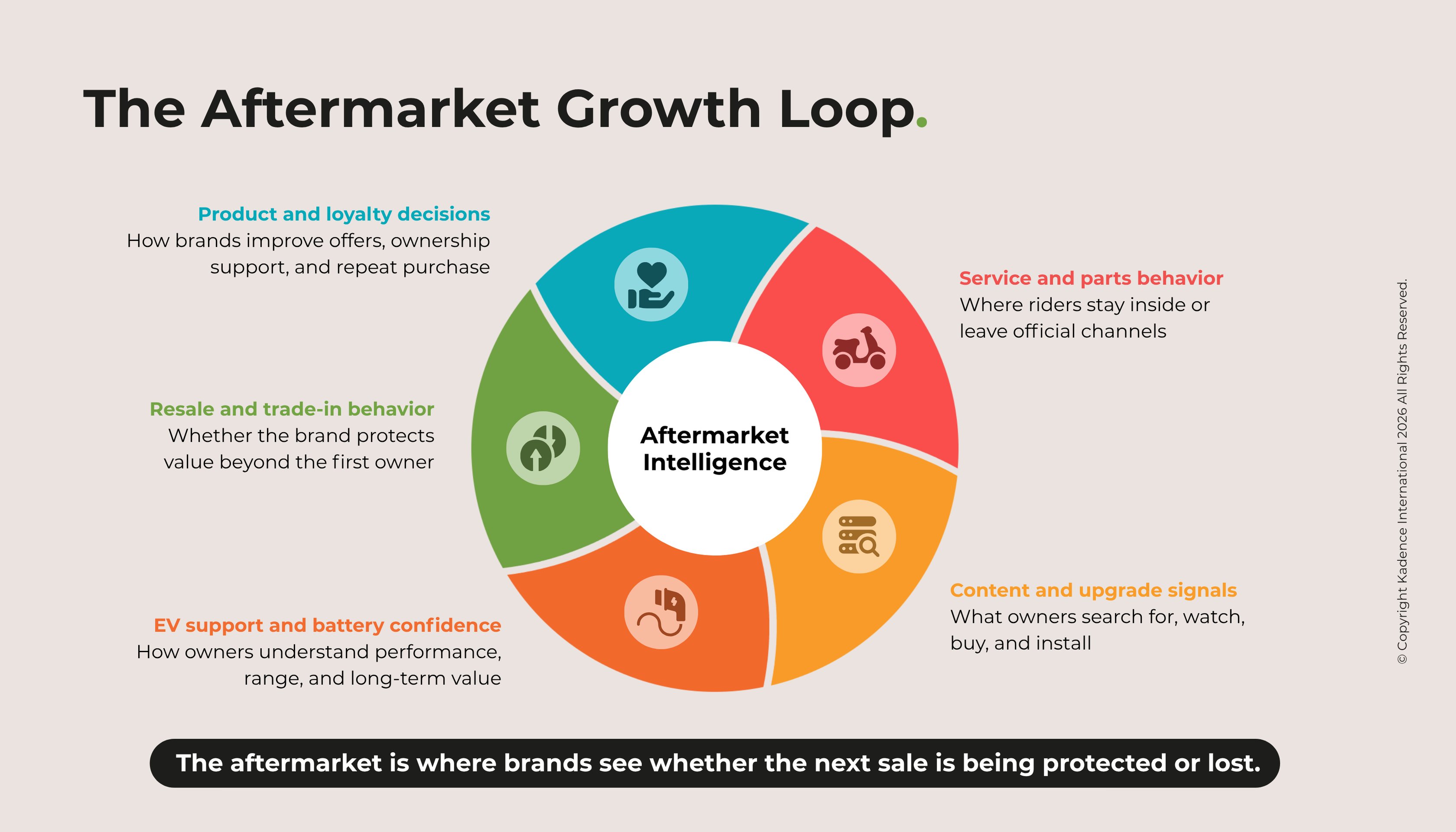
Aftermarket behaviour shows where the brand is losing control
Within the company, the post-sale relationship is often divided into separate parts. Marketing may see intent, while the warning signs appear later in service, parts, finance, or resale.
A two-wheeler company may believe it has a strong product and a healthy brand funnel while owners are quietly moving elsewhere for repairs, accessories, advice, or upgrades. A local repair shop, social video, or used-vehicle conversation can still shape the rider's beliefs about the brand. When those voices expose gaps in the official experience, the brand loses revenue, visibility, and influence over the next decision.
J&P Cycles, a motorcycle aftermarket retailer, shows how this post-sale relationship can be treated as commerce rather than an afterthought. Its Guaranteed Fit program helps riders find parts and accessories by year, make, and model, and provides protection if a listed part does not fit. That reduces one of the biggest barriers in aftermarket e-commerce: uncertainty over whether a product will work on the bike.
The aftermarket is already where riders spend money after the first sale, and where brands can either keep or lose influence over that spend. The risk is not only that owners leave, but that the brand may not see why until the decision has already been made.
Product content is becoming part of the aftermarket
Aftermarket buying carries a different kind of hesitation from the original vehicle purchase. Riders are not only deciding whether a part looks useful. They are deciding whether it belongs on their machine and whether the improvement is worth the effort.
A strong product page, installation video, or real-world comparison can answer questions once handled by a counter salesperson or mechanic. It provides the buyer with sufficient practical evidence to move from interest to purchase.
Many aftermarket categories are judged on proof, not aspiration. A rider needs to see how the product performs in ordinary conditions, not just how it looks in a studio image.
RevZilla, a motorcycle gear, parts, and accessories retailer, has built much of its rider-facing presence around this kind of practical education, with product reviews, buying guides, and how-to videos designed to help riders compare options before they buy. Its Browse By Bike tool also keeps the e-commerce journey grounded in the vehicle the rider actually owns.
Manufacturers can take the same principle into their own channels by making official parts, accessories, service content, and upgrade paths easier to find, understand, and trust.
The best aftermarket content reduces the risk of buying the wrong product by showing the changes that occur after installation and how the purchase improves ownership.
Electric models will create a different aftermarket
Electric two-wheelers change what owners need after purchase. The vehicle has fewer moving parts, but the ownership system becomes more technical.
That changes the role of maintenance. Regular support is no longer only about keeping the vehicle on the road. It becomes a way to protect range, software reliability, and the economics of ownership.
Owners need simple information they can act on, not technical dashboards designed for engineers. A clear view of battery health and expected performance can reduce anxiety and support confidence in the vehicle’s future value.
Gogoro’s battery-swapping model in Taiwan shows how infrastructure can shape the ownership proposition. Predictable energy access becomes part of the brand’s value, especially for riders who depend on the vehicle every day.
Software also creates a more continuous relationship. Updates, diagnostics, app-based support, and remote issue detection can give brands a reason to stay connected between physical service visits.
The winners will be the brands that translate technical performance into plain ownership decisions.
Resale value is becoming part of the ownership promise
A two-wheeler’s value does not end with the first owner. In many markets, the used-vehicle market shapes new-vehicle buyers' confidence before purchase.
A model with strong resale value feels safer to buy. A model with uncertain resale value carries a hidden cost, even if the upfront price looks attractive. The owner may not formally calculate that risk, but it still affects how much they are willing to pay and whether they stay within the brand when they upgrade.
Brands have more influence here than they often assume. Service records, certified used programs, battery health reports, and dealer-backed trade-ins can make resale feel less uncertain. The strongest systems give future buyers proof that the vehicle has been cared for, not just a seller’s word.
This becomes especially important for electric two-wheelers, where battery condition can make or break confidence in the used market. An electric model needs a more transparent way to display battery health and remaining useful life.
Resale gives brands a reason to re-enter the relationship before the owner starts comparing alternatives. A trade-in offer or certified used valuation can make the upgrade path feel easier, safer, and more valuable inside the brand than outside it.
The wrong metrics keep the aftermarket value hidden
Two-wheeler brands often see the first sale clearly and the next purchase too late. The problem is that the evidence between purchase and repurchase is scattered.
A service score may indicate whether the owner was satisfied with a single visit. A parts dashboard may show stock pressure. An e-commerce report may show which accessories sold. None of those measures, on their own, shows whether the owner is becoming more loyal, more doubtful, or more likely to leave.
Aftermarket measurement needs to track movement, not just transactions: when owners leave official channels, when repair delays change behaviour, when accessory purchases reveal unmet needs, and when the same complaint begins to appear across dealers.
Those insights should change what the business does next. They show which ownership promises are credible, where product design is creating friction, where dealers need support, and whether ownership costs are starting to weaken loyalty.
The aftermarket is often treated as a series of operational records, when its real value is in the pattern. Brands that connect those signals can see the next loyalty problem before it becomes a lost customer.
Aftermarket strategy has to be local
A global two-wheeler brand can standardise the badge, the campaign platform, and the broad ownership promise. The aftermarket rarely works that neatly.
The post-sale economy is shaped by local habits. In some markets, authorised service carries strong weight because buyers want documentation, warranty protection, and resale proof. In others, neighbourhood repair shops remain central because they are faster, cheaper, and closer to where riders live and work.
The strategic pressure varies by market. India’s scale makes service density hard to ignore, while Indonesia places more weight on local dealer trust and routine repair access. In the US, enthusiast culture gives accessories and specialist retailers more power; in Europe, safety, compliance, and total ownership cost often shape the post-sale offer.
A single aftermarket playbook will miss those differences. The same service bundle, accessory package, warranty message, or digital tool may land differently depending on how riders already maintain, modify, finance, and resell their vehicles.
Global scale still matters. It can support better parts planning, stronger digital systems, clearer standards, and more consistent ownership data. But the aftermarket is won locally, where riders make practical decisions long after the advertising has done its work.
Aftermarket demand can reveal the next product brief
Owners often improve a two-wheeler before the brand does. They adapt the vehicle when the base model does not carry enough, ride comfortably enough, feel visible enough, or support the technology they need every day.
Those paid modifications are product evidence. They show where the base model has not fully answered how riders use the vehicle.
A strong aftermarket business can give brands an early view of what the next model, trim, accessory bundle, or dealer offer should include. If owners keep paying for the same upgrade, the need may belong in the next product refresh. If one accessory category grows quickly in a market, the brand may be underestimating how the vehicle is being used.
Two-wheeler brands often invest heavily in concept testing before launch. The aftermarket provides another source of truth after launch, when owners show what they need enough to pay for.
The brands that stay useful will be harder to replace
The next fight in two-wheelers will not be won only through sharper advertising, more aggressive pricing, or faster model launches. Those levers still matter, but they are easier for competitors to copy.
A stronger aftermarket is harder to imitate because it is built over time. It depends on dealer discipline, parts availability, service confidence, product education, owner data, resale support, and the everyday proof that the brand remains useful after money has changed hands.
That usefulness is becoming a form of defence. When a rider knows where to get help, which parts to trust, how much a repair should cost, what an upgrade will do, and how the vehicle will hold value, the next decision becomes less open. The brand has already reduced the uncertainty that competitors would need to exploit.
The hard part is knowing which post-sale signals matter in each market and which ones are noise. The companies that understand this will give the aftermarket a larger role in brand strategy. In two-wheelers, the next sale is often decided long before the next showroom visit.
If your brand depends on a product relationship that continues after purchase, Kadence can help you understand where ownership behaviour shapes loyalty, repeat purchase, and future demand. Speak to our team about building a clearer view of the post-sale moments that matter most in your market.
FAQs
Why does the aftermarket matter for two-wheeler brands?
The aftermarket matters because riders continue judging the brand after purchase through servicing, parts, upgrades, warranty support, resale, and ownership advice. These moments shape loyalty and repeat purchase.
How can two-wheeler brands use aftermarket data?
Brands can use aftermarket data to see when owners leave official channels, delay repairs, buy upgrades, raise repeat complaints, or show signs of switching. These signals can guide marketing, product, dealer, and loyalty decisions.
Why is the aftermarket important for electric two-wheelers?
Electric two-wheelers depend on battery support, software reliability, diagnostics, charging access, and long-term value. Clear post-sale support helps owners understand performance and reduces uncertainty.
How does resale value affect two-wheeler brand trust?
Strong resale value makes a two-wheeler feel safer to buy. Service records, battery health reports, certified used programs, and trade-in support can help owners and future buyers trust the vehicle’s value.
What should two-wheeler brands measure after the sale?
Brands should track movement across the ownership cycle, including official-channel use, repair delays, accessory purchases, repeat complaints, resale interest, and signs that owners are becoming more or less likely to stay.