
Japan’s largest theme parks operate on a global scale. Tokyo Disney Resort and Universal Studios Japan each attract more than 15 million visitors annually, consistently ranking among the world’s most visited parks. Investment continues across the market, from IP-driven expansions to new experiences designed to extend time spent and deepen engagement. On the surface, demand appears deep and stable; however, in practice, participation tells a different story.
Japan theme park attendance trends show a widening gap between investment and repeat visitation. Japan is building bigger, richer theme park experiences, but that does not mean more people are visiting more often. Our latest Theme Park and Amusement Park Survey in Japan shows limited visit frequency across the population, with a significant portion of consumers attending infrequently or not at all.
Japan’s theme park market, valued at over $8 billion, continues to grow through both domestic demand and international tourism. That growth, however, is concentrated among a small number of high-performing destinations, with engagement dropping off beyond these.
For operators and brands, the challenge is not generating interest but converting that interest into consistent visits. Consumers are engaged with the category, yet attendance remains concentrated and uneven.
Theme Park Visit Frequency in Japan Remains Low Despite Strong Demand
Japan’s leisure market is defined by choice. Dense cities, efficient transport, and a wide range of activities mean consumers are rarely limited in how they spend their time. Theme parks compete with travel, dining, and easier, short-form alternatives that require less planning.
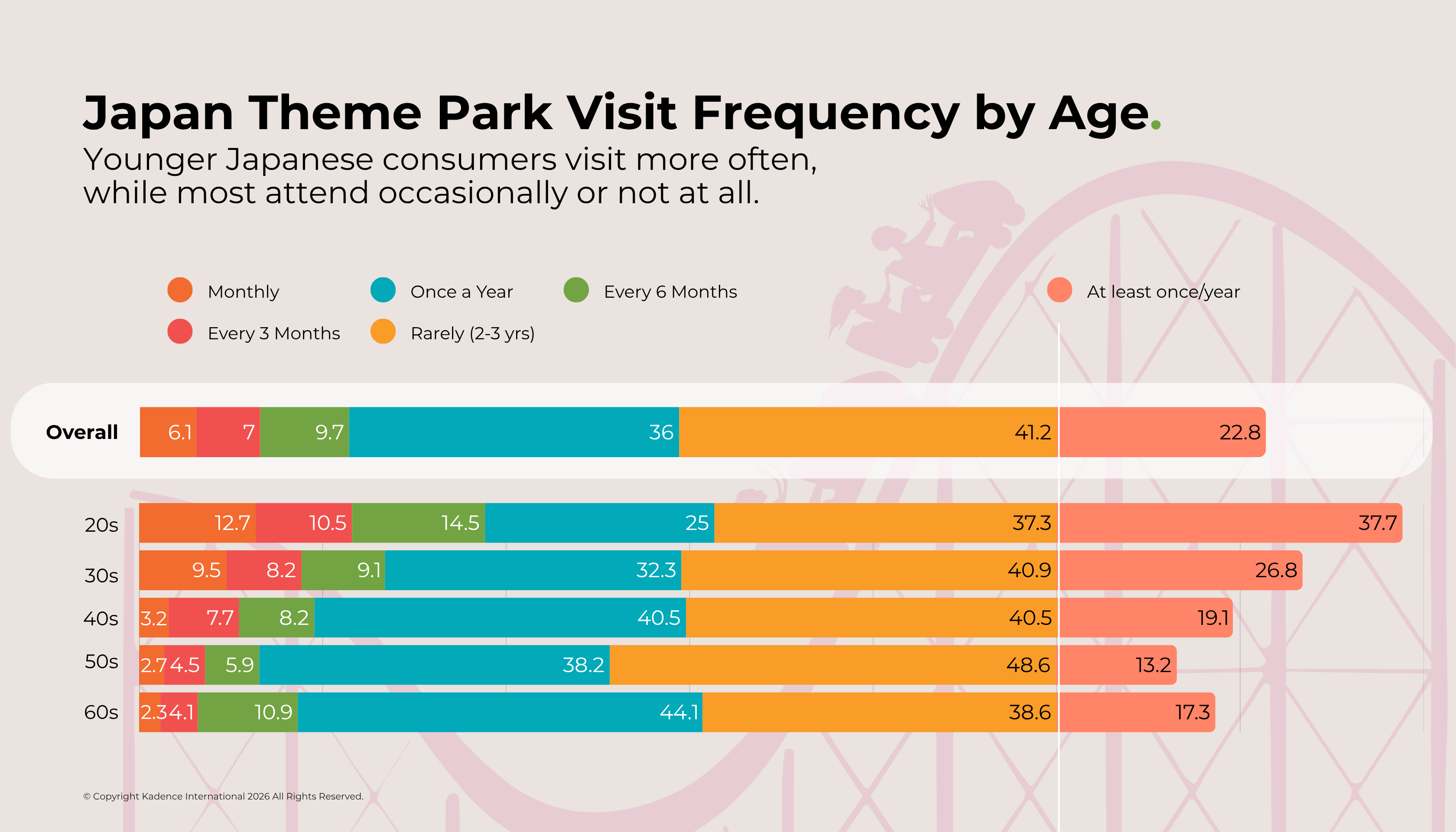
Almost half of the consumers we surveyed do not visit amusement or theme parks at all, while a smaller segment visits annually. Participation exists, but it remains limited.
Visits are infrequent and tied to specific occasions. They tend to cluster around specific moments such as planned outings or travel, rather than forming part of regular leisure patterns. This concentrates attendance within narrower windows rather than spreading it consistently across the population.
With one of the oldest populations globally, a larger share of consumers fall into life stages where participation becomes more occasional. Engagement shifts toward specific events instead of continuous engagement.
Most Popular Theme Parks in Japan Reflect Changing Expectations by Age
Theme parks are expanding beyond traditional ride-led formats, with developments in Japan increasingly combining entertainment, leisure, and design to serve multiple roles within a single visit. Recent investments across the market reflect a broader shift toward creating spaces that can accommodate different ways of spending time, rather than focusing on a single type of attraction.
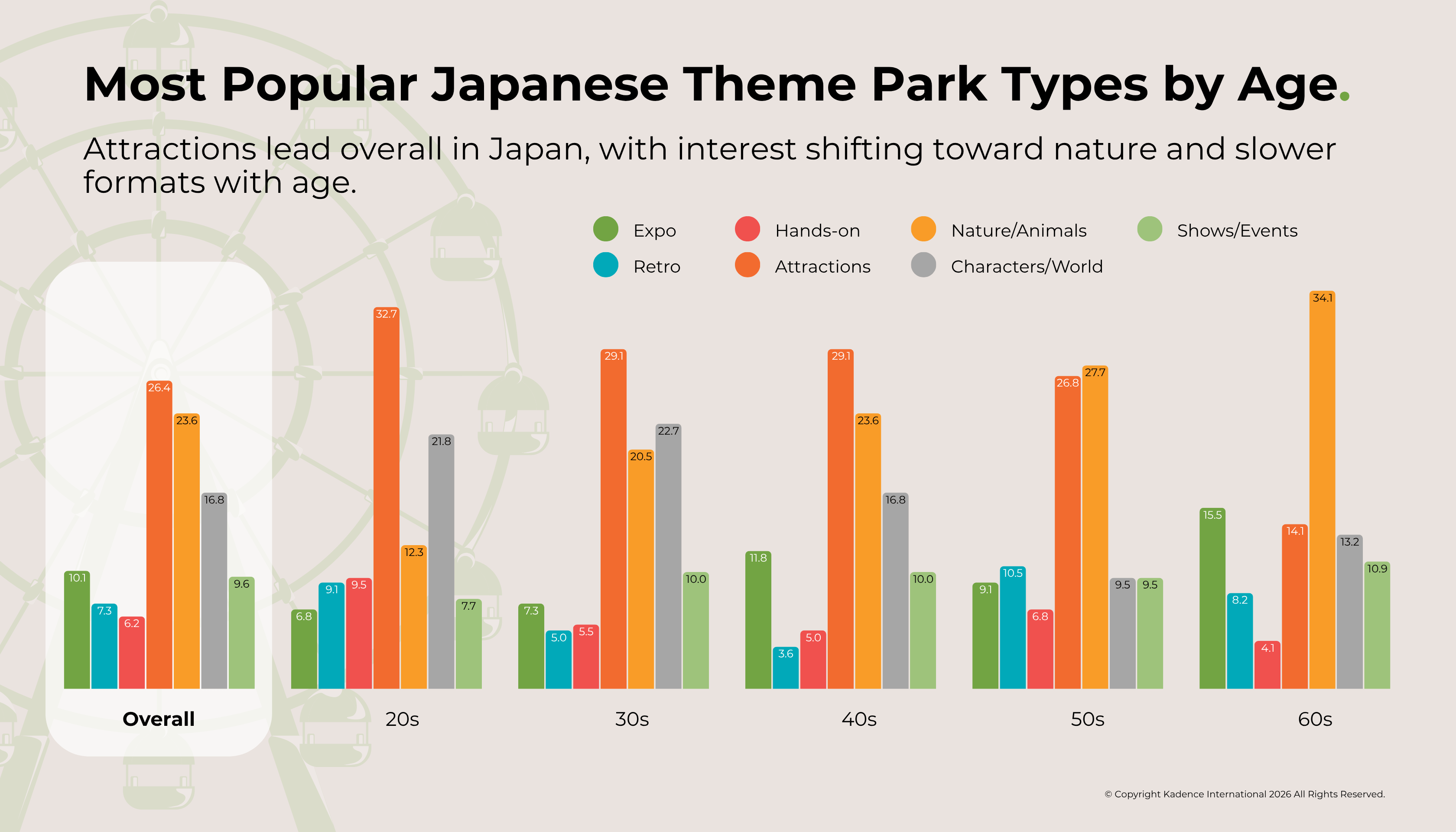
Interest does not concentrate on a single dominant format. Attractions and nature-based parks draw comparable levels of attention overall, but the balance shifts significantly with life stage.
Younger visitors are drawn to intensity, novelty, and stimulation. Fast-paced rides, immersive attractions, and newly launched zones align with a preference for experiences that feel exciting, social, and different from everyday routines. Repeat visits are often driven by what feels new, limited, or culturally relevant in the moment.
As consumers age, expectations shift. Older visitors place greater value on space, pacing, comfort, and the ability to spend time more casually. Nature parks, animal attractions, and open environments become more appealing because the experience is less about constant activity and more about how the day feels overall. Educational and expo-style formats also gain relevance with age.
Consumers in their 30s sit somewhere between these two behaviours. Character-led and narrative-driven environments resonate strongly because intellectual property creates a shared world to explore rather than a collection of individual rides. The appeal comes from immersion and familiarity as much as the attractions themselves.
Japanese consumers see theme parks as entertainment, social spaces, and leisure outings, offering a change of pace. A fixed positioning struggles to remain relevant across such varied expectations.
This changes how theme parks need to be designed. Those that rely on a single format limit their ability to engage across age groups, while those that combine high-intensity attractions with slower, open, or narrative-driven spaces allow visitors to move through the day in ways that align with their intent.
Relevance is no longer built solely on scale. It depends on how effectively the theme park can adapt to different motivations during the same visit, allowing more people to find value without competing for the same experience.

Theme Park Visits in Japan Are No Longer Built Around Rides Alone
Theme parks globally are shifting toward experience-led formats that extend time spent beyond individual attractions, with food and retail playing a larger role in shaping how visitors engage.
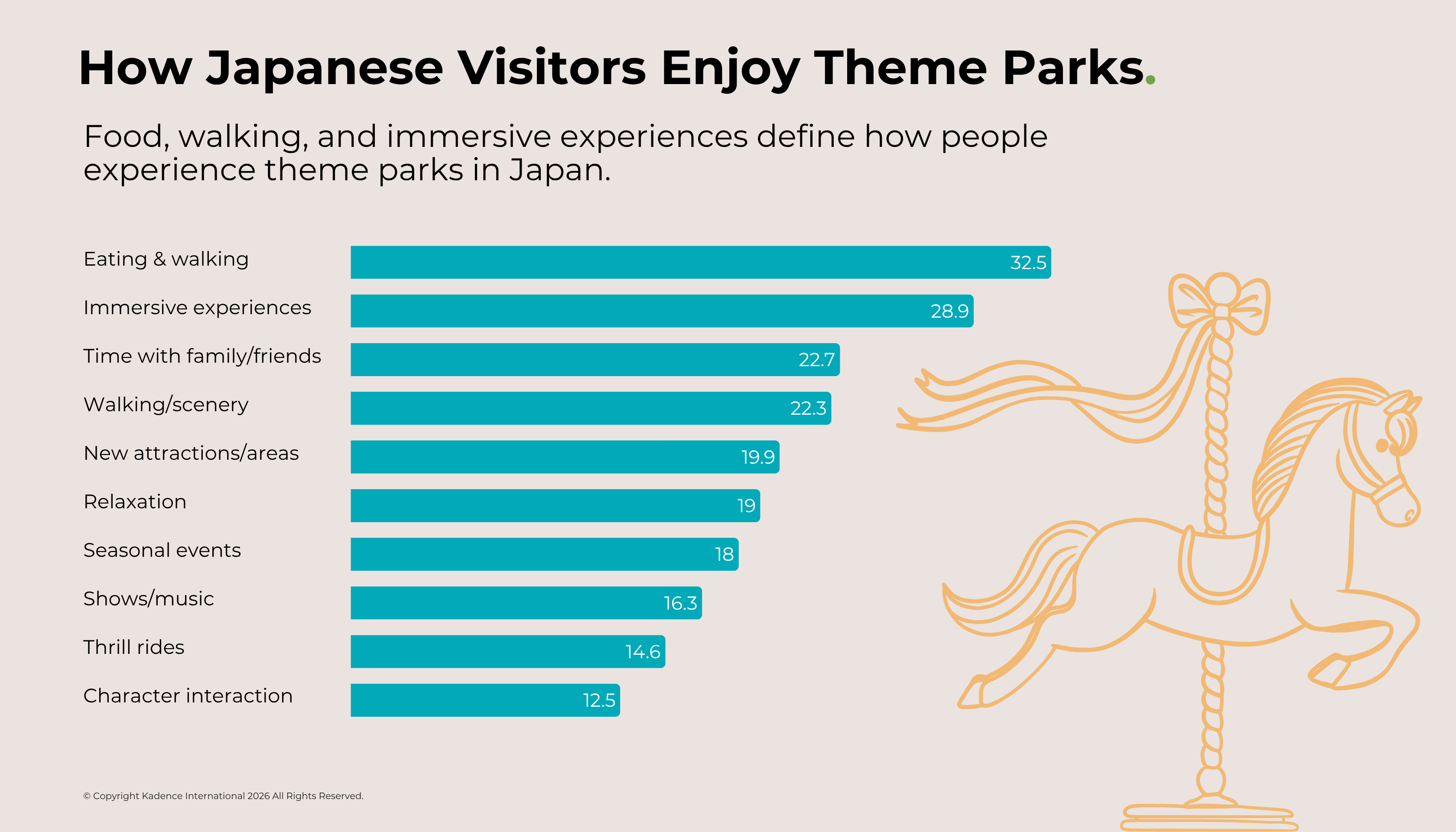
Eating, walking, and moving through the park rank among the most common ways Japanese visitors spend their time, reflecting a broader shift away from ride-maximisation. The visit is shaped by how the day unfolds, how time is shared, and whether it offers a meaningful change from everyday routines.
Younger audiences continue to show a stronger pull toward novelty and high-energy activities, including new attractions and thrill rides. At the same time, shared experiences carry equal importance, whether that involves spending time with friends, exploring new areas, or capturing moments that extend beyond the visit itself.
Across age groups, visitors are drawn to places that feel cohesive rather than fragmented. Leading parks have responded by investing in themed zones, storytelling, and spatial design that create a sense of continuity from entry to exit.
Value is no longer defined by rides alone. Admissions provide access, but the overall impression is shaped by everything around it. Time spent outside queues carries as much weight as time spent inside them.
Rising Costs and Crowding Are Reshaping Theme Park Visits in Japan
Sustained demand, driven by a surge in domestic activity and record inbound tourism, has bolstered Japan's theme parks in recent years. International arrivals reached over 36 million in 2024, placing additional pressure on already high-traffic destinations such as Tokyo Disney Resort and Universal Studios Japan. At the same time, operators have adjusted pricing structures, raising ticket prices and moving toward variable pricing models that adjust based on demand.
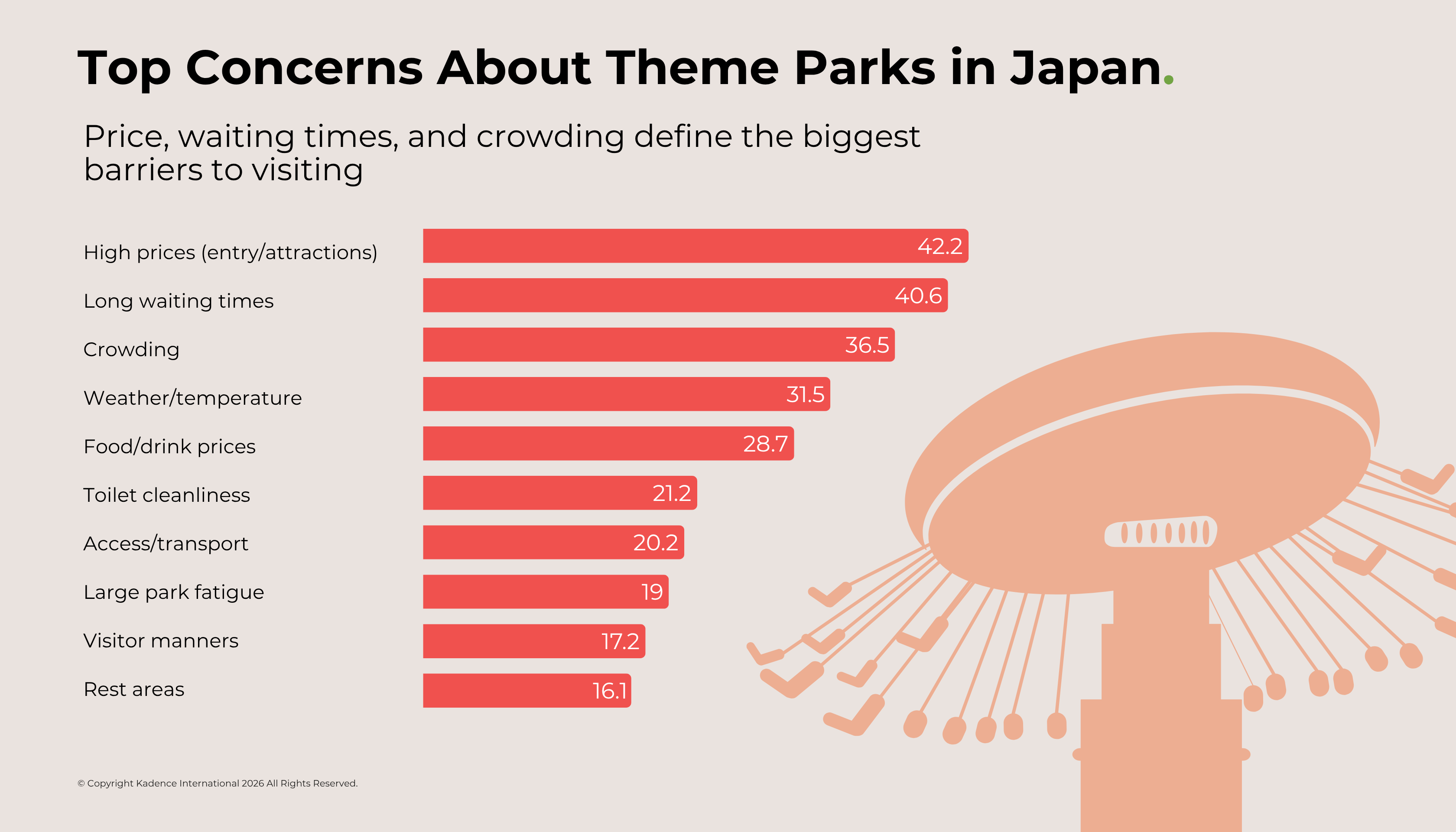
These pressures shape how visits are considered. High costs (admission and in-park spending), long waiting times, and crowding are major concerns, making theme park visits feel like a disproportionate financial and time investment.
The impact extends beyond logistics. Time spent in queues, navigating dense crowds, or managing peak-day conditions is factored into how the visit is judged before it begins. Even when the core offering is strong, these factors shape expectations of how the day will unfold.
Weather and in-park pricing add further variability. Outdoor spaces expose the visitor to seasonal extremes, while food and beverage costs are often perceived as higher than those at alternatives outside the park.
This changes how attendance builds. Interest alone does not convert into visits unless the day aligns across cost, time, and comfort.
Efforts to improve crowd flow, reduce visible waiting times, and provide clearer pricing structures directly influence participation. When the park feels easier to navigate and more predictable, the path from interest to attendance becomes smoother.
What Drives Theme Park Demand in Japan Goes Beyond Attractions
Recent investment across Japan’s leading theme parks has focused on large-scale, intellectual property-driven environments designed to extend the visit beyond individual rides. Tokyo DisneySea’s Fantasy Springs, which opened in 2024 at an estimated cost of ¥320 billion (approximately $2.1 billion), represents the resort’s largest expansion to date, built around immersive worlds from Frozen, Tangled, and Peter Pan.
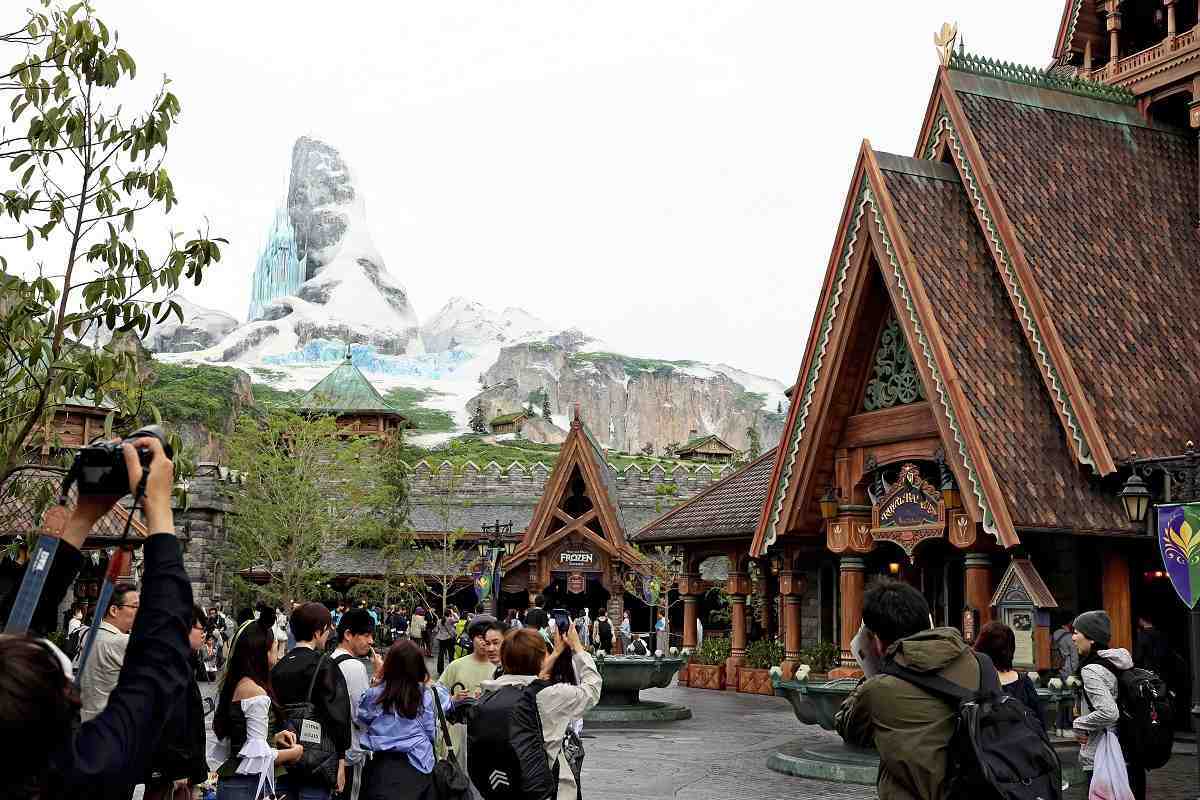
Image credit: Japan Times
Japan’s approach is rooted in its broader media ecosystem. Anime, gaming, and character franchises define the category. From Demon Slayer collaborations driving seasonal attendance to large-scale IP integrations, these worlds arrive with built-in audiences and clear expectations. The appeal is immediate, shaping intent before the visit is even planned.
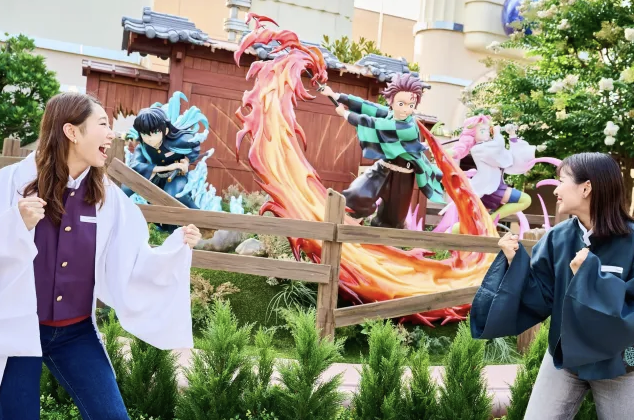
Image Credit: Sora News
Universal Studios Japan has followed a similar path. Its Super Nintendo World, developed at a cost exceeding $500 million, recreates the world of Mario and other Nintendo franchises through interactive attractions and in-park activities. The park has continued to expand this approach, with Donkey Kong Country opening in 2024, extending the same concept rather than introducing standalone rides.
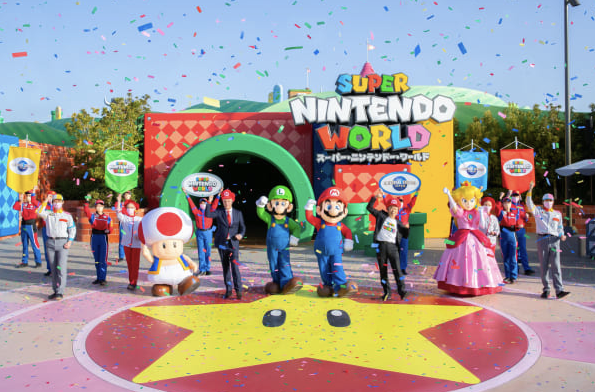
Image Credit: Japan National Tourism Organisation
Parks built around recognisable characters and narratives make the visit easier to anticipate. This reduces uncertainty and increases the likelihood that interest converts into attendance.
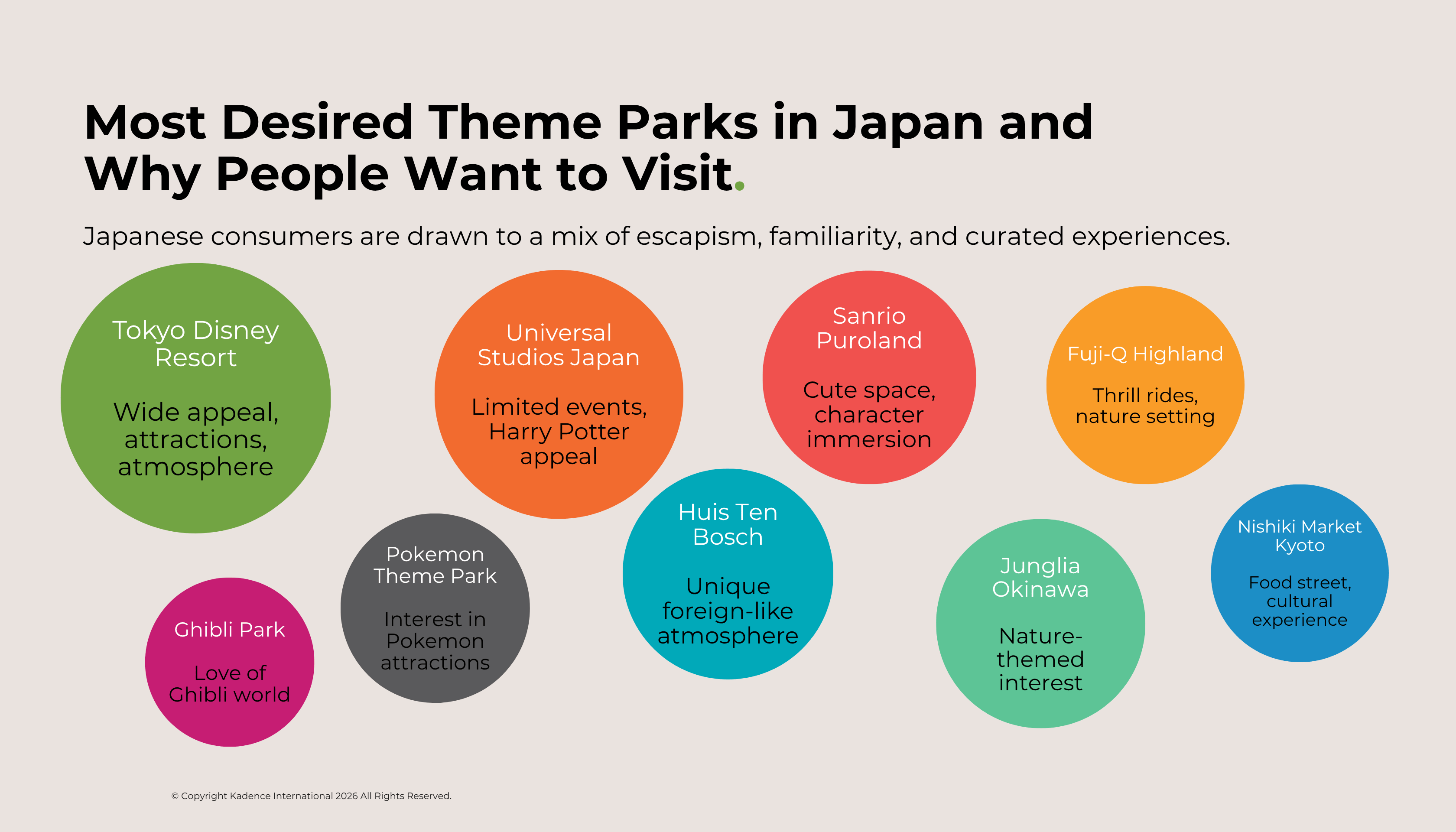
At the same time, demand is not limited to high-intensity environments. Destinations such as Ghibli Park, Huis Ten Bosch, and emerging nature-led developments like Junglia Okinawa point to growing interest in slower, more curated formats. These parks emphasise design, pacing, and atmosphere, offering a different form of escape that does not rely on constant stimulation.
Studio Ghibli’s transition into a physical park format illustrates how narrative worlds can support this shift without relying on rides.
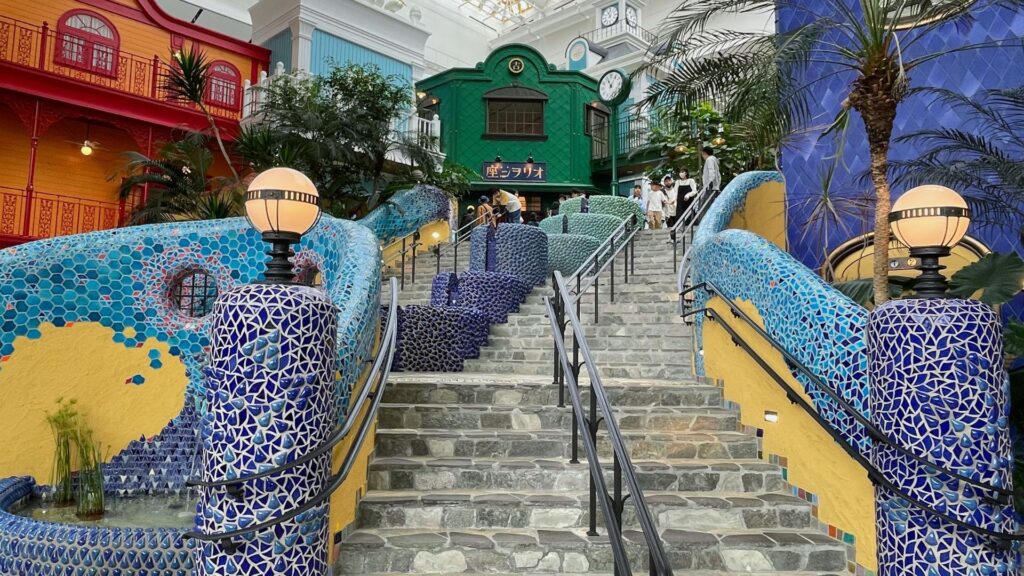
Image Credit: Erika’s travel adventures
Value is being defined more broadly, shaped by how well the setting aligns with how visitors want to spend their time.
The visit must feel complete once inside the park and worth the time invested, increasing the likelihood that intent translates into attendance.

Japan Theme Park Growth Is Entering a More Uneven Phase
Japan’s theme park market is entering a more uneven phase of growth. Investment and inbound tourism continue to lift major destinations, while domestic demand is shaped by an aging population and shifting leisure habits.
International visitors are concentrating demand at flagship parks, putting pressure on capacity and pricing. Domestic visitors are increasingly picky, expecting the visit to fit within available time and standards of comfort.
Parks built around strong intellectual property and clearly defined spaces convert interest into attendance more effectively. Growth will depend on how clearly the experience can be understood before it begins. The next phase will be led by parks that align with how people choose to spend their time, not those that rely solely on attention.
What happens between interest and attendance ultimately determines outcomes. Kadence helps brands identify where that gap forms and how to close it through market research that captures real behaviour. Talk to us about how we can support your next market or category deep dive.
FAQs
How does Japan’s aging population affect theme park attendance?
Japan’s aging population is reducing visit frequency, with more consumers treating theme parks as occasional outings rather than regular leisure activities.
How is international tourism shaping theme park demand in Japan?
International tourism is driving demand at major theme parks in Japan, with visitors more likely to prioritize flagship destinations. This is contributing to higher attendance at top parks while increasing pressure on capacity and pricing.
Why do flagship theme parks in Japan perform better than regional parks?
Flagship theme parks in Japan tend to attract more visitors because they offer strong intellectual property, immersive environments, and clearer value propositions. Regional parks often face more competition and may find it harder to differentiate.
Why are theme park visits in Japan often occasional rather than frequent?
Theme park visits in Japan often require significant time, planning, and spending, which means they are typically treated as special outings rather than everyday leisure activities.