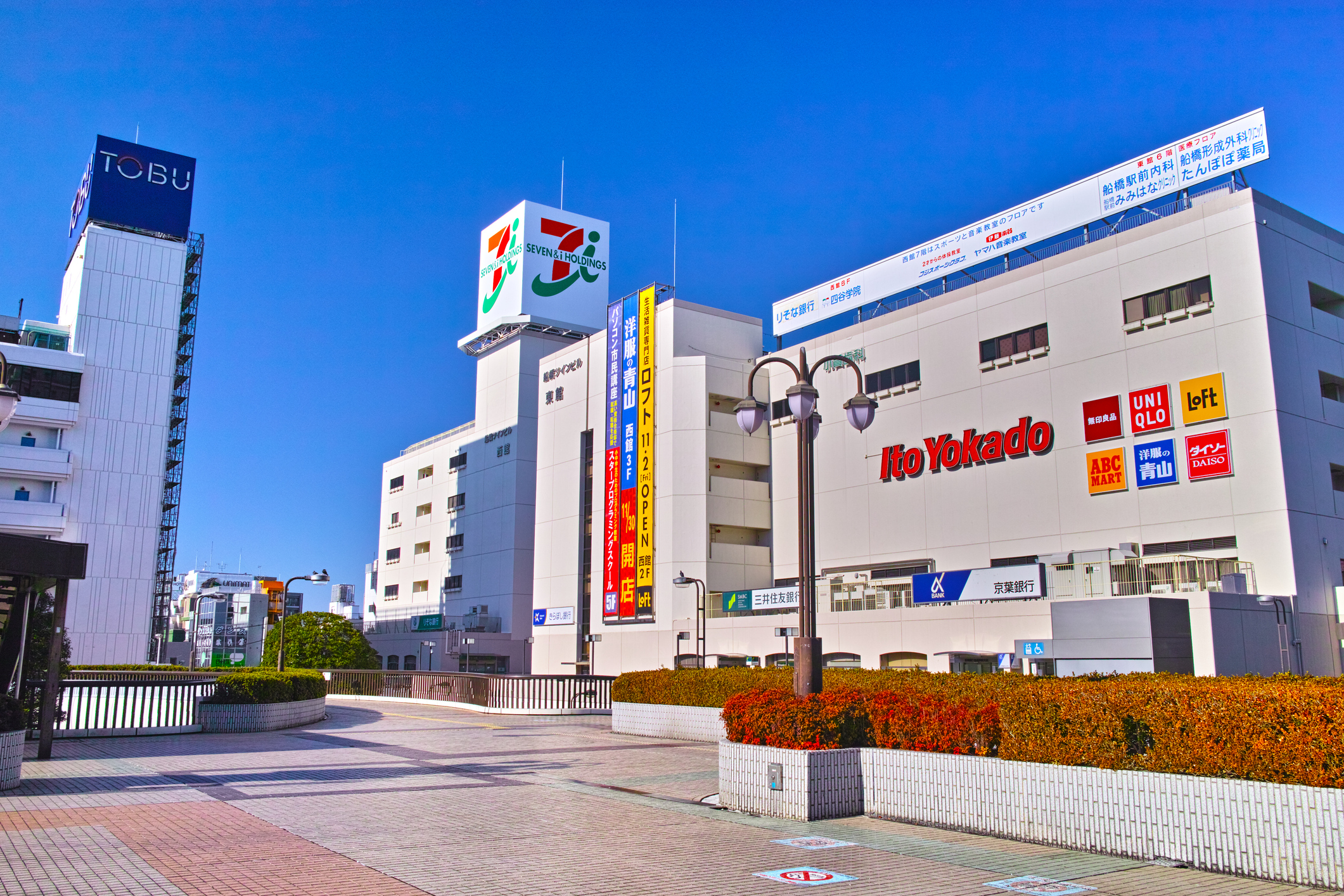

A brand can win shelf space in Japan and still lose the customer before the first reorder.
Foreign companies often mistake distribution for demand, reading retail placement as evidence that the market accepted the product when it may only mean a buyer agreed to test it. Retail placement only shows that a buyer was willing to test the product. The harder measure comes later, when consumers decide whether the product belongs in the small, repeated purchases that shape daily life.
Japan exposes that distinction quickly because so much of the retail system is built around routine, frequency, and low friction. Convenience stores illustrate the point most clearly. A consumer can buy breakfast before the morning train, collect a parcel at lunch, pay a utility bill after work, and pick up dessert on the walk home without making a separate shopping trip. The store is not functioning as a fallback option or emergency retailer. In many urban areas, it has become part of the route itself.
This buying pattern reflects the way everyday life is organised in Japan: dense urban neighborhoods, smaller homes, long workdays, rail-led commuting, and high expectations for reliable service. Japanese consumers do not always need to store, plan, or stock up when the retail system can meet needs along the route of the day.
The scale of that behaviour is difficult to ignore. According to the Japan Franchise Association, the country’s seven major convenience store chains recorded 16.4 billion customer visits in 2024, alongside sales of ¥11.8 trillion, or roughly US$74.7 billion. The revenue figure is substantial, but the visit count better explains the market structure.
A product can be affordable, recognisable, and widely distributed yet still fail because it asks consumers to do something the surrounding retail system has trained them not to do: plan ahead, store more, prepare more, wait longer, or interrupt a routine that already works. Consumers are not rejecting the product out of mystery or cultural resistance. In many cases, they are simply declining additional steps.
This is where many foreign brands misread Japan. The challenge is often framed as cultural complexity or market opacity because those explanations sound strategic. In practice, the issue is frequently more mechanical. The product does not naturally fit into how consumers already move through the day.
Japan’s convenience economy rewards products that attach themselves to existing habits and exposes products that depend on consumers changing those habits first. Repeat purchasing proves the routine is accepted.
The Product May Be Right, But the Buying Pattern Is Wrong
The pressure comes from how well the system already works. It solves small needs quickly and repeatedly, close to where people live, work, and travel. That efficiency raises the standard for every product placed inside it.
A bottled tea is a simple example. In a stock-up market, the product may be designed around multi-packs, household storage, and weekly replenishment. In the konbini environment, the same category may be judged in a narrower context: whether it works for the commute, the lunch break, or the next hour. A larger size might seem cheaper, but it's not appealing if the item is meant to be bought, opened, and used right away.
The lesson is not to make every pack smaller, but to know which part of the portfolio should drive routine, which should support pantry replenishment, and which should not be forced into a high-frequency purchase.
The consumer may understand the proposition, but the pack, price, timing, or channel may require too much adjustment for a purchase that should feel almost automatic.
The commercial risk is when brands diagnose this too late. They add media pressure, expand distribution, or adjust messaging when the deeper problem sits in the gap between how the product was designed to be bought and how Japanese consumers are prepared to use it.

Why Product Format Carries More Commercial Risk in Japan
In Japan, a product has to survive a crowded train, fit into a handbag, sit on an office desk, open cleanly, or feel appropriate as a small reward at the end of the day. These details determine whether the product can be carried, opened, finished, and justified within the space of a short stop.
Onigiri, chilled noodles, ready meals, bottled teas, and single-serve coffees show how much work format does in Japan. The product must be easy to choose quickly, carry cleanly, consume without preparation, and finish without waste.
The same principle goes beyond food. A hand cream in Japan’s convenience environment cannot rely only on brand equity or a broad moisturizing claim. It has to make sense in the moment: dry hands in winter, a small bag, a quick purchase, a price that does not require deliberation, and packaging that explains the benefit before the consumer gives the shelf much attention.
This is where global brands often misjudge adaptation. Smaller formats should not be treated as scaled-down versions of the main product. They may need their own claim, price expectation, placement logic, and role in the consumer’s day. A compact product is not automatically convenient. It becomes convenient only when size, purpose, price, and purchase context reinforce the same occasion.
The Errand Creates the Purchase
Japan’s convenience stores matter because shopping is not always the reason people walk through the door. A consumer may enter to withdraw cash, pay a bill, collect a ticket, print a document, or use a parcel service. The basket that follows can be secondary, but the visit has already placed the consumer inside a retail environment.
That service role has been built over the course of decades. Seven-Eleven Japan says it launched bill payment services in 1987 to help customers who could not easily visit bank counters during the day, responding to longer working hours and changing household patterns. The company now describes the store as part of Japan’s “lifestyle and social infrastructure,” a phrase that reflects how far the format has moved beyond packaged goods.
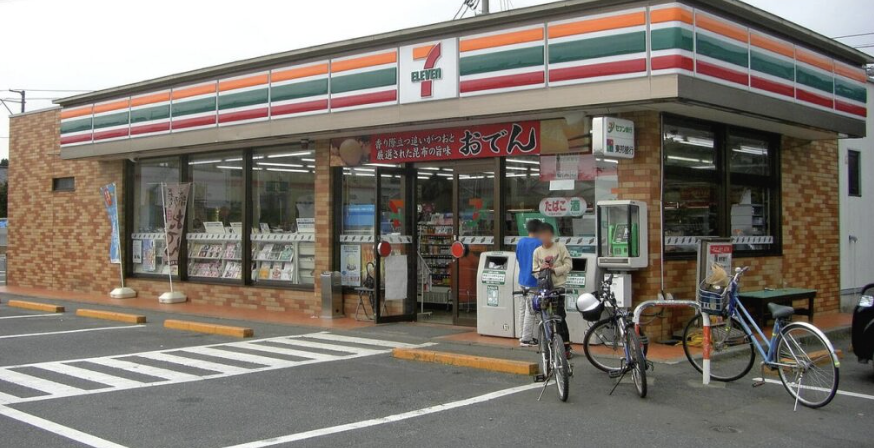
Image credit: Essential Japan
Lawson’s Loppi terminals display the same logic in a different form, supporting product purchasing, ticket bookings, and applications for various events. These services turn the store into a practical stop in the day, rather than a destination reserved for shopping.
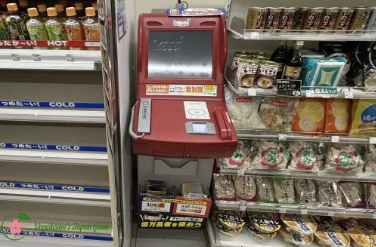
Image credit: Visit Japan
The visit begins with a task, not a category need. That changes the product's job. It must become relevant before the shopper has mentally entered a shopping trip.
For brands, the consequence is sharper than footfall. The shopper may not arrive with category intent. A product has to attach itself to an errand already in progress. A drink near the payment counter, a snack beside a service terminal, or a personal care item close to checkout is not only up against other products. It has to earn attention before the shopper moves into comparison mode.
For Older Consumers, Convenience Is Becoming a Question of Access
Japan’s next retail shift is unlikely to be a simple move from stores to apps. Delivery will grow, but it has to prove its value against a street-level system already designed to solve many immediate needs. In much of Southeast Asia, delivery platforms became the convenience layer. Japan starts from a different place because stores, vending machines, drugstores, station kiosks, and supermarkets already solve many everyday needs.
The future of delivery depends less on speed than on where physical access begins to fail. Nearly 1 in 3 people in Japan are aged 65 or older. For older consumers, the value may lie in avoiding a heavy bag, reducing the need to walk, maintaining independence, or continuing to manage daily needs without relying fully on family members or formal care.
This is where the model moves beyond the city-center store. Seven and i Holdings says Seven-Eleven Japan operates Seven Anshin Delivery, a mobile store service using light trucks stocked with about 300 items, including food and household goods. The service primarily serves areas where everyday shopping is inconvenient or where many seniors find transportation difficult.
For brands, delivery in Japan should be read less as a universal shortcut and more as an access problem. The opportunity is not just app-based impulse or restaurant delivery. It is helping consumers complete daily tasks when walking, carrying, or traveling becomes harder. Products serving older households, heavier shopping missions, pharmacy needs, scheduled replenishment, or care-related routines require a different channel logic from products designed for a quick urban stop. The next advantage will come from knowing which consumers can still reach the product, which ones need it brought closer, and when convenience means independence rather than speed.
Global Models Fail When They Import the Wrong Buying Assumptions
Japan can make entry look more straightforward than it is. The market is orderly, mature, quality-conscious, and highly serviced. For global companies, those strengths can create the impression that success depends mainly on disciplined execution. The risk sits in the operating model: how the brand expects people to shop, compare, carry, store, and repeat the purchase.
Walmart’s experience with Seiyu shows how difficult it can be to transplant a global retail model into Japan. Walmart first invested in Seiyu in 2002 and moved to full ownership by 2008, bringing the operating logic that had powered its global growth: scale, supply-chain efficiency, and everyday low prices. In Japan, that model met a market shaped by frequent smaller trips, high expectations for freshness and service, and a stronger appetite for rotating promotions than a pure low-price promise could easily satisfy.
Walmart improved parts of the business, including inventory systems and cost discipline, and later launched a digital push through Rakuten. But the broader struggle remained. In 2021, Walmart sold a majority stake in Seiyu, retaining a 15% stake. In 2025, Reuters reported that Trial Holdings would acquire Seiyu from KKR for ¥382.6 billion (US$2.55 billion), with Walmart also selling its remaining stake. The example shows why operational strength alone was not enough.

Image Credit: Arkansas Democrat Gazette
The point is not that foreign brands cannot succeed in Japan. It is that global strength does not prove local fit. A strategy that works in one retail culture may carry assumptions about basket size, trip purpose, price architecture, merchandising, and replenishment that do not translate cleanly into Japan’s purchase rhythm.
Consumer goods brands face a quieter version of the same risk. A global proposition can be commercially sound and still arrive with the wrong assumptions about how shoppers encounter the category, how quickly they judge value, and which retail setting gives the product its strongest role. By the time weak performance appears in sales data, the brand may already have learned that Japan requires more than a translated launch plan.

How Brands Should Validate Demand Before Scaling in Japan
Brands entering Japan need to understand why convenience matters to consumers before deciding which channel should deliver it. A listing may show retailer acceptance. It does not show whether consumers will understand the product quickly, buy it under real conditions, and return to it once novelty fades.
Research has to move closer to the purchase itself, because stated interest will not reveal whether a product can withstand the time pressure, space constraints, and low-attention decisions that define convenience-led buying. Brands need to understand what shoppers are doing before and after purchase, what else is in the basket, how much time they have, what they are carrying, and which competing options are already easier to choose.
The strongest market entry work should combine proposition testing with context testing. A product may score well on appeal, but still need a different pack, claim, price architecture, or launch channel once the purchase environment is studied closely. The goal is not to localize for its own sake. It is to identify which parts of the global model are strong enough to travel and which parts need adjustment before scale makes the mistake expensive.
Early performance should be interpreted with the same discipline. Weak first results should not be read only as low awareness. They may reveal a mismatch between the product's intended role and how consumers are actually using the channel. Strong initial results should also be carefully questioned. A launch can create curiosity without creating lasting behaviour, especially in a market where product refreshes and limited-time offers constantly reset attention.
The Real Test Is Whether the Product Can Enter Routine
Japan offers an early view into what happens when convenience becomes embedded in consumer expectations. Retail stops functioning mainly as a place to buy products and begins operating as part of the infrastructure surrounding everyday life. Stores handle meals, payments, logistics, household needs, and services within the same footprint, while consumers become accustomed to solving needs with little interruption.
In that environment, imported assumptions have less room to survive. Awareness and distribution matter only after the offer works inside the way people already buy, carry, use, and repeat products.
The operational test is simple and demanding: can the product survive a small, fast, repeated purchase without asking the consumer to change behaviour? If the answer is yes, Japan can turn convenience into loyalty. If the answer is no, the market may expose the weakness long before the brand understands why access did not become demand.
Build Your Japan Strategy Around How Consumers Actually Buy
Winning in Japan requires more than market sizing, distribution planning, or translated messaging. It requires a clear view of how consumers make decisions in real purchase conditions. Kadence helps brands entering or expanding in Japan identify where demand originates, which assumptions need to be adapted, and how product, price, format, and channel strategy should be built around actual buying behaviour.
Need to understand where your brand fits in Japan’s consumer landscape? Contact Kadence to explore consumer research, market entry, and retail strategy in Japan.
FAQs
Why does Japan’s convenience economy matter for global brands?
Japan separates shelf access from real demand. Brands need to know whether a product fits the way consumers shop, carry, use, and repeat purchases in everyday settings.
How does convenience retail shape Japanese consumer behaviour?
Convenience retail in Japan reduces the need for consumers to plan, store, or stock up. Dense store networks, rail-led commuting, smaller homes, and high service expectations have made frequent, smaller purchases part of everyday routines.
Why do global brands struggle in Japan despite strong distribution?
Global brands often struggle when global launch plans assume the same basket size, trip purpose, price logic, or replenishment behavior that worked elsewhere.
What should brands consider before entering the Japanese market?
Brands should test whether their product fits real purchase conditions in Japan. That includes format, price, packaging, timing, channel role, and whether the product can withstand small, fast, repeated purchases.
How should brands validate demand in Japan before scaling?
Brands should combine proposition testing with context testing. Stated interest is not enough. Research should examine how consumers make decisions near the point of purchase, what else they buy, how much time they have, and which alternatives are easier to choose.