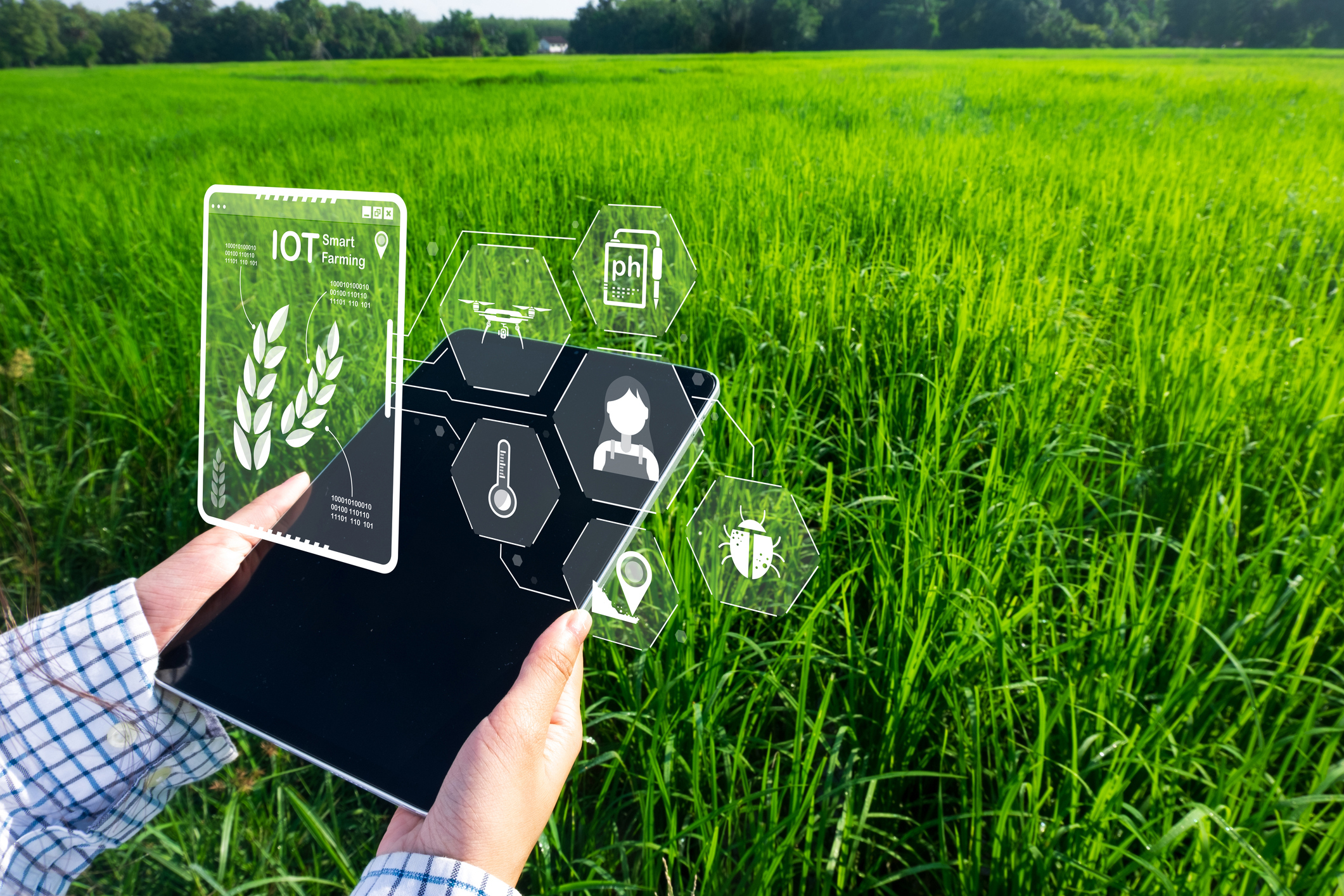

Agriculture has spent decades getting better at producing more from the same land. Bigger machinery, better crop protection, improved seed genetics, and more sophisticated irrigation all helped boost productivity. The next phase looks less straightforward because many of the resources that supported those gains are becoming harder to access, more expensive, or more contested.
Water is the clearest example. Agriculture accounts for around 72% of global freshwater withdrawals, so future productivity cannot be judged on yield alone. How much value a farm can produce from each unit of water, fertiliser, energy, or land is likely to matter far more than it once did, especially in regions where those inputs are already under pressure.
The shift is already visible in how farms are being managed. Plant-level spraying is moving into commercial use in Europe, biological inputs are established at scale in markets such as Brazil, and gene editing is widening the range of traits that can be engineered into crops. What links those developments is not one technology but a change in resolution: agriculture is becoming more precise at almost every level, from the seed to the individual plant.
Whether farmers can take advantage of those advances is another question. In the US, 348 million acres of farmland were rented in 2024, and 79% of those acres were owned by people or organisations that did not farm them. That separation between the person working the land and the person who owns it becomes more important when the next generation of productivity gains may require long-term investment in irrigation, soil, automation, data, and resilience.
By 2046, the biggest change in agriculture may not be a single new technology or a dramatic breakthrough. It may be the steady shift away from managing acres as broadly as possible and toward managing biology, resources, data, and risk with much greater precision. That changes more than how food is grown. It could change who controls the most valuable parts of the agricultural system.
9 shifts that could reshape agriculture
1. Farming moves from field management to plant management
Swiss agtech company Ecorobotix is already selling a sprayer that uses cameras and AI to distinguish crops from weeds and target applications plant by plant. In 2026, the company committed another $50 million to its US expansion, including domestic assembly in Kansas.
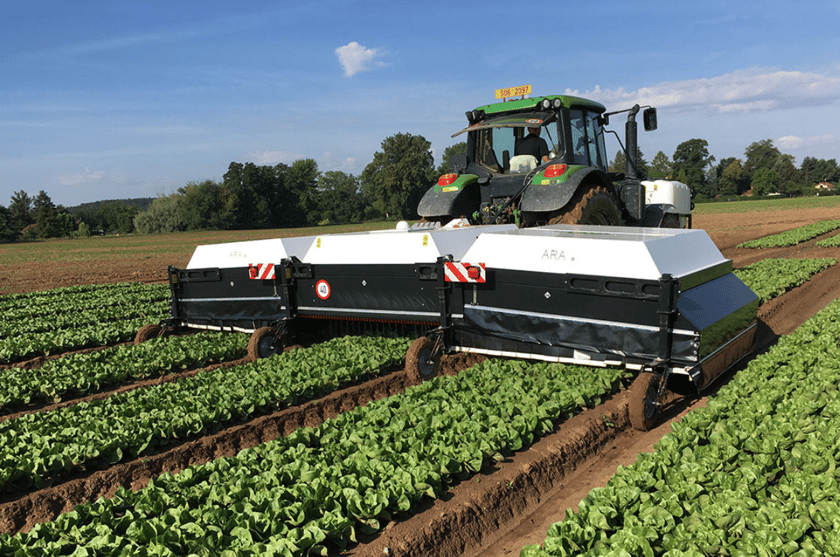
Image credit: Ecorobotix
As computer vision, sensing, and application technology improve, weed control, fertiliser, water, and crop protection can be directed with far greater precision. That could reduce wasted inputs, improve visibility across a field, and change the economics of crop management. Over time, the practical unit of decision-making may shrink from the acre to the individual plant.
2. Seeds become part of the farm’s operating system
Gene editing is beginning to move crop development closer to the conditions in which a plant will actually be grown. Bayer, for example, has been developing genome-edited crops with traits aimed at resilience, yield, and production efficiency, while regulators in markets including Europe are creating clearer pathways for some newer genomic techniques.
Over the next 20 years, breeders may be designing crops for much more specific conditions: how much water is available, how nutrients are delivered, what machinery is used, what the local climate looks like, or even what a particular buyer needs. Seed genetics would become much more closely tied to how the whole farm operates, rather than being treated as a separate starting point.
3. Fertiliser starts becoming biological
Brazil already offers a glimpse of what this can look like at scale. Biological nitrogen fixation is deeply embedded in soybean production there, with Bradyrhizobium inoculants supplying most of the nitrogen used by the crop, and hundreds of inoculant products now registered in the country.
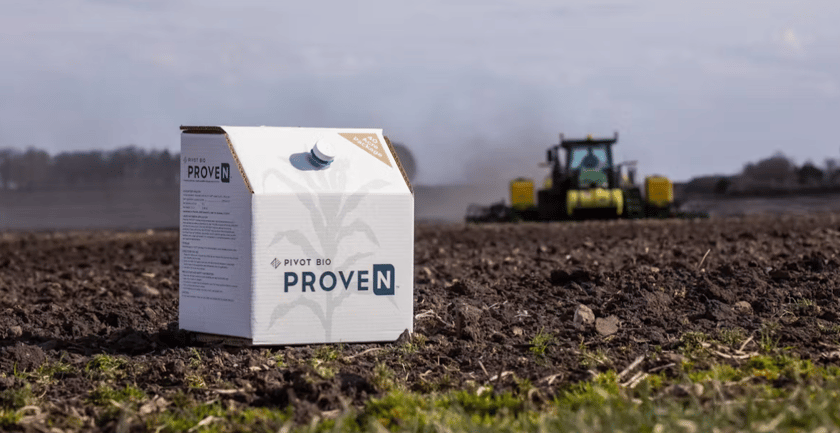
Image credit: Pivot Bio
Companies such as Pivot Bio and Kula Bio are pushing the same principle into other crops and markets, using microbes to supply nutrients directly to plants. Synthetic fertiliser is unlikely to disappear, but biology could take on a larger share of the work currently performed by synthetic chemistry. That would shift competition away from how much fertiliser can be sold and toward how efficiently plants can access the nutrients they need.
4. Water becomes a productivity technology
Only about 23% of global cropland is equipped for irrigation, yet it produces nearly half of global crop value. At the same time, more than 60% of irrigated land is already located in areas facing high or very high water stress.
Water efficiency is becoming an increasingly difficult business issue to ignore. Two farms can produce similar yields and still have very different economics if one requires far less water to achieve them. That makes precision irrigation, soil monitoring, drought-tolerant genetics, and crop choice more important to both cost and long-term viability.
Israel shows how far that logic can go. Treated wastewater already supplies a significant share of agricultural irrigation there, turning water reuse from an environmental measure into a core part of the production system.
5. Farmland starts producing more than crops
Google’s 2026 agreement with Terradot covers more than 200,000 hectares of rice production in Brazil, combining changes in farming practices with enhanced rock weathering to generate methane-abatement and carbon-removal credits alongside the crop itself.
The economics are still developing. Carbon markets remain uneven, verification is evolving, and environmental payments are unlikely to become a dependable income everywhere. But the broader model is expanding beyond carbon into renewable energy, conservation payments, biodiversity, and other ecosystem services.
For some farms, the same acre could eventually generate several different streams of value rather than one.
6. The farm becomes a data asset
Modern farms can generate detailed information on soil performance, yield, crop health, water use, machinery, weather response, and input efficiency. The unresolved issue is who captures the value created by all that information.
Research published in the Journal of Rural Studies in 2026 found that only 16% of surveyed farmers believed farmers themselves would benefit most from aggregated farm data. Thirty-six per cent expected agribusiness to benefit most, while another 18% pointed to technology providers.
As agricultural data becomes useful for lending, insurance, procurement, agronomy, and verification, control over the platform becomes commercially important. The battle may be less about collecting the data than deciding who owns it, who can combine it, and who is allowed to profit from it.
7. Input companies start selling outcomes instead of volume
BASF’s xarvio HEALTHY FIELDS service already points toward a different model. Instead of simply recommending crop-protection products, it manages decisions around timing, product choice, and dosage and backs the result with a performance guarantee. In Japan, BASF expanded the model in 2025 to include a rice yield-performance guarantee.
That approach becomes more relevant as precision spraying reduces chemical use and biological inputs potentially reduce the demand for conventional fertiliser. Selling more physical products becomes a weaker growth model when the technology is designed to use less of it.
Over time, more value could sit in guaranteeing weed control, nutrient performance, yield protection, or risk reduction rather than in the volume of product applied.
8. Food companies start managing the farm
PepsiCo says regenerative, restorative, or protective practices now cover 4.7 million acres within its agricultural programs, supported by farmer incentives, technical assistance, and data. Nescafé reported that 53% of its green coffee purchases in 2025 came from farmers adopting regenerative practices, supported by more than 1,600 agronomists and field staff across 15 countries.
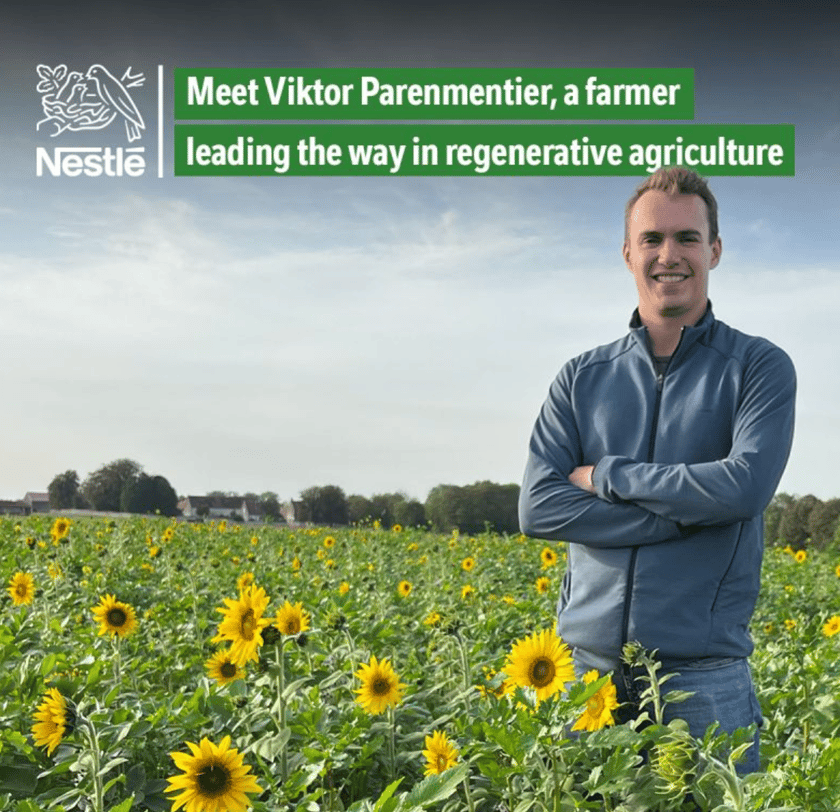
Image credit: Nestle
These programs are often presented as sustainability initiatives, but the commercial logic is just as important. Climate exposure, soil condition, water availability, and farming practice can all affect future supply, quality and cost.
When a crop is strategically important enough, buying it after harvest may no longer give a company enough control. Major food businesses are starting to reach further upstream, influencing how crops are grown and where they are sourced.
9. The next constraint may be who owns the land
USDA’s latest land-tenure survey found that 348 million acres of US farmland were rented in 2024, and 79% of those acres were owned by non-farming landlords. Around 43 million acres are expected to transfer ownership within the next five years, excluding land moving through wills or trusts.
That structure becomes more important when the next generation of productivity gains may depend on investments with long payback periods. Irrigation, soil restoration, automation, and new infrastructure can increase the long-term value of the farm, but a tenant has less reason to fund them if much of that value ultimately accrues to somebody else.
The pace of agricultural modernisation may therefore depend as much on leases, finance, and ownership structures as it does on the technologies available.

What this means for agriculture companies
If these shifts continue, value in agriculture could move away from selling more physical products and toward controlling better outcomes. Precision reduces waste, biological inputs challenge parts of the chemistry model, and data becomes more important to how farms are managed, financed, and supplied.
That creates pressure on established business models, but it also opens new ones. Equipment, fertiliser, and crop-protection companies may need to earn more from performance, software, services, and risk reduction, while food manufacturers could move further upstream to secure supply and influence how strategically important crops are produced.
Competition could come from much further outside traditional agriculture. Software companies, biotech firms, finance providers, and environmental-market businesses are already finding ways into the farm economy. For established players, that raises a more immediate question: is it enough to keep supplying one part of the system, or will more of the value sit with companies that can bring several pieces together?
Which trends deserve investment?
The biggest challenge is separating what is technically possible from what is commercially ready.
Agriculture makes that especially difficult because adoption depends on more than performance. A technology may reduce water, fertiliser, labour, or risk and still struggle if the upfront cost is too high, the payback takes too long, the farm is rented, or the benefit is captured elsewhere in the value chain.
Commercial readiness depends on who must change behaviour, who bears the cost, and who ultimately captures the benefit. A technology that works for a large grain operation may make little economic sense for a smaller farm, while an idea that scales in one market may be held back elsewhere by infrastructure, regulation, or financing.
This is where market research becomes useful. It can test adoption appetite, price tolerance, barriers to switching, differences between markets, and whether buyers genuinely value the outcome being created. Some agricultural technologies may be technically impressive but commercially premature; others may be ready in one market and years away in another. The job is to tell the difference.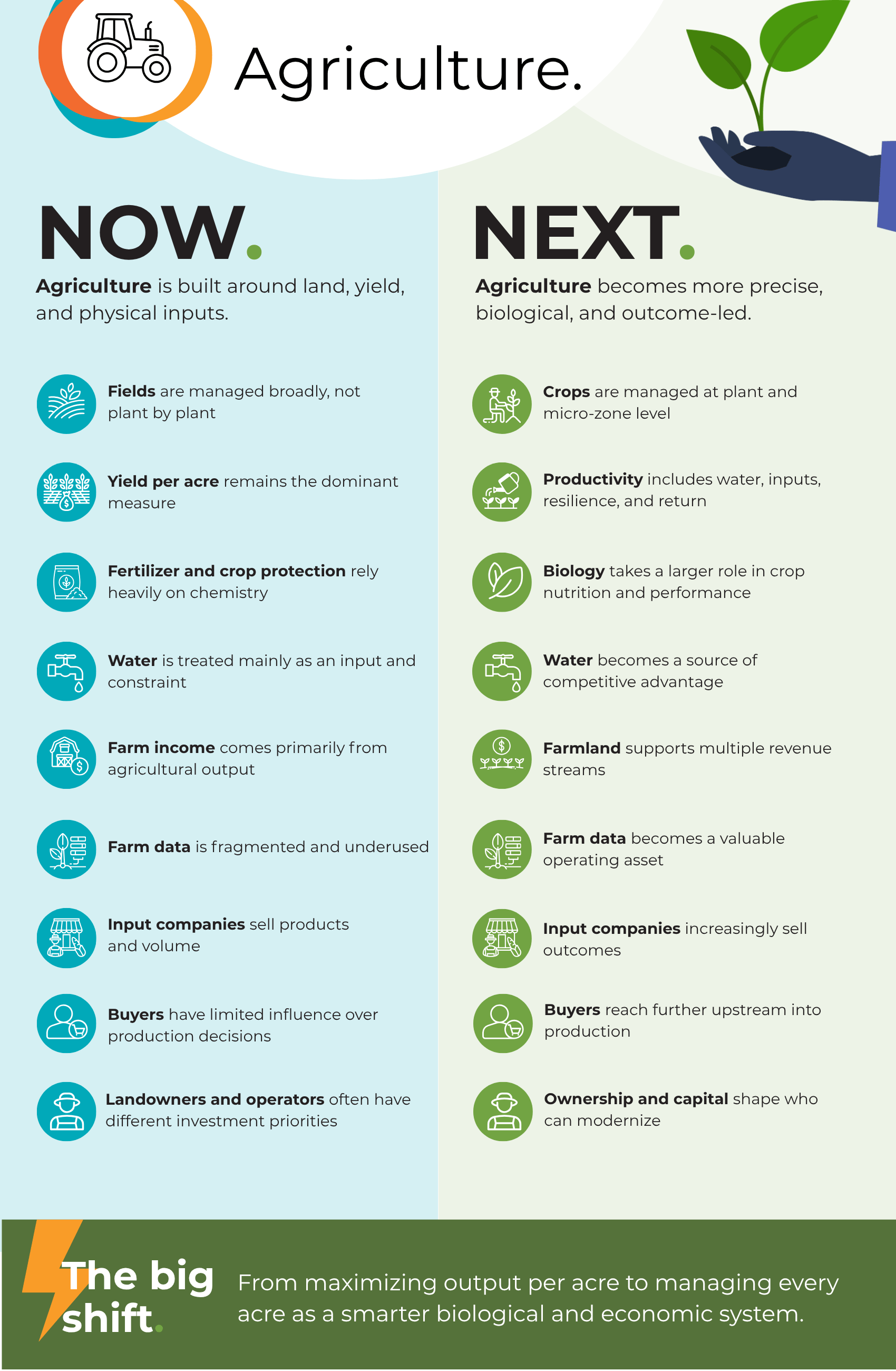
Agriculture is changing at different speeds across markets, crops, and farming systems. Kadence helps companies understand where adoption is real, where barriers remain, and which emerging ideas have genuine commercial potential. From proposition testing to market readiness and cross-market research, we help businesses decide where to invest, where to experiment and where to wait.
Talk to Kadence about where agriculture is heading NEXT.

FAQs
What will agriculture look like in 2046?
There is unlikely to be a single model. Agriculture could become more precise, data-driven and biologically sophisticated, but adoption will vary widely by crop, geography, farm size and access to capital.
Will technology make farming less dependent on labour?
In some areas, yes. Automation can reduce the need for people to perform repetitive or highly time-sensitive tasks, but it may also increase demand for skills in software, robotics, equipment maintenance and data management.
Will smaller farms be able to compete as agriculture becomes more technology-driven?
That will depend heavily on cost and access. Technologies that require substantial upfront investment may initially favour larger operators, while lower-cost tools, shared services and new financing models could make some capabilities more accessible over time.
Could agricultural innovation change where food is produced?
Potentially. Improvements in genetics, irrigation and resource efficiency may allow some crops to remain viable in more difficult conditions, while water scarcity, heat and changing economics could make other regions less competitive.
How should agriculture companies evaluate opportunities across different markets?
They need to look beyond technical performance. Farmer economics, infrastructure, regulation, land ownership, local farming practices and willingness to adopt can vary significantly between markets, so an idea that works in one country may face very different barriers elsewhere.