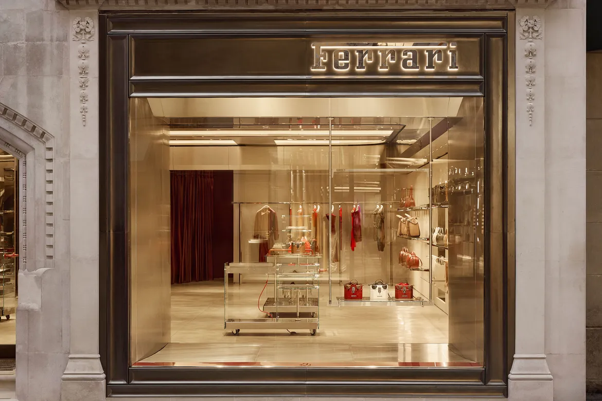

When Ferrari launched its first high-fashion collection in 2021, the ambition went beyond selling clothes. Ferrari was trying to build a luxury business beyond cars, reaching consumers who might never own one.
The company has kept investing in that strategy. It has launched multiple fashion collections, built a dedicated fashion and luxury team in Milan, and expanded its own retail presence. At the same time, Ferrari has cut roughly half of its licensing agreements and closed stores it believed no longer matched the brand’s luxury positioning.
That makes Ferrari an unusually useful test of how far brand equity can travel. Engineering, racing heritage, Italian design, and scarcity helped make Ferrari one of the world’s most recognisable luxury names. In fashion, however, recognition is only the starting point. A Ferrari jacket still has to compete with companies whose reputation was built around clothing.
When a successful test is not enough
McDonald’s learned how expensive the gap between initial appeal and sustained demand could become with the Arch Deluxe.
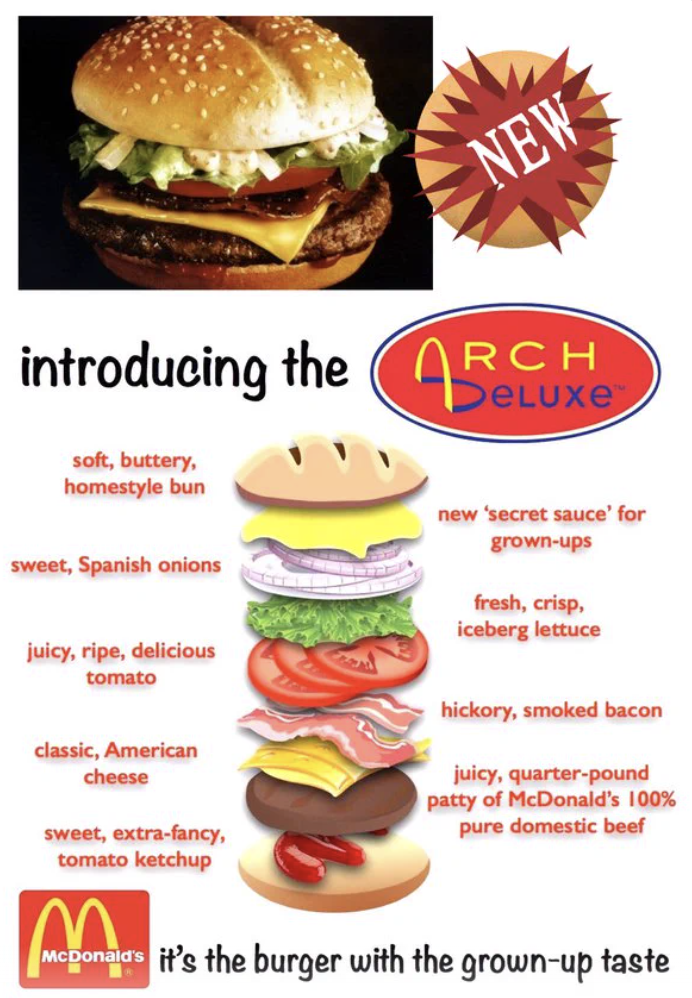
Image credit: McDonalds
Before the national launch, the burger was tested in Canadian markets in 1995. McDonald’s introduced it across the United States the following year and reportedly projected first-year sales of $1 billion. Eater estimated that the advertising campaign behind it cost about $150 million.
The burger remained on some restaurants' menus through the late 1990s before disappearing entirely in 2000. Eater also reported that franchisees struggled with the extra sauce, buns, lettuce, and seasoning required to make it, while McDonald’s president Edward H. Rensi cited market research to defend the product to franchisees.
There is no public record showing exactly what the Canadian research predicted. What happened after launch is clearer. Customers were being asked to pay more for a more sophisticated McDonald’s burger, while restaurants had to absorb additional ingredients and procedures to deliver it.
The Arch Deluxe shows that even a product that seems like a natural fit for a brand can fail to last. It was still just a burger from McDonald’s, but within a few years, it was gone from the menu.
A famous name still has to compete
A Ferrari fan may like the idea of Ferrari clothing because of what the name represents. But someone shopping for a jacket still has to decide whether to buy a Ferrari instead of an established fashion brand.
A 2009 study by Buil, de Chernatony, and Hem, published in the European Journal of Marketing, found that consumers responded more positively when a new product felt like a natural fit with the parent brand. The results varied across Spain, the United Kingdom, and Norway, but the broader pattern was consistent: fit mattered.

Image credit: Ferrari Resort Wear 2026
Ferrari can bring racing heritage, Italian design, and exclusivity into fashion. But the clothes still have to work as clothes. They have to look good, feel good, fit well, and give someone a reason to choose them over brands already known for making clothing.
The reason for buying matters too. A Ferrari sweatshirt bought as a collector’s item is different from one bought for regular wear. One is driven by the brand, while the other has to compete for a place in someone’s wardrobe.
Research has to separate brand appeal from product demand
Research can overstate the opportunity when brand appeal and product demand are measured as if they were the same thing. Existing customers may respond positively to an extension because they already know and value the brand. That response can help establish whether the idea feels credible, but it says much less about what happens when the product has to compete for an actual purchase.
Put the product beside the alternatives people would actually consider, at the price they would actually pay, and the decision becomes more realistic: would they choose it?
Then follow what happens after purchase. Did they use it? Did it perform as expected? Would they buy it again?
Each question answers something different: whether the idea fits the brand, whether the product can win a purchase, and whether the experience is strong enough to bring the customer back.
For a brand entering a new category, those three questions need separate answers. Strong brand equity may get the product considered, but the purchase still depends on how it compares with established competitors.

Some parts of a brand travel better than others
Not every move into a new category asks the brand to do the same amount of work. Research on brand extensions has consistently found that perceived fit matters. A 2023 meta-analysis covering 2,134 effects from studies conducted between 1990 and 2020 found that both the strength of the parent brand and the perceived fit of the extension were positively associated with success.
But fit is broader than simply asking whether a new product “feels right” for the brand.
A recent review of more than 100 studies on brand extensions identified several different kinds of fit. A new product might use similar manufacturing skills, appeal to the same customers, be priced at a similar level, or be used in a similar situation. It might also fit at a more conceptual level because it carries the same ideas and associations as the parent brand.
Fit can come from different places. A new product may draw on the same capabilities as the parent brand, appeal to the same customers, sit at a similar price point, or carry the same associations.
Ferrari clothing does not rely on the same capabilities as Ferrari cars, but it can still draw on Italian design, performance, exclusivity, and status. The commercial question is whether those associations give the clothing an advantage once it is judged against established fashion brands.
Valuing Ferrari cars does not automatically translate into valuing every product that carries the Ferrari name.
Companies can overestimate how much of their brand equity will transfer. A brand may be trusted for one capability but admired for another. It may have a loyal customer base without having credibility in an adjacent category, or a strong identity that travels even when the underlying product expertise does not.
Those are different assets, and they create different opportunities for growth.
The competitor matters as much as the brand
A brand extension can make perfect sense and still struggle if consumers prefer what is already available.
That is why testing whether an idea “fits” the parent brand is only part of the job. The more important commercial question is what happens when consumers have to choose.
For Ferrari, that means putting the clothing against the brands a shopper would realistically consider at the same price. The comparison changes the research. Instead of asking whether Ferrari can make credible clothing, the question becomes whether someone would actually buy the Ferrari piece when Prada, Moncler, Gucci or another established luxury brand is sitting beside it.
The same principle applies in less glamorous categories. A food brand entering supplements, a hotel group launching home fragrance, or a fitness company moving into nutrition may all have a believable reason to expand. But consumers do not make those decisions in isolation. They compare price, quality, familiarity, performance and what they already trust.
A strong brand can help a new product get noticed and considered. Once consumers compare it with familiar alternatives, the product itself has to give them a reason to switch.
Research should reflect that choice as closely as possible. Testing an idea on its own can show whether people respond positively to it. Putting it alongside the products they would realistically consider provides a clearer indication of whether it can compete.
A positive reaction to an idea is useful, but it is not the same as choosing it over something already on the shelf. Research becomes more valuable when it tests the decisions consumers will actually make at launch.

Know what has to hold up before you scale
Before a company commits to a full launch, the evidence needs to answer harder questions. Will consumers choose the product at the intended price? Will they come back? And can the business deliver it repeatedly without eroding the economics of the opportunity?
The Arch Deluxe example shows how those questions can pull in different directions. McDonald’s had a recognisable brand, a tested product, and a large national launch behind it. But franchisees still had to deal with more ingredients, more preparation, and a product that did not remain on the menu.
Ferrari faces a different version of the same problem. The brand can open the door to fashion. What happens after that depends on whether the clothes can stand up in a category with its own expectations, competitors, and buying habits.
This is where market research becomes more valuable than a simple measure of interest. It can test the idea before the business commits too much money, time, and operational effort to it.
For companies moving into a new category, the most useful research is the research that still holds after launch: whether the product can win against established competitors, whether customers return, and whether the business can deliver it profitably.
If your brand is moving into a new category, the research needs to do more than measure interest. Kadence helps brands test whether an extension fits, competes, earns repeat demand, and makes commercial sense before the investment gets too large to unwind.
FAQs
What is brand extension?
Brand extension is when a company uses an established brand name to enter a new product category or launch a new type of product.
Why do brand extensions fail?
Brand extensions can fail when consumers do not see a strong fit with the parent brand, prefer established competitors, or do not find enough value in the new product to buy it repeatedly.
What makes a brand extension successful?
Successful extensions usually combine strong brand equity with a credible fit between the parent brand and the new category. The product also has to compete effectively on price, quality, performance, and relevance.
How can market research help with brand extensions?
Market research can test whether the extension feels credible, how it performs against real competitors, whether consumers will choose it at the intended price, and whether early interest is likely to translate into repeat demand.
What is an example of a failed brand extension?
McDonald’s Arch Deluxe is a well-known example. Despite extensive testing and a major national launch in the 1990s, the burger was eventually removed from the menu after failing to achieve lasting demand.