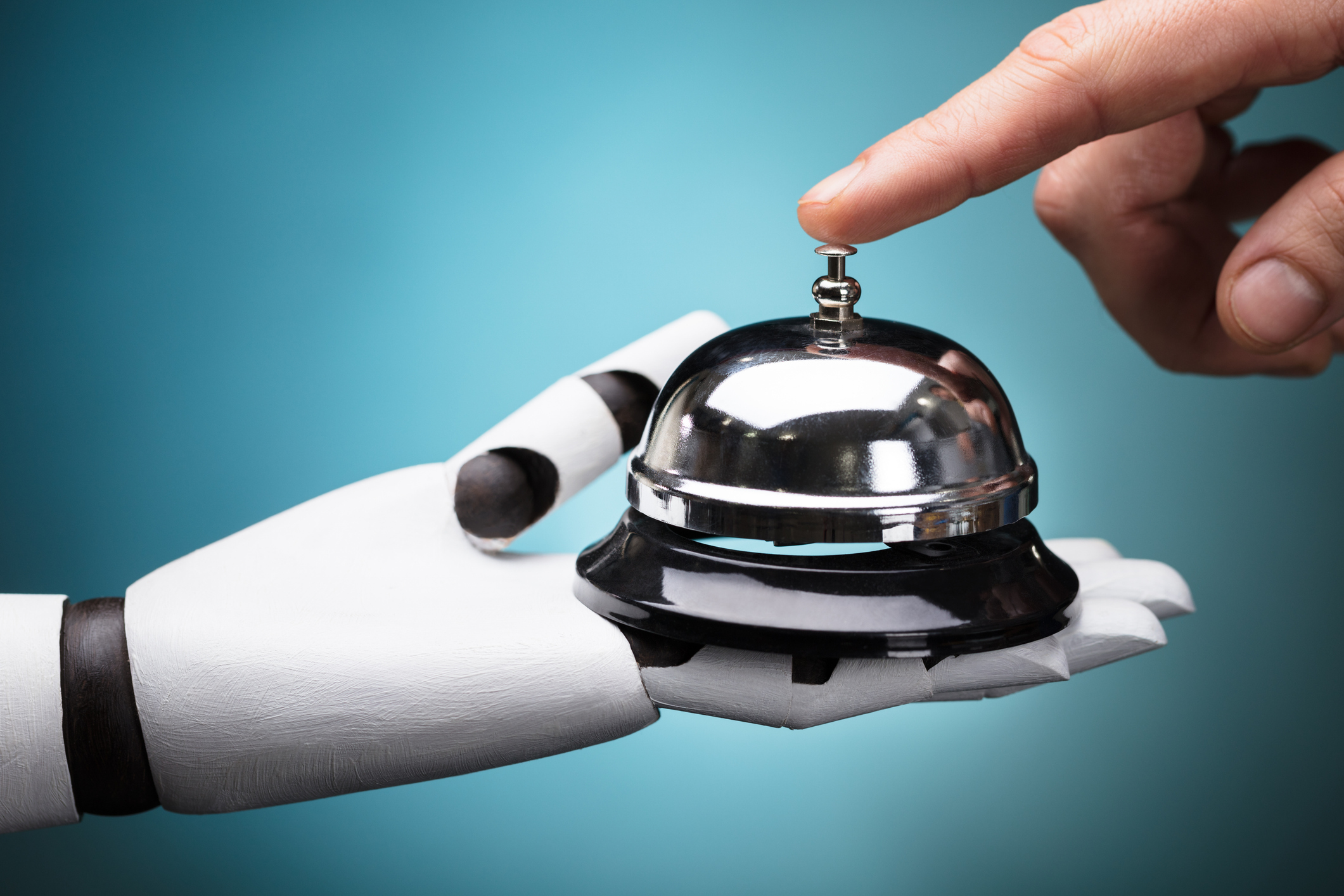

More than 42,000 hospitality robots were sold worldwide in 2024, according to the International Federation of Robotics (IFR). Most were built to guide customers, provide information or allow staff to assist remotely. Humanoid robots are still an emerging part of the market, and it is unclear when they will be widely adopted. The question is not only what the machine will do, but whether its appearance supports the service.
Acceptance belongs to the interaction
A 2025 study in the International Journal of Hospitality Management compared reactions to robot failures in healthcare and food service. In one experiment with 402 participants, failure in healthcare produced more negative attitudes and lower tolerance than the same failure in food service. A second experiment found that human-like robots elicited the harshest responses when they failed in healthcare; reactions to machine-like robots changed less across the two industries.
At a hotel, delivering luggage or answering a question can be judged on speed and accuracy. A booking error requires interpretation and the authority to make things right. At check-in, a robot can handle the routine steps. However, the stakes are higher when the room does not match the booking.
A humanoid body raises expectations
Greater realism may also create resistance before the interaction begins. A hospitality study combining qualitative research and experiments found more negative self-reported and unconscious reactions to highly realistic robots than to designs with fewer human features. Robots with less human-like designs were accepted at almost the same level as employees. The study appeared in the International Journal of Contemporary Hospitality Management in 2023.

Where the business case begins
Hotels introduce robots to handle work that is repetitive, time-sensitive or difficult to cover consistently. Delivering amenities, moving items, answering routine questions and guiding guests can take pressure off employees and keep service available across extended hours. The gain disappears if staff have to supervise every delivery, correct every misunderstanding or step in whenever the request changes.
The financial case also sits across the service chain. A robot may reduce the time spent on a delivery but add work when an employee has to explain the delay, find a missing item or repair the guest relationship. The saving is real only when the whole journey takes less time and produces an experience the customer is willing to accept.
The right comparison is not the robot in isolation. It is the robot against the current service and against simpler automation. If a kiosk or app completes the same task without reducing customer satisfaction, the robot’s mobility or human-like features add cost without adding value.
The type of hotel matters too. Automation fits a limited-service hotel built around low friction and speed. At a premium property, warm human interaction can be part of the experience and expectation.
Where the experience starts to lose value
A robot adds value when it removes waiting or completes a straightforward request without making the guest work harder. It detracts from the experience when the customer needs reassurance, judgment, or authority that the machine lacks. A booking error, a complaint or a request for urgent help moves the interaction into that second category.
A machine that mishandles a complaint or fails to respond to a request for urgent help creates a more serious problem than a stalled delivery. Its technical limit becomes the company’s problem to solve. A human option hidden behind repeated prompts offers little reassurance.
When the robot reaches its limit, it needs to transfer the customer promptly, with the interaction history available to the employee. A robot can free staff from routine work only if enough people remain to handle exceptions. Remove those employees, and the escalation route disappears when it matters most.
A named employee or clearly visible help point makes accountability tangible. Without one, customers can read the machine’s inaction as the company’s indifference.

Research the service, not just the machine
A simple rating or Net Promoter Score (NPS) cannot show whether automation improves the service. A customer can give a positive score after a novelty-driven interaction and still avoid the robot next time, ask an employee to confirm the answer or abandon the process when something goes wrong.
A credible assessment combines qualitative observation with controlled comparisons. Observation shows where customers hesitate and when they look for a person. Simulated encounters can compare the robot with an employee and with a kiosk or app, using the same task, setting and outcome.
The scenarios need to cover more than a successful routine request. An unclear answer tests how the robot handles uncertainty. A problem beyond its authority shows whether the handoff works. Completion, abandonment, requests for help and confidence after an error provide stronger evidence than a general approval score.
The assessment also needs to account for the employees supporting the system. If staff spend their time correcting routes, explaining misunderstood requests or repairing failed handoffs, the robot has moved work rather than removed it. Interviews and observation can identify hidden labour and show whether it affects operating cost or service quality.
Early enthusiasm needs to be separated from lasting value. A pilot should continue beyond the first interaction, showing whether customers keep using the robot, choose another channel or return to an employee when the task becomes less predictable.
Make the decision at the service-moment level
The decision is rarely whether a hotel should use robots. It is where a robot belongs in the journey, what it can take on and where a person must remain visible. That answer depends on the value customers attach to the interaction, the brand promise and the cost of recovering when automation fails.
As brands automate more of the customer experience, market research can show where these changes improve service and where they weaken the brand. Kadence International helps companies test customer-facing automation under realistic conditions.
FAQs
What is the difference between a service robot and a humanoid robot?
A service robot performs tasks for customers in settings such as hotels, stores and hospitals. A humanoid robot is designed with human-like features or behaviour. Not every service robot is humanoid.
Where can hospitality robots add value?
Robots can add value when they handle repetitive, straightforward tasks such as deliveries, directions and routine information. The value depends on whether they complete the task without creating extra work for employees or customers.
Where do hospitality robots risk weakening the customer experience?
The risk increases when a customer needs judgement, reassurance, authority or urgent help. A visible and prompt route to a person becomes part of the service.
Why are simple satisfaction surveys not enough?
A satisfaction score does not show whether customers completed the task independently, trusted the result, used the robot again or needed employee help. Behavioural observation and realistic failure testing provide a fuller picture.
What research should hotels use before introducing service robots?
Hotels can combine qualitative observation, simulated service encounters, comparison with employees and simpler automation, failure testing, employee interviews and repeat-use measurement. Together, these methods show where automation improves the service and where it adds hidden cost or weakens the brand.