
As information moves faster than attention, Japan stands apart for doing something almost countercultural. It slows down, cross-checks, and refuses to accept information at face value. The result is an information ecosystem unlike any other major economy. Consumers enjoy learning, seek depth, and follow the news, yet trust very little without evidence. Hype never lands, influence rarely scales, and new ideas are accepted only after they withstand collective scrutiny.
This behaviour is often mistaken for conservatism, but it is more of a filter grounded in cultural values that prioritise accuracy, accountability, and societal harmony. Japanese people prefer clarity over impulse and verification over volume.
In our latest research, Japanese consumers show intense curiosity and broad engagement with information, yet remain selective about who they believe, what they share, and when they decide. In Japan, trust is earned gradually and consistently.
Understanding this filter is essential for any brand aiming to enter, grow, or build credibility in Japan. In this market, visibility does not guarantee influence. Trust determines traction from media habits to product adoption to how ideas move from one person to another.

The Information Mindset That Shapes Japan
From an early age, Japanese children learn more than academic subjects. The education system places a strong focus on shared responsibility, cooperation and respect for social rules. Students clean their classrooms, serve lunches to one another and take part in group tasks that reinforce discipline, teamwork and accountability. Moral education is also woven into the curriculum, encouraging students to consider the impact of their actions and to value accuracy, harmony and thoughtful judgement. These practices shape a lifelong approach to decision-making in which care, verification and collective awareness play central roles.
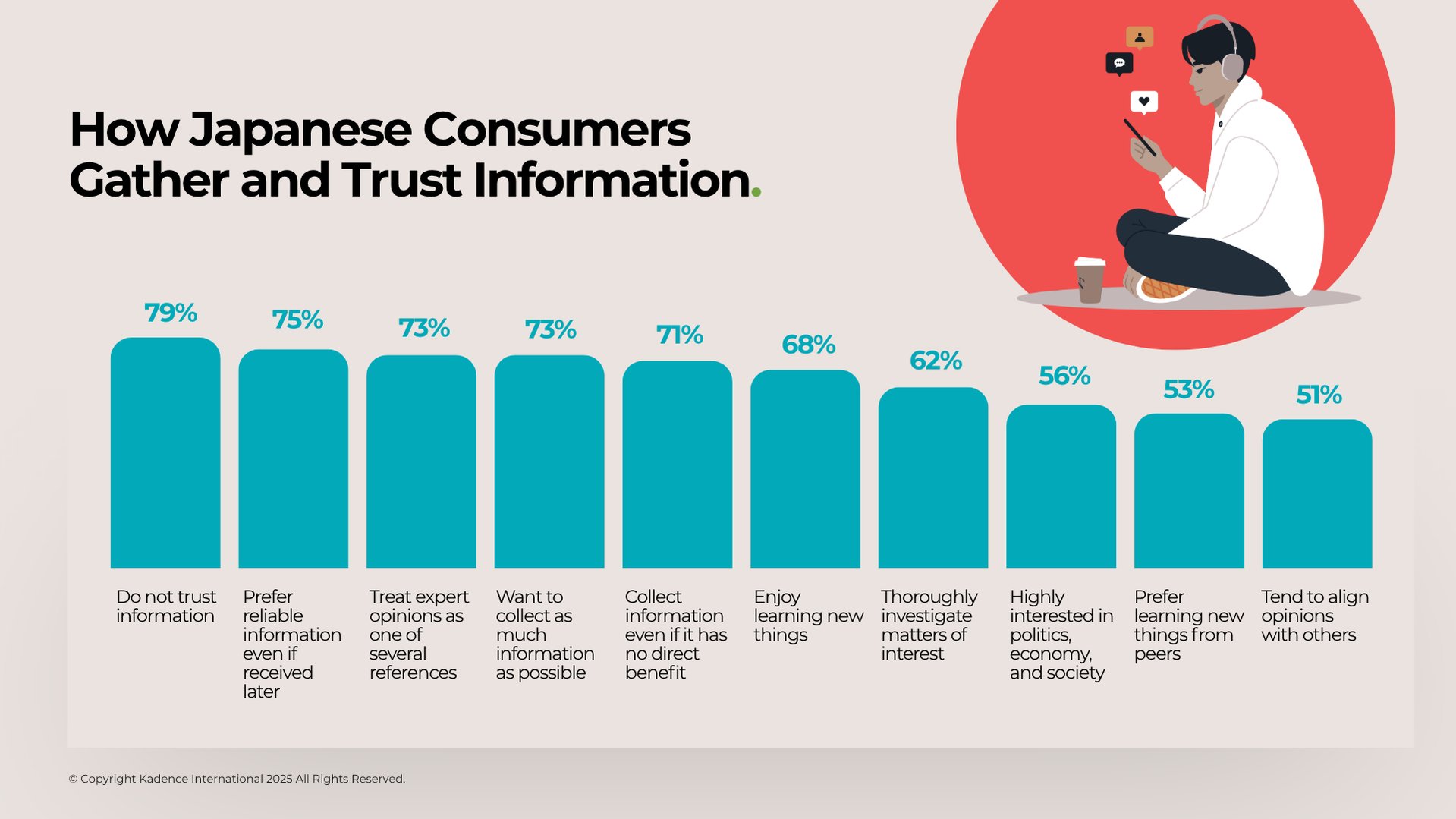
This foundation helps explain why Japanese consumers exhibit such a distinctive information mindset. They are often described as cautious, yet the evidence shows something more deliberate. They are curious and motivated to understand the world, but a disciplined form of scepticism balances that curiosity. They want to explore, learn and dive deeper into topics, but they check before they commit. Trust is established through consistency and evidence.
Expert opinions are treated respectfully but not followed blindly. Consumers regard them as one input among many. People compare information, look for alignment across sources and place every claim within a broader context, even when the source appears credible. This pattern spans generations and is rooted in national norms that prize precision, accountability and balanced judgement.
For brands, this mindset sets clear expectations. Information must be consistent across touchpoints, and claims must be supported by verifiable evidence. Messages that rely on volume or exaggeration are discounted, while those that demonstrate clarity and transparency are far more effective.
This combination of high curiosity, high discipline and high scrutiny defines how Japan navigates the modern information landscape. Few markets approach information with such consistency or depth.
Who Does Japan Trust Most
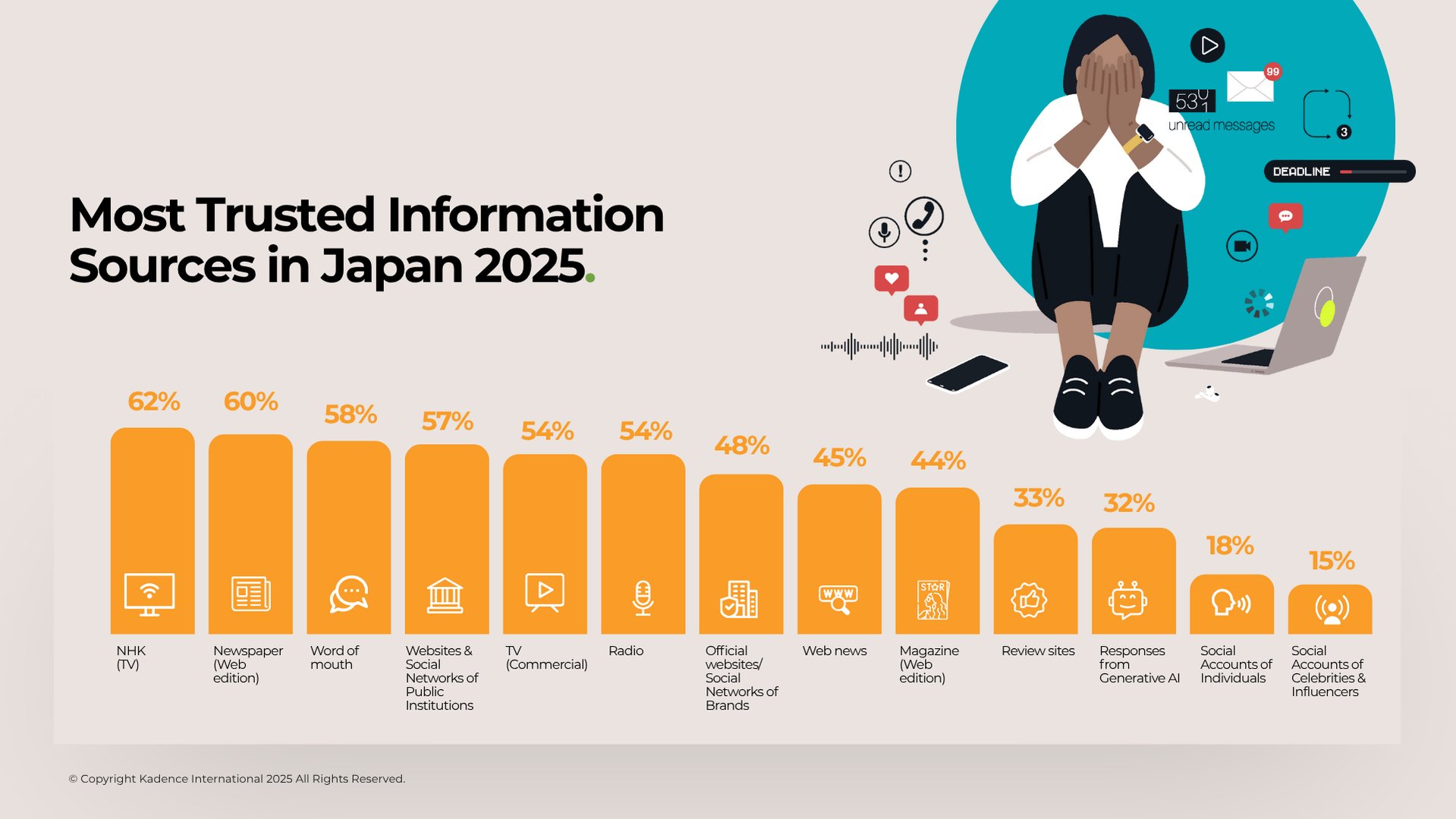
Trust in Japan follows a pattern that diverges from global trends. Japan still trusts traditional institutions more than digital sources, unlike other markets that prefer digital.
Television retains significant authority, particularly Nippon Hōsō Kyōkai (NHK), the national public broadcaster known for neutrality, editorial rigour, and decades of public service. Newspapers, especially their online editions, hold a similar status due to their reputation for accuracy and verification.
Government websites and official channels form the next tier. They are valued not for speed but for reliability. Company websites also carry weight, especially when brands provide transparent product information.
Influencers and everyday social media users sit at the bottom of the trust hierarchy. Their reach may be significant, but their perceived reliability is limited in a culture that prizes evidence over charisma. Generative AI is viewed with interest but approached cautiously. It is helpful but not authoritative.
Brands that work with credible channels and provide verifiable information earn disproportionate impact. A message delivered through a respected institution will resonate more strongly than one pushed by a popular influencer. In a noisy digital landscape, Japanese consumers seek the quiet, the accountable, and the proven.
How Japan Adopts New Products
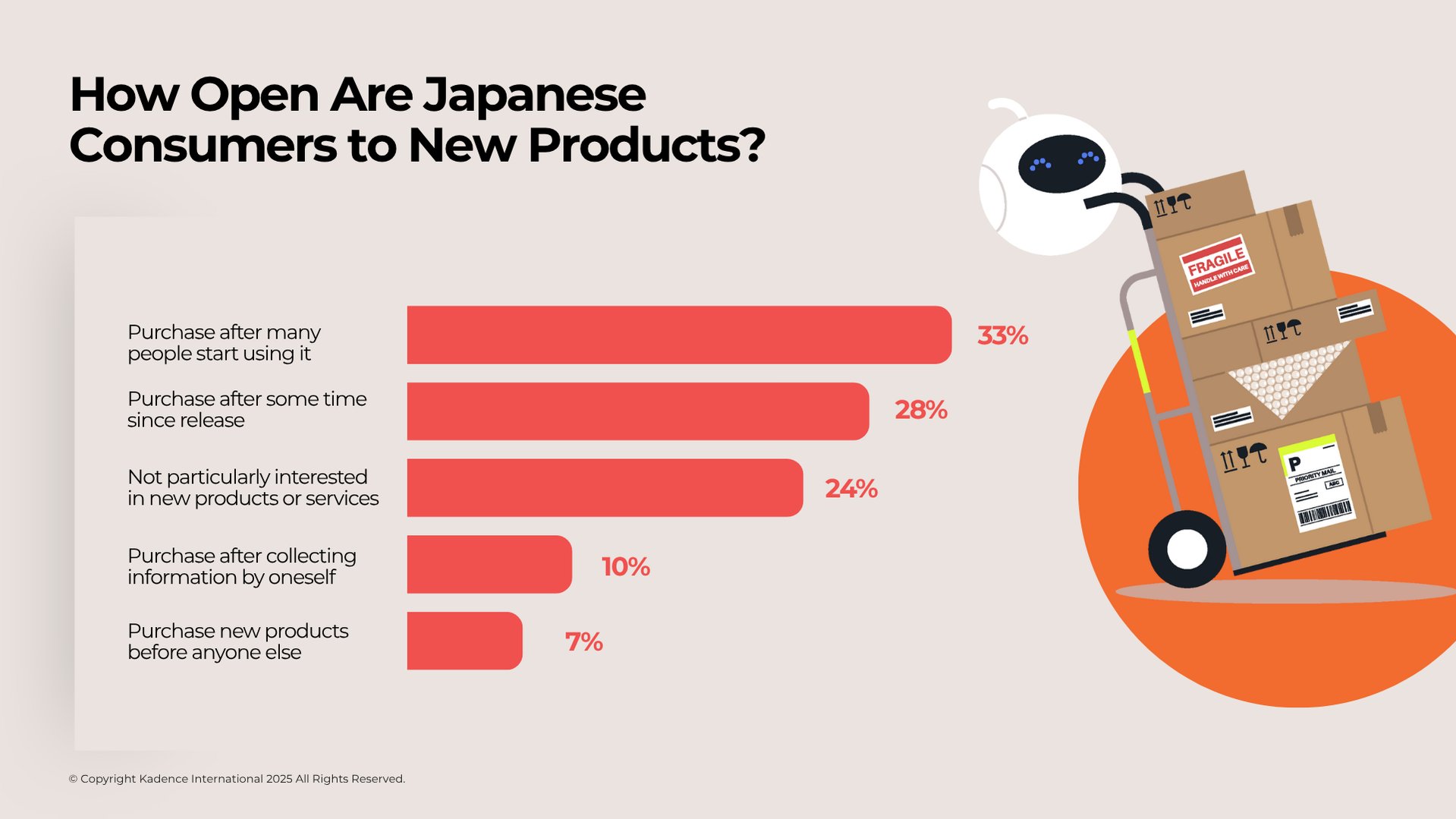
Japan’s reputation for slow adoption is often misinterpreted. The behaviour is intentional. The majority prefer to wait until a product has demonstrated reliability, gained real user approval, and shown it can integrate meaningfully into daily life.
Novelty alone carries little weight. Features matter only when backed by demonstrated performance. Consumers accelerate adoption once a product earns visible acceptance from others. Social proof in Japan is collective, measured, and credible.
Launches in Japan benefit more from steady credibility-building than from theatrics. Trial programmes, performance transparency, and visible user satisfaction drive adoption far more effectively than bold advertising. Japanese consumers do not resist innovation; instead, they reward proven value.
How Influence Moves in Japan
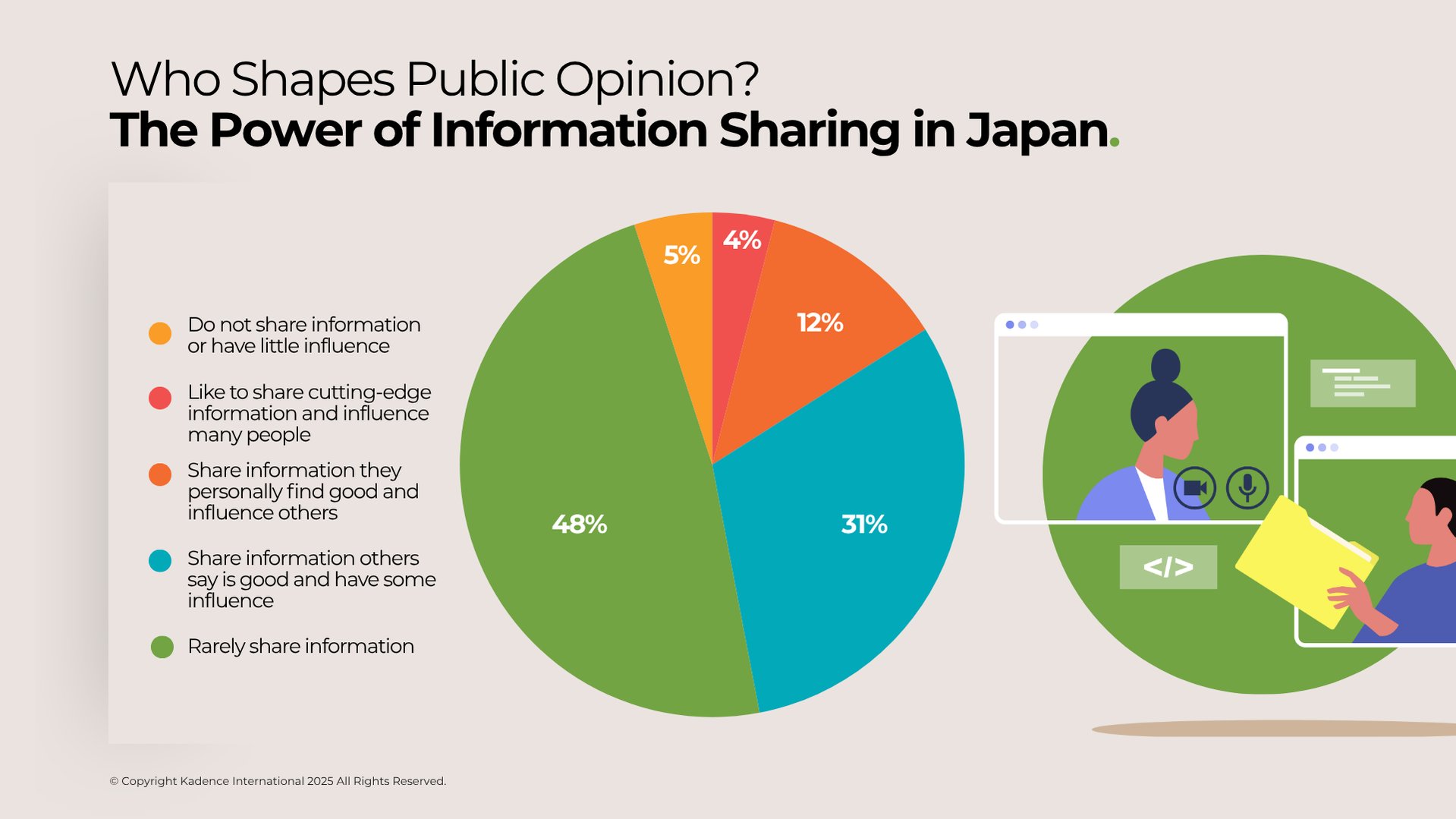
In many markets, influence is loud. In Japan, influence is selective and intentional, where only a small minority see themselves as trendsetters.
Only a small minority sees themselves as trendsetters. These individuals are not the hyper-visible digital personalities found elsewhere. They share information when it is genuinely helpful, not to signal status. A larger group shares selectively, recommending only what aligns with their own judgment.
Most Japanese people prefer to observe rather than broadcast. Information sharing is not viewed as performance but as responsibility. The social weight of recommending a product or idea is taken very seriously. This leads to a measured influence ecosystem where signals emerge slowly but carry more meaning.
When people openly discuss a product, it reflects considered endorsement rather than fleeting excitement. Influence cannot be purchased through volume; it must be earned through clarity, honesty, and real value.
Japan rewards truth over noise, substance over spectacle, and authenticity over amplification.
Weekend Behaviour and Consumer Attention
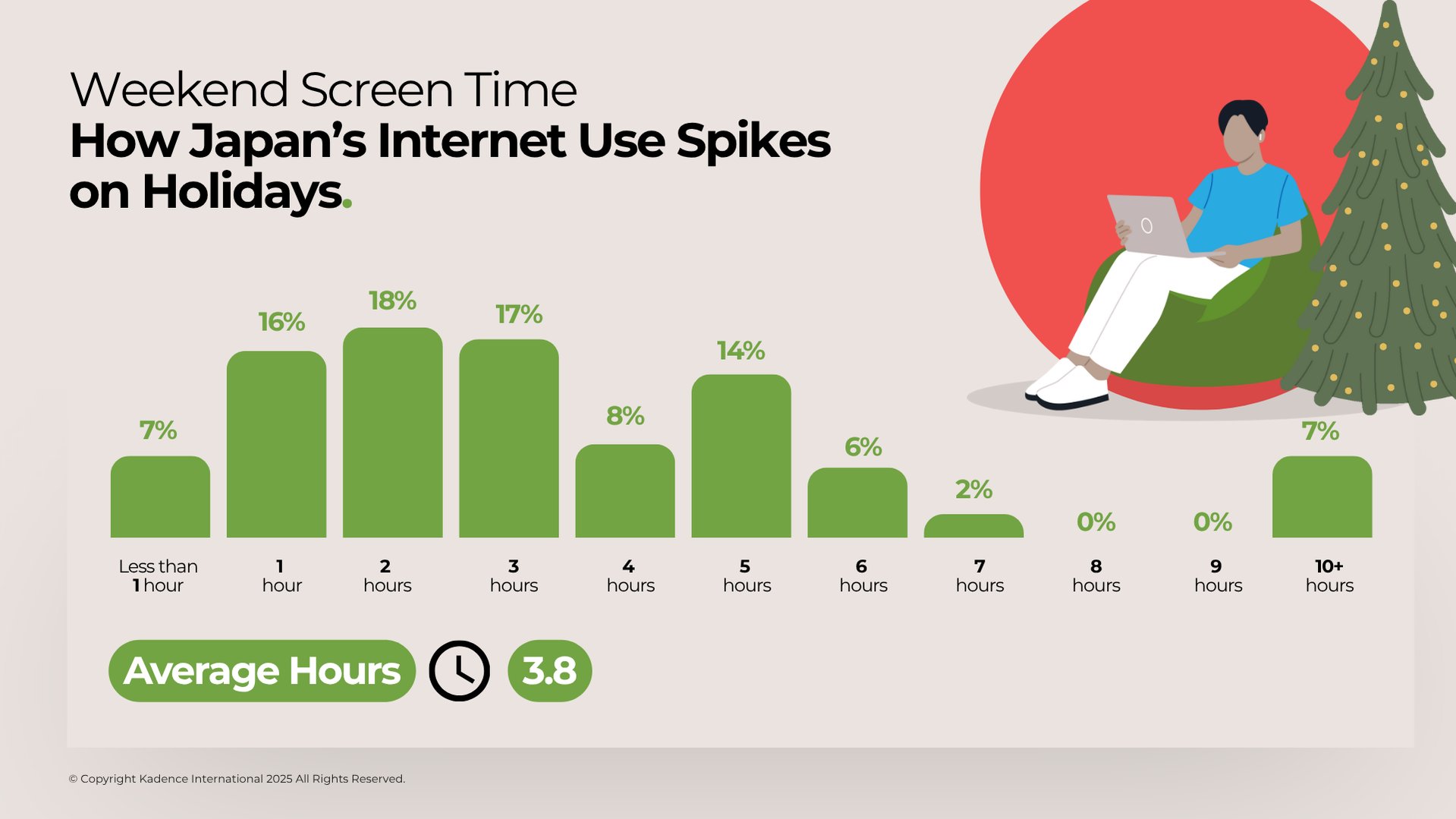
Japan’s digital patterns shift at the end of the week. Weekdays are structured and purposeful, with online behaviour tied to tasks, information retrieval, and timely updates. The weekend opens a different psychological space where people have time to explore, compare, and revisit content they may have rushed through during the week.
Younger Japanese audiences drive the most significant shift, yet consumers across age groups show greater openness and attention on the weekend. This creates a second window of opportunity for brands to reach people when they are more reflective and receptive.
Content that requires deeper engagement performs better in this context. Longer-form explanations, thoughtful product stories, and evidence-led messages resonate more strongly when routines ease, and attention expands.
Brands that align communication with this weekend window gain advantages in both visibility and impact.
What These Behaviours Mean for Brands
Japan’s information environment operates on a rule that many global brands underestimate. Trust enables engagement.
Across every behaviour in the study, from information gathering to product adoption to influence, the logic is consistent. Consumers act only when something feels credible, proven, and socially coherent.
This creates clear strategic implications.
- Lead with credibility. Bold claims and high-volume messaging will not shift behaviour unless supported by evidence. Brands that show their workings earn traction.
- Choose trusted channels. Public broadcasters, newspapers, and official platforms continue to anchor authority. Partnering with these ecosystems delivers a stronger impact than relying on influencer reach.
- Build adoption through reassurance. New products succeed when they demonstrate reliability in everyday life. Trial programmes and long-term reviews outperform hype.
- Earn influence. Japanese consumers do not share information lightly. Meaningful advocacy grows slowly, and when it appears, it signals real conviction.
- Use weekend attention strategically. Digital behaviour at the end of the week creates a second moment of receptivity that brands underutilise.

The Future Belongs to Brands That Earn Their Place
Japan is entering a period where the sheer availability of information no longer guarantees impact. Consumers are becoming more selective in how they interpret the world. The next decade will favour brands that can withstand scrutiny, maintain coherence, and demonstrate value openly.
As automation expands, misinformation accelerates, and platforms fragment, Japanese consumers will respond by strengthening their own filters. Verification will become instinctive, and consistency will matter more than persuasion. Brands that cannot demonstrate substance will quickly lose relevance, regardless of their global stature.
The brands that succeed will be those that read the signal clearly. Credibility must be visible -behaviour must align with intent, and value must hold up under comparison.
Japan is not resisting the future; it is defining its terms. Brands that treat trust as an operational discipline rather than a marketing narrative will lead.
For brands seeking a deeper and more reliable understanding of Japan’s consumers, Kadence offers research expertise that turns assumptions into certainty. Connect with our team to begin.