
Once dismissed as digital latecomers, Generation X is now shaping the next phase of online influence. This "middle-child" generation, situated between Boomers and Millennials, bridges the gap between analogue storytelling and algorithmic feeds.
According to Sprout Social’s Pulse Survey, 92 percent of Gen Xers use social media daily, spending about 90 minutes scrolling. What matters isn’t how often they log in, but how they use that time. Once passive observers, they now treat social platforms as tools for discovery, research, and conversation.
Sprout’s data shows that half of Gen X respondents say social media has no impact on their financial decisions, yet 40 percent use Facebook to find and purchase products. Their behaviour points to a more intentional style of engagement, where social platforms support evaluation rather than impulse. It marks a shift from performance marketing to participation marketing, where credibility—not visibility—defines influence.
How Gen X Redefined Social Media Influence
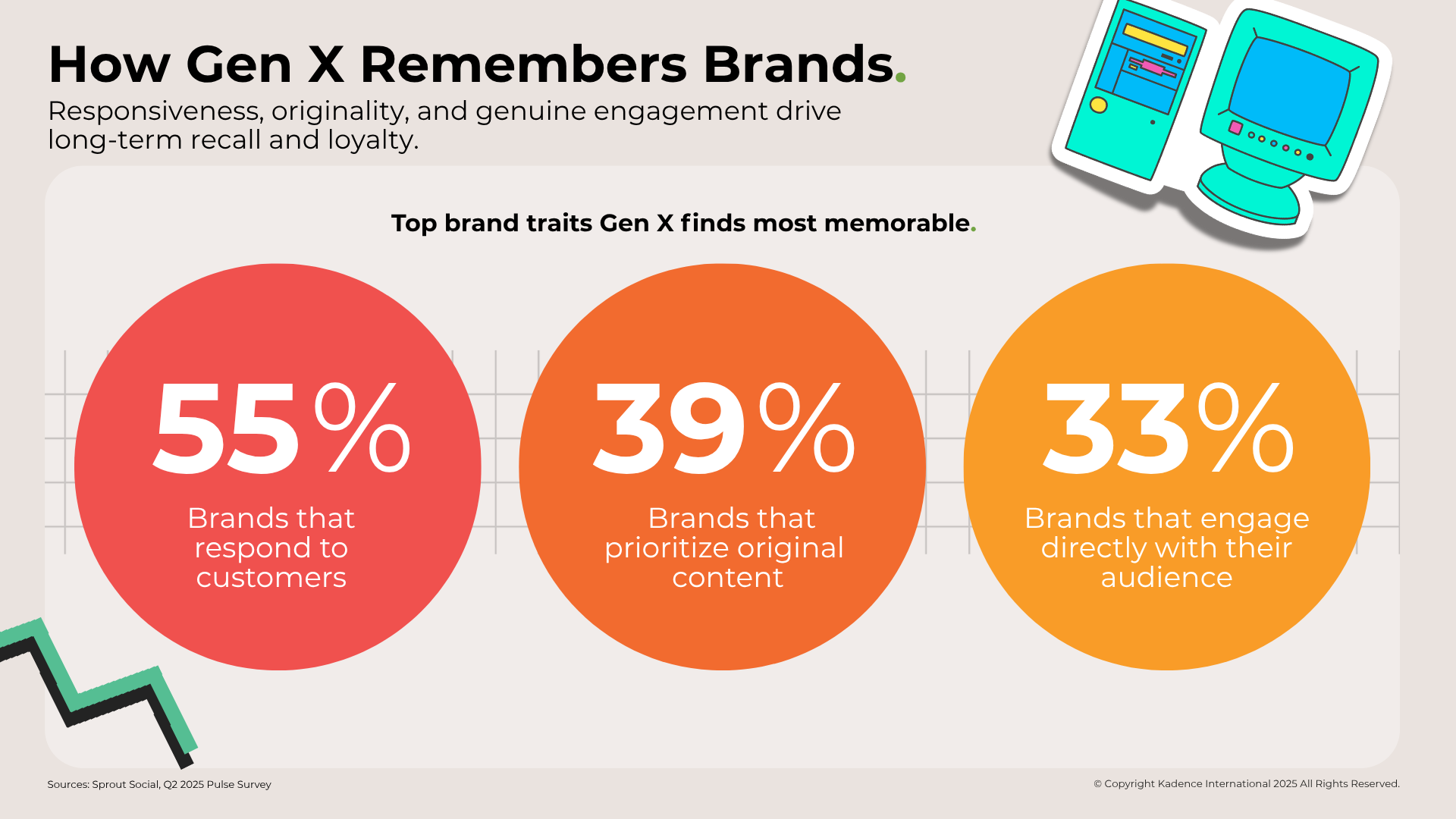
Born between analogue and digital, Gen X is rewriting engagement by trading trends for trust.
For years, they watched peers post and brands broadcast; now they’re part of the dialogue. Sprout Social finds that they recall brands that respond directly or post original content. They reward conversation, not exposure.
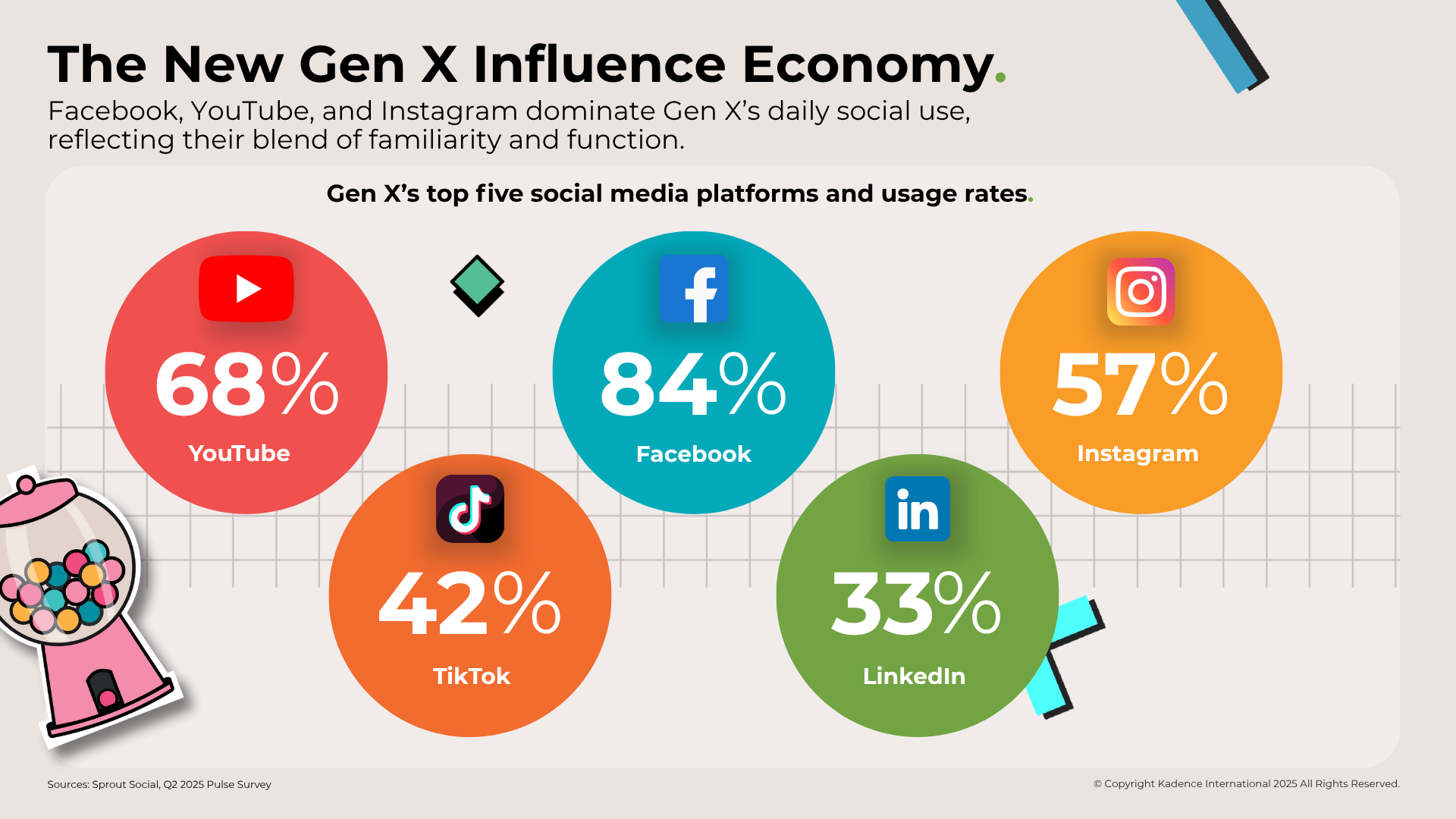
Three-quarters of Gen Xers use YouTube for tutorials, nostalgic clips, and product reviews, engagement driven by utility rather than algorithm. This shift from browsing to benchmarking marks the emergence of a new influence economy, one that values credibility over virality.
For marketers, it underscores a generational preference for clarity, proof, and participation over polish. Don’t dazzle Gen X; inform them.
This evolution is partly a result of generational math and a matter of circumstance. Many Gen Xers entered adulthood alongside the rise of the internet and witnessed the first wave of digital advertising fatigue. They developed an instinctive filter for exaggeration. That scepticism, once seen as cynicism, now gives them an edge: they can separate information from noise faster than any other cohort.
Gen X and the Power of Online Communities
If Millennials made social media a stage, Gen X turned it into a forum. Seventy-two percent use Facebook for customer care and recommendations, building a culture of credibility through conversation.
From hobby boards to lifestyle groups, Gen X communities trade advice, debate purchases, and crowdsource solutions. AMIC’s regional study found 30 percent of Gen X use social platforms to research products and 24 percent actively participate in brand content.
Outdoor brand REI captures this ethos: its Facebook groups invite peer discussion on sustainability and equipment care, with the company listening more than lecturing. For Gen X, relevance is measured in responsiveness, not reach.
While Facebook remains Gen X’s primary social hub, their forum habits are diversifying. On Reddit, where users aged 30 to 49 now make up roughly 31 percent of the US audience, Gen X are joining topic-based subreddits to share product advice, troubleshoot purchases, and trade expertise, mirroring the same pragmatic, research-driven behaviour seen across their other digital communities.
Community behaviour also varies by region. In the US and UK, Gen Xers favour closed Facebook groups and local forums where members exchange service reviews and DIY tips. In Southeast Asia, they engage through LINE OpenChat and Facebook Marketplace circles, which are built around family-run businesses and a resale culture. Across markets, the same principle holds: authenticity is a form of social capital.
Why Credibility Shapes Gen X Consumer Decisions
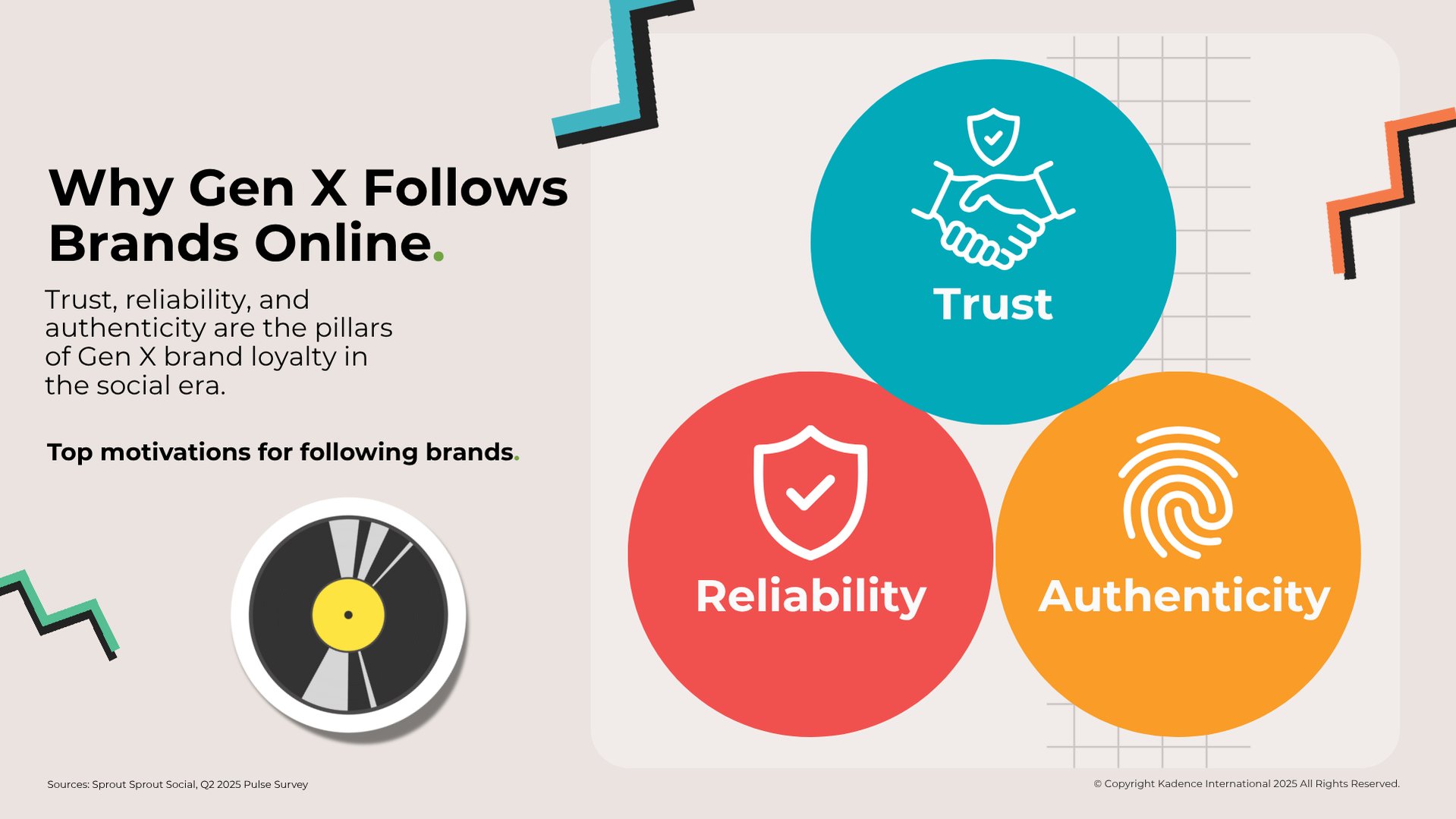
If authenticity is their language, reviews are their currency.
A BrightLocal study reports that 69 percent of consumers trust online reviews as much as personal recommendations, a trend led by Gen X.
They read negative reviews first, cross-reference platforms, and expect accountability. This scrutiny has turned transparency into a performance metric. Amazon and Best Buy perfected it through robust review ecosystems; smaller brands now follow suit by embedding verified testimonials and video reviews across owned channels.
For Gen X, responsiveness to feedback is a key indicator of integrity. Trust has become transactional — and the most powerful form of influence is one that is earned, not advertised.
This trust behaviour reflects their financial position. Many Gen Xers are in their highest-earning decade, but also support both ageing parents and adult children. With a limited tolerance for risk, they conduct thorough research before making a purchase. Reviews, warranties, and customer service records carry more weight than discounts or viral endorsements.
Their purchasing logic has become a blueprint for responsible consumption, one that younger generations are increasingly emulating.

Influencer Marketing That Connects with Gen X
Gen X doesn’t idolise influencers; they audit them. Sprout Social finds that 56 percent of Gen Xers are more likely to buy from brands partnered with trusted creators, provided the collaboration feels genuine.
Samsung’s “Join the Flip Side” campaign illustrated this shift. By showcasing Gen X professionals using foldable phones for both work and family life, it prioritised functionality over flash.
In Thailand, IKEA’s “Come Home to the Table” ad, a quiet dinner scene between generations, achieved virality through relatability rather than spectacle.

Image Credit: YouTube
Across markets, Gen X responds when influencers act as peers, not idols. For brands, credibility now outperforms charisma.
A similar trend surfaced in Japan, where micro-influencers in their forties drive engagement for lifestyle and finance content. Their appeal lies in lived experience, topics such as mortgage talk, parenting balance, and health management, which resonate more with Gen X realities than aspirational aesthetics.
The implication is that the age of celebrity advocacy is fading. Expertise, empathy, and everyday relatability now define digital influence.
Authenticity as the New Brand Standard
Gen X’s discernment creates both opportunity and pressure. They prize humour and candour but reject gimmicks. In Sprout Social’s survey, 48 percent defined “bold” brands as honest, 40 percent as inspiring, and 36 percent as humorous.
Liquid Death’s “Pit Diaper” partnership with Depend struck the right tone — self-aware, ironic, and unafraid of ageing — a form of authenticity that resonated with Gen X. Patagonia’s activist-driven storytelling does the same, showcasing real environmental advocates instead of celebrity spokespeople.
Having seen every marketing reinvention since cable TV, Gen X can spot inconsistency instantly. They reward coherence: when a brand’s values align with its voice, authenticity becomes an advantage.
This consistency imperative will soon define brand governance. As Gen X rises to senior leadership roles, their expectations for corporate transparency are reshaping internal culture. ESG reports, employee advocacy, and executive visibility on LinkedIn are becoming key indicators of trust, rather than mere PR exercises.
Brands that fail to align their internal practices with their external promises risk losing both Gen X customers and employees.
How Gen X Engages in a Noisy Digital World
Gen X doesn’t crave more content; they crave context. They prefer platforms that help them make decisions, not distract them.
- YouTube: tutorials, reviews, and expert explainers
- Instagram: story-driven authenticity
- Facebook: customer service and communities
This mature digital behaviour redefines engagement as function over fashion. Brands that consistently appear and offer practical value build durable relationships. Reliability, not repetition, drives recall.
The behavioural patterns shaping this generation’s digital life converge into one clear mandate: utility equals influence. When brands make themselves useful through tips, problem-solving, or clarity, they earn time, the most valuable currency online.
How to Market to Gen X
Gen X challenges the speed-obsessed marketing playbook. They are deliberate, data-driven, and loyal once trust is earned. Reaching them requires partnership, not persuasion.
Lead with information.
Educational storytelling — tutorials, explainers, behind-the-scenes content — builds authority.
Enable peer communities.
Conversation beats campaigns. Forums, loyalty spaces, and feedback loops matter more than ad frequency.
Prove reliability.
Evidence, reviews, and transparent pricing trump slogans.
Redefine influencers.
Collaborate with professionals and peers whose expertise feels lived, not staged.
Balance wit with sincerity.
Gen X loves humour grounded in truth, not trend.
Prioritise consistency.
Steady presence signals competence — the foundation of trust.
Across various categories, from automotive to wellness, these principles remain consistent. Carmakers like Volvo and Subaru have leaned into safety and longevity messaging that directly mirrors the priorities of Gen X. In financial services, Monzo UK and Chime US succeed with transparency-driven campaigns that demystify fees rather than oversell benefits.
Collectively, these traits rewrite the rules: For Gen X, influence rests on credibility, consistency, and community. They’re not amplifiers of trends. They’re architects of digital trust.

The Lasting Influence of Generation X
Gen X’s digital habits ripple across generations. They mentor younger peers, model online discernment, and set expectations for brand integrity. Still in their peak earning years, they wield vast spending power across home improvement, wellness, and tech sectors.
Their behavioural weight extends beyond purchasing. Many Gen X parents act as gatekeepers for family digital decisions, including subscriptions, devices, and privacy settings, quietly steering their household ecosystems. As a result, their standards for security, transparency, and utility are influencing Gen Z’s idea of what a “good brand” looks like.
In a culture obsessed with immediacy, Gen X reminds marketers that trust takes time. Their influence is quiet but decisive, an anchor of maturity in a marketplace of noise.
The ultimate lesson is philosophical as much as commercial: Gen X doesn’t want to be convinced; they want to be understood.
They measure credibility not by volume but by consistency. In filtering trends instead of following them, Gen X has become the generation defining what meaningful engagement will look like for the decade ahead — for brands, platforms, and the consumers who learn from them.