[Report] Riding the Next Growth Engine
How two-wheelers are reshaping mobility, demand, and value across global markets
The next wave of two-wheeler growth will not be decided by the motorcycle or scooter alone. It will be shaped by everything surrounding the ride: how vehicles are used, how riders earn, how they charge and service them, and how platforms, infrastructure, and city systems influence everyday mobility.
Across Asia, motorcycles and scooters already function as essential everyday infrastructure, supporting commuting, delivery, shopping, and income generation. In Western markets, congestion, parking pressure, delivery demand, and lightweight electric models are beginning to give two-wheel mobility a more practical role too.
This shift is changing what riders value and where brands can compete. Reliability, running costs, servicing, financing, charging access, and ownership support become far more important when a vehicle is used every day — particularly when time off the road means lost income. The category is moving beyond product competition towards competition around the entire use case.
Download the report to explore three forces reshaping the category: the rise of the utility ride, why EV adoption will be decided by access rather than product alone, and how platforms and wider mobility ecosystems are changing who controls the ride.
Download now
What's Inside the Report
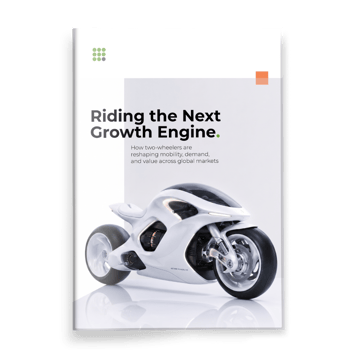
Riding the Next Growth Engine explores three shifts changing how two-wheelers are used, valued and commercialised — and where the next opportunities for brands are emerging.
1. The Utility Ride
Two-wheelers are becoming part of everyday infrastructure. As motorcycles and scooters move deeper into commuting, delivery, errands and income generation, riders increasingly prioritise reliability, comfort, low running costs, service access and minimal downtime.
2. EV Adoption Will Be Decided by Access, Not Product
The EV battle will not be won on vehicle specifications alone. Charging availability, battery access, infrastructure, affordability and the ability to keep riders moving will play a decisive role in whether electric two-wheelers become genuinely practical at scale.
3. The Ride Is No Longer Independent
Platforms, apps, fleets, payments, insurance and city systems are becoming part of the mobility experience itself. As more value moves beyond the vehicle, brands need to understand who controls the rider relationship — and where new opportunities for revenue, loyalty and differentiation are emerging.