

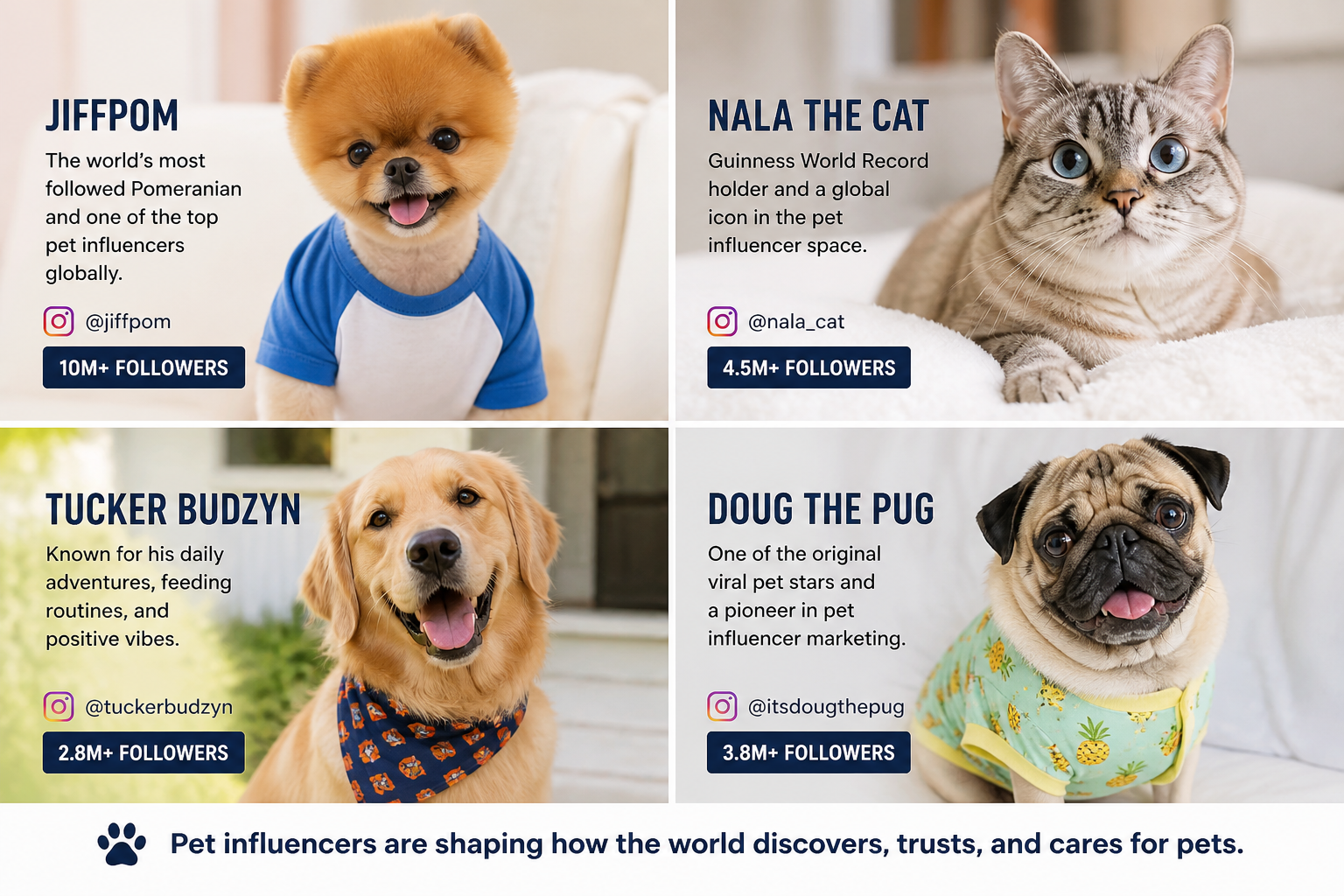
Our four-legged friends are increasingly present on social media, with some building followings that rival those of mainstream creators. Pets have become “petfluencers,” blending everyday content with product endorsements. Accounts featuring dogs and cats dominate this space, with everyday moments, from feeding to play, shared at scale.
Nearly two-thirds of pet owners now follow at least one pet influencer on social media, underlining the scale of this reach. This trend is extending into animal health, with supplements and specialised diets increasingly featured in standard pet care practices.
A study published in the Journal of Advertising Research found that pet-led endorsements outperform human influencers in controlled tests, particularly for messages linked to immediate enjoyment. At the same time, declining perceived trust in influencer content, especially paid promotions, is creating space for formats that feel more authentic.
Globally, the pet care market has grown into a multi-hundred-billion-dollar industry. In the United States alone, the American Pet Products Association estimates total pet industry spending at over $140 billion annually, reflecting how central pets have become to household spending.
Buying decisions are increasingly shaped before owners actively evaluate products or consult veterinary guidance. What appears in feeds establishes expectations around animal healthcare, influencing which animal health products feel necessary, familiar, and worth adopting.
This shift is beginning to reshape how ownership itself is understood. What appears in feeds becomes a reference point for what a well-cared-for pet looks like, how ongoing care is carried out, and which products are considered essential. These expectations influence spending patterns, often before a brand has any measurable signal of interest.
Animal health buying decisions are formed before active consideration
In animal health, buying decisions are no longer triggered at the point of need. Products linked to digestion, immunity, joint care, and hygiene are introduced through daily routines, shaping familiarity well before evaluation begins. By the time owners compare options or seek advice, preferences are already partially formed through repeated exposure. This shifts decision-making from a reactive process to one shaped by ongoing visibility.
Pet care product discovery increasingly begins in the feed, where what people see comes before intent. Around four in ten Gen Z consumers discover new products through influencers, with over 60% following creators specifically for product discovery, according to industry research. With a majority also reporting purchases influenced by creators, the gap between exposure and action continues to narrow. Engagement rates reflect this shift, with pet influencers averaging around 5%, outperforming typical influencer benchmarks. Pet content also operates differently from traditional advertising, often feeling more like participation than promotion, which reinforces trust and makes product use appear more natural.
Products in social content are rarely advertised directly; instead, they are integrated into ongoing pet care. Over time, this repeated exposure plays a direct role in shaping animal health buying decisions, often before products are actively considered.
This model is especially evident in the United States, where subscription and direct-to-consumer brands have leaned into it fully. Unboxing formats, particularly on YouTube and short-form video, have become a consistent entry point. Products are not explained; they are experienced in real time, often through recurring formats that make products feel familiar.
This extends beyond traditional pets. Lizard the Buddy, with more than one million YouTube subscribers, shows how care practices—from terrarium setup to feeding—are introduced through content rather than direct promotion. While brand partnerships in this category are more limited and less visible, the same pattern holds: audiences learn how ownership works by watching it in practice.
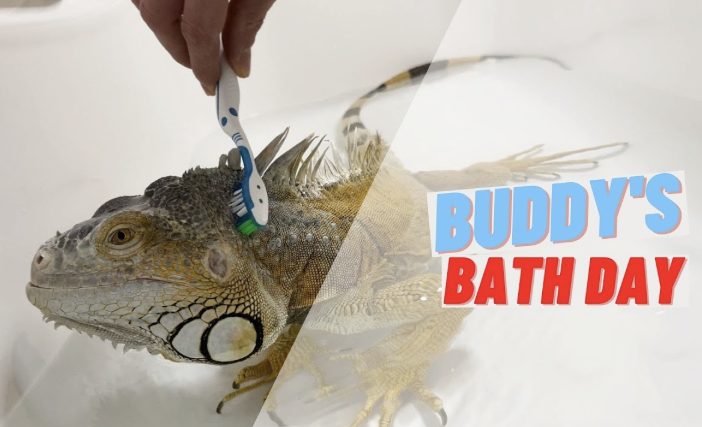
Image Credit: YouTube
In China, discovery moves faster due to the integration of content and commerce. Platforms such as Douyin shorten the distance from discovery to purchase. Social commerce now accounts for more than one-third of total e-commerce in China, making it one of the most developed content-to-commerce ecosystems globally. Products seen in use can be purchased immediately, often within the same interface, allowing design-led and premium animal health brands to scale quickly.
A similar pattern is emerging across Southeast Asia and India, where content is increasingly central to product discovery. Cature Indonesia, a premium pet care brand focused on natural litter and hygiene products, is gaining traction through short-form video and creator-led content, introducing products through regular use rather than direct promotion. In India, newer direct-to-consumer brands are following a similar path, using social platforms to build familiarity before scaling through broader distribution.
Across markets, products for animal health and pet care are often chosen based on familiarity rather than comparison. This shift has significant implications for animal health marketing, particularly as pet influencer marketing becomes a primary driver of product discovery.

What’s seen on social media is shaping breed demand and ownership trends
The influence of pet content extends beyond products to the type of pets people choose to bring into their homes. Registration data shows demand is shifting, with online exposure reinforcing existing trends in breed popularity.
In the US, the French Bulldog recently became the most popular breed, overtaking the Labrador Retriever after decades of dominance. The shift reflects broader changes in urban living and lifestyle preferences, but sustained exposure across social media has amplified the appeal of smaller breeds that feature prominently in digital content.
In the UK, similar patterns have emerged, with rising demand for compact and visually distinctive breeds. Some ‘trending’ breeds have even drawn scrutiny from welfare organisations and industry bodies concerned about the gap between their popularity and the realities of long-term animal health. Groups such as the RSPCA and the British Veterinary Association have raised concerns about the continued promotion of brachycephalic, or flat-faced, breeds in media and advertising, given well-documented health issues, including breathing difficulties.
In China, breed choice is increasingly tied to lifestyle positioning. Pets are shown within curated urban environments, where ownership reflects not just companionship but a broader aesthetic and way of life.
These shifts carry long-term commercial implications. Breed selection influences ongoing spending, including diet and grooming, healthcare, and accessories. The pets that gain exposure today are often those that shape where future demand will concentrate.
Premium care is becoming the expected baseline
The influence of pet content extends directly into animal health, reshaping how buying decisions are made and how care is defined. Practices that were once considered discretionary are now widely observed and increasingly treated as standard, influencing which products are considered necessary before owners actively evaluate alternatives.
In the US, this is visible in sustained growth across supplements, grooming, and premium nutrition, with increasing focus on preventive care and quality of life. These products are consistently present in content, where feeding and care are shown in detail rather than described.
In Japan, care is more structured, with a strong emphasis on hygiene, grooming, and portion control. In contrast, China shows how quickly these expectations can scale, with premium products embedded into highly curated care practices.
This model works as long as the routine can be sustained. When cost, time, or complexity exceed what owners can maintain, non-essential products become harder to justify.
Case study: Ollie and Pidan
The shift toward higher expectations in animal health is already being captured by brands that build presence through consistent use.
US-based Ollie has helped normalise fresh feeding by incorporating it into day-to-day life. Through partnerships with pet influencers, the brand is embedded in consistent feeding habits, with meals portioned and served in real time. This has helped make fresh food feel practical rather than premium.
Without this repeated presence in daily feeding, fresh food remains a considered purchase rather than a default, limiting both trial and retention. This repeated exposure plays a direct role in shaping animal health buying decisions, making products feel established before they are actively considered.
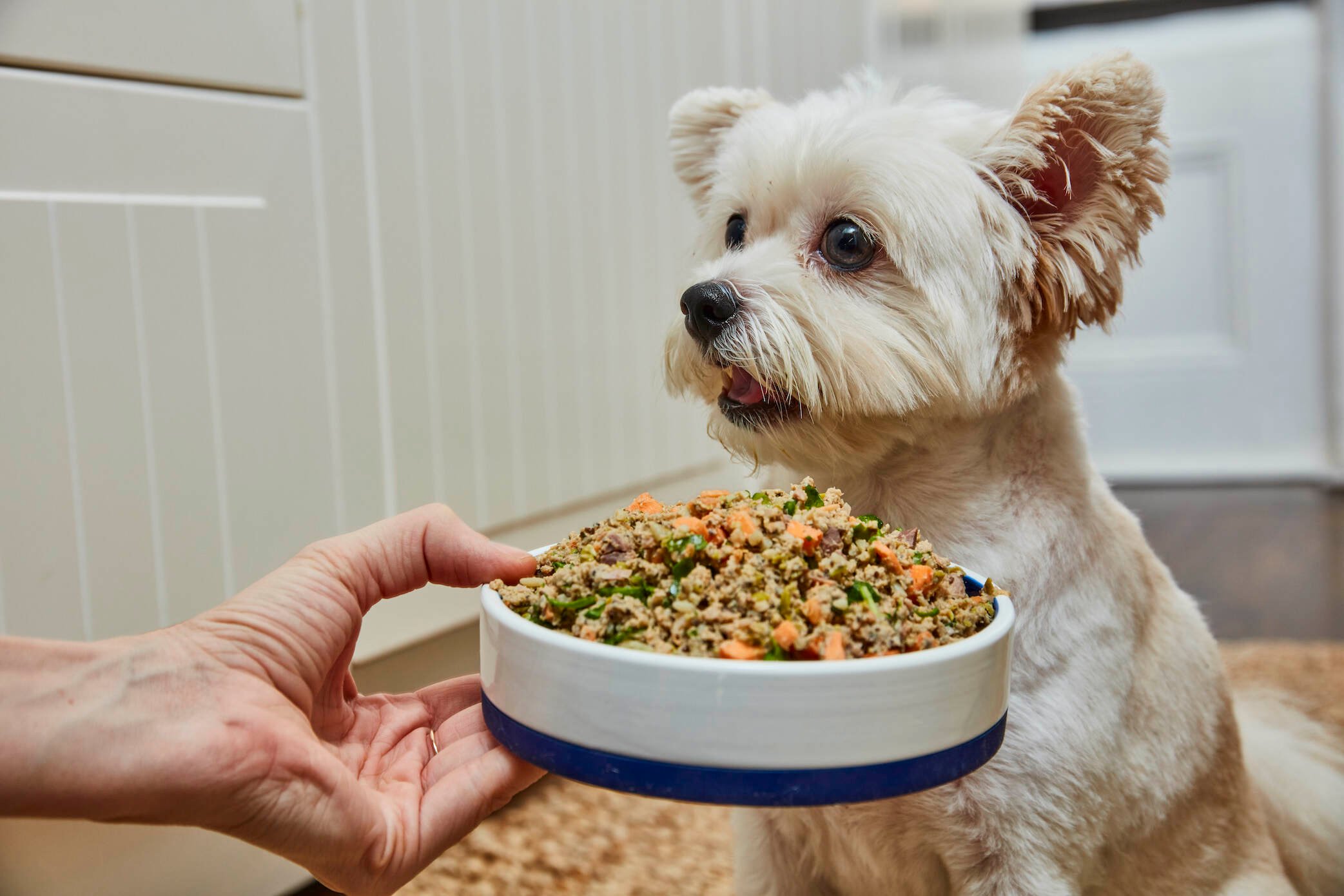
Image credit: My Subscription Addiction
In China, Pidan reflects the same shift across a broader set of categories. Its products are placed within curated home environments, where cleanliness and design are integral to ownership. What might once have been considered an upgrade is presented as part of a well-maintained home. Without this consistent presence, these products remain discretionary, limiting repeat purchase and long-term adoption.
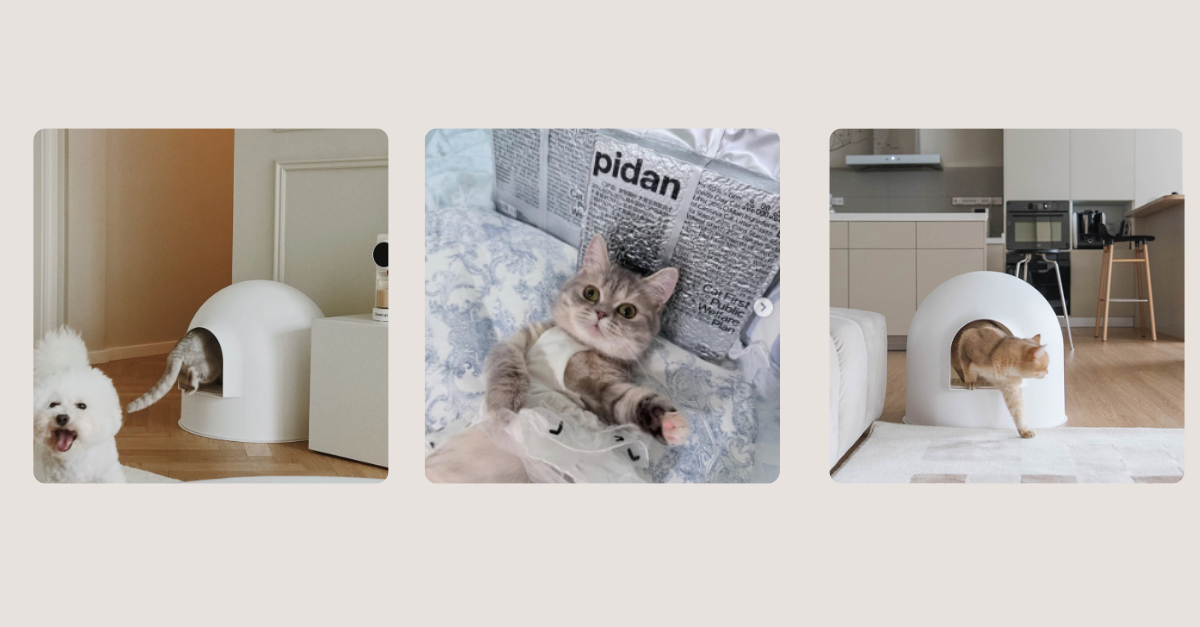
Across both markets, the mechanism is consistent: premium care is not introduced as an upgrade but becomes standard through repeated presence.
This model extends beyond product placement into brand creation, where the influencer becomes the starting point rather than the channel.
Case study: Nala the Cat
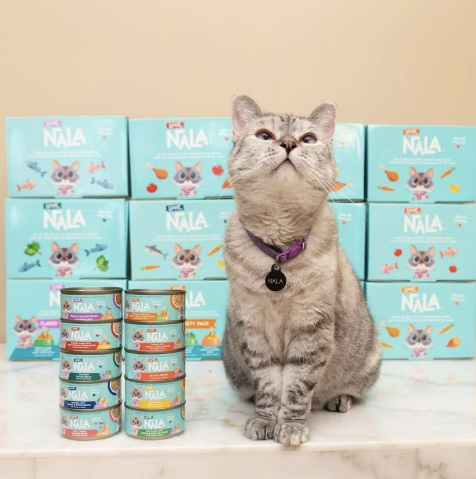
The commercial potential of petfluencers extends beyond partnerships into brand creation, and Nala the Cat shows how this shift plays out at scale. From a shelter cat to a global brand, with over 4.5 million Instagram followers and a Guinness World Record, the audience was built long before any product entered the market.
For brands, the takeaway is not the size of the following, but what that following represents. Familiarity and trust were built through consistent visibility in feeding and care practices, creating a clear foundation for product entry.
Her brand, Love, Nala, launched as a premium cat food line aligned with those practices. What began as a direct-to-consumer offering has since expanded into major US retail, including Walmart.
When a product reflects what audiences have already seen and accepted, it enters the market with fewer barriers to trial and distribution. Without that alignment, even well-funded launches face slower adoption and greater resistance.
The commercial model is ingrained in everyday content
Petfluencer monetisation is built into content rather than separated from it. Products are introduced through use, with affiliate links, discount codes, and tagged items layered into daily moments.
In Western markets, this often takes the form of long-term partnerships, where brands build recognition through consistent presence rather than one-off campaigns.
In China, content, commerce, and conversion occur within the same ecosystem, supported by live-streaming and in-app purchasing.
The shift is from campaign-based marketing to continuous presence, where revenue is generated through continued presence rather than a single conversion moment.
The gap between perceived and practical animal health decisions is widening
As expectations rise, a gap is emerging between how animal health decisions are portrayed and how they are made in reality. Content often reflects high-effort routines that are achievable but not sustainable for most owners, shaping decisions that do not hold up in daily use.
Repeatedly seeing these routines sets a new normal. What is most often seen becomes the standard for animal health, even if it only reflects a narrow, resource-intensive way of owning a pet.
A further gap emerges in how products are positioned. Items that are not essential are often included in complete animal health practices, making it harder to distinguish between what is necessary and what is optional. This is particularly evident in areas of animal health, where supplements and specialised care products are often included in routine use, even when they are not required in all cases.
The imbalance extends to how pets are represented. Content often favors visually distinctive or highly stylised animals that perform well on camera, while rescue and adoption narratives receive less consistent presence. This can shape perceptions of what pet ownership looks like and where pets come from.
For brands, this has clear consequences. Exposure does not just drive awareness; it shapes expectations in ways that are not always sustainable. When products are consistently associated with high-effort, high-cost care, they risk being perceived as aspirational rather than practical, limiting long-term adoption. When that gap widens, products are not just ignored; they are rejected once they fail to hold up in daily use.
Where brands are getting it wrong and what this means
Most brands still approach animal health buying decisions as if they occur at the point of conversion. Petfluencers are treated as a distribution channel, with focus placed on reach and engagement rather than how decisions are actually formed. This overlooks the role of repeated exposure and use in shaping preference long before a purchase is made.
Products are placed into content without a clear role, creating visibility without relevance. One-off partnerships generate attention but do not sustain it. Messaging focuses on claims, while content environments reward demonstration. When placement does not reflect real use, it feels forced and is quickly disregarded.
Many brands focus on the moment of conversion, while the conditions shaping preference have already formed in the feed. This leaves brands with a clear choice: design for how products fit into content and accept higher churn, or design for real-world use and accept slower growth. Both paths come with trade-offs, but treating them as interchangeable leads to poor outcomes in both.
Products gain traction when they fit into how care actually works. Over time, repeated use builds familiarity in a way that claims cannot. Demonstration carries more weight than explanation, particularly when it reflects how ownership works in practice rather than how it is ideally presented.
Performance needs to be evaluated differently. The question is not how a post performs, but whether a product becomes part of how people care for their pets.
The brands that succeed are not the ones that appear most often, but the ones that fit most naturally into the way ownership is lived. Products that cannot hold up outside the feed do not scale. They are abandoned as quickly as they are adopted.
What brands should do next?
Petfluencers are shifting where expectations take shape and how products gain traction. By the time interest shows up in search or sales data, much of that influence is already in place.
For brands, the priority is straightforward. Pay attention to how pet care is being shown and how expectations are forming. Understand where your product fits into those patterns, and where it does not.
What matters is not just visibility, but whether a product is consistently shown in ways that feel relevant and achievable. Brands are not just competing for attention; they are operating within expectations they did not create.
At Kadence International, we help brands understand how animal health buying decisions are formed before they appear in data. Through behavioural insight and real-world observation, we identify how ongoing care practices evolve, how expectations are set, and how products become part of everyday routines.
FAQs
How are pet influencers shaping animal health buying decisions?
Pet influencers are shifting demand by showing how products are used in everyday care rather than explaining their benefits. Supplements, diets, and grooming practices are introduced through visible use, which builds familiarity and trust before owners actively evaluate options.
How do pet owners make animal health buying decisions today?
Pet owners increasingly make animal health buying decisions based on repeated exposure to ongoing care in content rather than direct comparison at the point of purchase. Familiarity built through social media often shapes which products are considered before active evaluation begins.
Do pet influencers influence pet owners' purchasing decisions?
Yes. Research shows a significant share of pet owners discover and purchase products through influencer content. Products that appear consistently in feeding, grooming, or care routines are more likely to be adopted because they feel familiar and already validated.
What types of animal health products perform best with pet influencers?
Products that fit naturally into observable care patterns perform best. This includes supplements, dental care, fresh food, grooming products, and hygiene solutions. Items that can be demonstrated in use are more effective than those that rely on claims alone.
What are the risks of relying on pet influencers in animal health marketing?
The main risk is misalignment between content and real-life use. When products are associated with high-cost or time-intensive routines, they can feel aspirational rather than practical. This can lead to lower long-term adoption or rejection when owners cannot sustain the behavior.
How should animal health brands measure the success of pet influencer campaigns?
Brands should look beyond engagement metrics and evaluate whether their products become part of ongoing care. Success is better measured through repeat visibility, sustained use, and long-term adoption rather than short-term clicks or conversions.