

Forget the convertible. America’s real midlife crisis isn’t flashy. It’s invisible. And it’s showing up not just in ERs and therapists’ offices, but in how people buy, hesitate, unsubscribe, and emotionally log off.
A new study from Arizona State University landed like a quiet thunderclap: Americans born in the 1960s and early 1970s — the heart of Generation X — are showing sharp declines in cognitive health, increased loneliness, and reduced physical strength compared to both their parents’ generation and their peers in Europe. These aren’t minor shifts. They’re fundamental stressors that compound over time — the kind that erode resilience, not just mood.
In other wealthy countries, particularly Nordic ones, midlife well-being is improving. In the US, it’s falling apart. And while the headlines focus on policy failures and social erosion, there’s another layer too few are talking about: what this means for brands, marketers, and anyone trying to understand consumer behaviour.
Midlife, in America, is no longer a soft plateau of loyalty and income. It’s a volatile pressure point — one reshaping how people spend, engage, and emotionally check out of brand ecosystems that still pitch “balance” as the defining trait of your 50s.

The New Midlife Stress Load
For years, marketers treated middle age as the peak of the consumer lifecycle. A period of discretionary spending, brand loyalty, career height, and emotional confidence. The research now tells a very different story.
- Loneliness is rising fastest among Americans aged 45 to 59 — overtaking young adults for the first time in 2024 (APA, Loneliness Index).
- Episodic memory — the ability to remember events, conversations, and decisions — is declining in midlife, despite higher education levels than previous generations.
- Physical strength and energy are measurably lower than in Gen X’s counterparts abroad.
Add in economic anxiety, and the picture sharpens. The Pew Research Centre found that more than half of middle-aged Americans are simultaneously supporting adult children and ageing parents. This “sandwich generation” effect isn’t new, but the financial strain is deeper than before. Unlike Boomers, Gen X reached peak earnings during the Great Recession, faced wage stagnation throughout the 2010s, and now sits at the nexus of inflation, rising healthcare costs, and an unstable retirement outlook.
Despite all of this, most marketing strategies aimed at Gen X haven’t changed. They still sell aspiration, independence, and lifestyle upgrades. But for many midlife Americans, those messages now feel detached — or worse, antagonistic.
What this means for market researchers and product teams:
You’re not reaching a stable customer anymore. You’re reaching someone depleted. Campaigns built around energy, novelty, and performance clash with the real state of the midlife consumer. Product design, messaging, and user experience must consider cognitive load, time scarcity, and the simple desire for something that just works — every time, without friction.
Midlife isn’t coasting anymore. It’s a grind. Brands that don’t understand this will keep mistaking disengagement for disinterest, when it's actually exhaustion.
Cultural Isolation Is Rewiring the Consumer Brain
Midlife in the U.S. is increasingly solo. Gen X is the most physically mobile generation in American history. They’ve moved cities more often, changed jobs more frequently, and drifted further from extended family than any generation before them. But that freedom came at a cost: weaker caregiving networks, fewer close friendships, and less community embeddedness.
In 2024, Gallup reported that only 35% of Gen Xers said they had strong community ties, the lowest of any living adult generation. For many, the COVID-19 pandemic simply finalised a pattern already underway: withdrawal from in-person networks, irregular digital contact, and a gradual decline in everyday social engagement.
Loneliness, however, is not the end of the story. It is the entry point to a broader collapse in consumer trust.
The Edelman Trust Barometer shows that Gen X has the lowest trust in institutions of any generation, including brands, media, and even NGOs. This is not mere cynicism. It is learned behaviour. They lived through the rise and collapse of the dot-com bubble. They watched the mortgage crisis wipe out savings. They heard brands say “we’re all in this together” while quietly laying off workers. Trust did not disappear overnight. It wore down slowly, one transaction at a time.
What this means for marketers:
- Expect less organic sharing. Word-of-mouth doesn’t work the same when people feel socially disconnected.
- Brand evangelism is rare. The energy required to cheerlead a brand simply isn’t there.
- Reviews matter more than influencers — but only if they feel real.
The midlife consumer isn’t looking to signal belonging. They’re looking to feel grounded. And when they don’t see themselves in the customer journey — when every testimonial feels younger, more optimistic, more carefree — they disconnect.
This is where segmentation fails most. Gen X isn’t just a demographic band. It’s a cohort in the middle of an emotional reshaping — less driven by identity signalling, more driven by stability and reduced risk. The brands that recognise this shift will stop designing for “connection” and start designing for competence.

Stress Isn’t Just Emotional. It’s Cognitive.
Marketers talk about “consumer behaviour” like it’s a stable pattern. But midlife strain doesn’t just change what people feel — it changes how they think.
Cognitive ageing research shows that chronic stress shrinks the brain’s decision-making capacity. Under pressure, people rely more on habits, defaults, and shortcuts. Their ability to evaluate options narrows. Their tolerance for ambiguity decreases. Their patience with poorly written interfaces, bad recommendations, or vague product claims evaporates.
In midlife, especially under American conditions, consumers are not looking to optimise. They are looking to minimise friction.
This shows up in subtle but critical ways:
- A decline in customisation enthusiasm. “Build your bundle” is a burden, not a benefit.
- Increased reliance on reorder features, auto-ship, and predictable subscriptions.
- Higher abandonment rates when faced with excessive choice or configuration.
Yet brands continue to equate personalisation with complexity. For a consumer navigating stress, economic strain, and fragmented attention, personalisation isn’t a gift — it’s a tax.
The most effective tools in the midlife consumer’s world right now are quiet, familiar, and low-demand:
- Amazon’s Buy Again feature
- Apple’s Reminders app
- Chewy’s AutoShip
- Google’s default autofill settings
None of these screams innovation. But they serve a deep need: cognitive conservation.
What this means for product and UX teams:
If your ideal Gen X user needs three steps to do something they used to do in one, you’ve already lost them. UX for this group should prioritise predictability, error forgiveness, and the option to opt out of personalisation entirely.
There’s also an emotional overlay: The more overloaded the user, the more they crave clarity. This is where your copy team matters. A Gen X consumer doesn’t want to be persuaded — they want to be told exactly what something does, why it’s worth it, and how much effort it takes to use.
What Brands Still Get Wrong About Gen X
Gen X has always been hard to pin down — too young for boomer nostalgia, too old for Gen Z’s cultural overhaul. But today’s brand misalignment isn’t just about tone. It’s a failure to acknowledge a complete behavioural shift.
Even now, Gen X is often portrayed in marketing as:
- Financially stable
- Lightly cynical but digitally fluent
- Wellness-oriented, convenience-seeking, brand loyal
But the data tells a more complex story:
- Eighty percent of Gen Xers report high financial anxiety due to caregiving, debt, or underfunded retirement plans (Transamerica Institute, 2025).
- They are the most sceptical generation when it comes to marketing claims, even more than Boomers (Edelman, 2024).
- Despite being digitally native-ish, they prefer reliability over discovery, and function over feature creep.
Marketers who try to reach Gen X with throwback pop culture or Boomer-style luxury positioning are talking to a version of the generation that no longer exists — or only exists in curated Instagram memories.
Common Marketing Misfires
- Nostalgia Overload: When every campaign leans into cassette tapes, mixtapes, and Blockbuster references, it tells Gen X one thing: we don’t see you now. Only who you used to be.
- Productivity Promises: Burnout isn’t theoretical — it’s hourly. Gen X doesn’t want to optimise workflows. They want fewer things to manage, not better ways to manage them.
- Wellness Tropes: Yoga pants, self-care kits, and “you got this” slogans feel unmoored from the realities of ageing joints, hormone shifts, caregiving fatigue, and the slow cognitive drag of chronic stress.
What’s left is a gap. One that Gen Xers feel in their inboxes, their shopping carts, and their feeds. They're not alienated by your brand. They’re just unconvinced it understands them.
Brand implication: Stop designing for who Gen X used to be. Start designing for how they actually live today. Which means understanding not just how they shop — but what they’re carrying emotionally, physically, and mentally while doing it.
What’s Working — and Why
Despite the widespread mismatch, some brands have quietly adapted to the reality of the midlife consumer. They don’t shout. They don’t dazzle. But they meet a fundamental need: relief.
Let’s look at what’s resonating:
1. Replacements(dot)com

A niche e-commerce business helping people find discontinued china patterns and flatware. On the surface? Antiquated. In reality? A masterclass in serving the midlife psyche. It honours emotional continuity, values preservation over replacement, and offers meticulous, calm service.
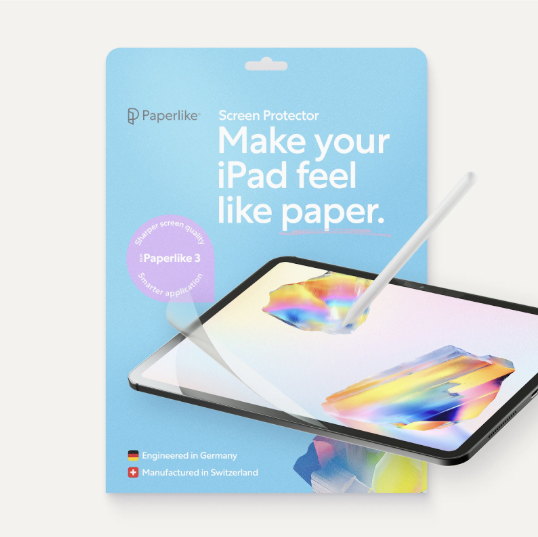
2. Paperlike (Germany)
A screen protector that mimics paper texture for iPad users. It’s pitched not as a gadget, but as a focus tool. It sells calm, reduced sensory overload, and precision for the overloaded brain. No unnecessary noise.
3. Chewy AutoShip

It’s not just about pet food. It’s about one less thing to remember. The UX is seamless, the tone is gentle, and it anticipates what midlife consumers now need most: mental offloading.
4. Calm App
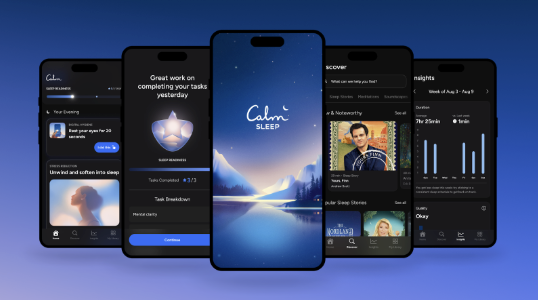
Not wellness as lifestyle — wellness as lifeline. The app’s simplicity, voice consistency, and personalisation without demands make it a daily coping mechanism, not just a brand moment.
Each of these wins not by being louder or newer — but by being predictable, emotionally aligned, and non-invasive.
Marketing takeaway: If your product saves time, reduces effort, or lowers decision fatigue — don’t bury that behind aspirational marketing. Say it clearly. Midlife consumers aren’t craving inspiration — they’re conserving energy. The right product feels like relief, not motivation.
What This Means for Market Strategy
What’s happening in American midlife isn’t just sociological — it’s commercial.
This isn’t a “watch and wait” situation. Gen X controls over 30% of U.S. discretionary spending today and holds more than $17 trillion in assets, yet they’re under-represented in strategic marketing segmentation compared to Millennials and Boomers (Statista, 2025).
But this isn’t just about money. It’s about forecasting behavioural change. What we see in Gen X today — stress overload, trust erosion, fatigue-based decision-making — will likely appear in younger cohorts earlier due to compounding economic and environmental pressures.
If Gen X is the first cohort to hit midlife during true system instability —brands should be watching closely. Because the friction they face is a preview of what’s coming for everyone.
Download The X Factor
At Kadence, we understand what really drives Gen X across key markets — not as a demographic checkbox, but as a dynamic, shifting behavioural segment.
Our latest trend report, “The Gen X Factor,” explores:
-
What Gen X really wants from brands in 2026
-
How their mindset is evolving across the US, UK, and Asia
-
Tactical recommendations for marketers, researchers, and product teams who want to get it right
Download “The GenX Factor” and go deeper into the mindset of midlife — because this generation isn’t fading. It’s rewriting the rules of relevance.
FAQs
Why is Gen X experiencing a midlife crisis differently than other generations?
Gen X is hitting midlife under uniquely American pressures: higher healthcare costs, weaker social safety nets, caregiving for both parents and children, and less accumulated wealth than previous generations at the same age. Research shows these stresses are compounding into worse health, higher loneliness, and greater cognitive strain than seen in peer countries.
Is Gen X really more stressed than Millennials or Boomers?
Yes, in different ways. While Millennials report anxiety earlier in life and Boomers benefited from stronger economic tailwinds, Gen X sits at the intersection of financial pressure, health decline, and responsibility overload. Studies consistently show Gen X reporting higher levels of burnout, loneliness, and skepticism than both younger and older cohorts.
How does midlife stress affect Gen X consumer behavior?
Midlife stress changes how Gen X makes decisions. They are more risk‑averse, less tolerant of complexity, and more focused on reliability than novelty. This shows up in stronger brand scepticism, lower impulse buying, preference for defaults and subscriptions, and a desire for products that reduce effort rather than add features.
Why do many brands struggle to connect with Gen X today?
Many brands still rely on nostalgia, aspirational messaging, or outdated assumptions about stability and spending power. Gen X consumers want clarity, competence, and honesty — not youth signalling or performative optimism. When brands fail to reflect their lived reality, Gen X disengages quietly rather than complaining loudly.
What should marketers and product teams understand about Gen X right now?
Gen X is not disengaged — they are overloaded. Winning with this audience means designing for cognitive ease, trust, and long‑term value. Brands that simplify choices, reduce friction, and respect Gen X’s intelligence are far more likely to earn loyalty in a period where patience and attention are scarce.
Do you conduct research in the local language?
We believe that conducting research in the local language is crucial for gaining true depth of insight. Not only does it allow us to understand the intricacies of local nuance, but also the wider culture that sits behind this. We’re proud of the multi-lingual team that enables us to do this. Between us, we speak over 40 languages!