Transcript
00:00
Ellie Tehrani
Foreign welcome to the elusive consumer Simi. On today's episode we are going to explore the intersection of music, technology and creativity. And we're joined by Simi Singh, Chief product officer at Hook Music which is an AI powered platform that allows fans to create and share remix of their favorite songs while also ensuring that artists and right holders are properly compensated. So Simi, what was the moment or project in your career that made you realise that product was your passion?
00:54
Simmi Singh
Yeah, great question. Yeah, I mean a little bit back, a little bit of background about myself. You know I, I studied finance and law at university in Australia and I was kind of wasn't really sure what I wanted to do and I was like what's the best thing you can do with this degree? And went into investment banking and went right into the middle of the world of finance and as it turned out, right in the middle of the biggest financial crisis in 2008. In fact the internship offer that I had or sorry the graduate offer I had was from Lehman Brothers which as everybody knows went under. But I was lucky enough to hang onto my job and spent the first three, four years of my career in finance.
01:45
Simmi Singh
And you know, I kind of, I guess kept asking myself like I want to be closer to like a lot of the deals that I worked on in banking were consumer focused deals like consumer companies, big FMCG companies I really liked. Of all the types of industries that I worked across like that was the one that I kept getting drawn to. And so after I left investment banking I seeked out like one of the biggest FMCG companies at you know, in Australia or that region called lion and entered into a strategy role again not really quite knowing where I can have impact or be useful. But it was a step in that direction of want to be, wanting to be closer to the world of consumer and you know, as a beer company.
02:37
Simmi Singh
And so there was a lot of, you know, the product wasn't like product is the beer but a lot of the focus was understanding consumer behaviour and finding what the market positioning would be for the company. So in my strategy role I had like broad exposure across all of the functions and again I wanted to go deeper. I thought I wanted to do marketing and while I didn't find a role within the company there I ended up joining Intuit which is a tech focused, it's like a, I guess they, you might know, it's a, they own QuickBooks Online which is a accounting product used by small businesses. And again I felt like I'm getting closer to the consumer. I was in a marketing role, really interacting with them. And I was really blown away by that experience.
03:28
Simmi Singh
I think that was a real pivotal moment because it was tech, it was fast moving, it's very innovation focused. I interacted in my role in marketing very closely with product and customer service teams. And again, I was getting a taste for it. And I think that also inspired me to launch my own business called the Crimson Bride, which is a wedding marketplace platform, much like the Knot, but very focused on the South Asian wedding market. And in that process, I built the website, the experience, the content side of it. And I think that's where that. That whole piece around, what's your vision? What do you want this product to be? Then speaking with the designer and the engineer to bring it to life, I think was a very gratifying experience.
04:20
Simmi Singh
I don't know, I felt like, very content and really happy to be doing that work. It was very detailed work. But that was the first time I got exposure to actually building the product from scratch and working with all these different parts of the business to bring that to life. And so when my husband and I moved to New York, I really seeked out product as an area that I wanted to pursue. And again, I was kind of thinking about, well, what products do I like using? And music, obviously, is a big, like, if I look at my home screen on my phone, music apps were like the biggest ones that I had. And, you know, I ended up making a connection at what was called at the time Savan, which is India's largest music streaming service.
05:13
Simmi Singh
Luckily was based out of New York and reached out to the. To the founding team and, you know, wanted to express my interest and passion for music and got a role as a product manager for the growth area of the business. And, yeah, I think I really love the process of just thinking through is the consumer's mindset, how do they perceive the product, what it's supposed to do, and finding opportunities to tap into those needs. And luckily in that role, because were a small team but had a massive scope. We were 20 million users when I joined. There was just a lot of opportunity to try out different things and experiment.
06:00
Simmi Singh
And during the time I was there, about a year into my job, we got acquired by another large Indian conglomerate, and our user base grew from 20 million users to over 150 million users in the space of a couple of years. That kind of was an interesting moment because I had a choice of like, do I stay in product or do I. You know, there was a need in the business to get some strategy and operations help. And yeah, I kind of ended up leaning back into strategy because I felt like there was more of a need on that side of the business at that time and had the opportunity to still interact very closely with product. But not just product, it was content marketing, advertising side of the business, subscription side of the business, partnerships.
06:48
Simmi Singh
It really allowed me to again but from a leadership role perspective see a, like how all of these pieces, much broader pieces kind of came together in a larger company and you know, from there I, I ended up moving to Spotify which is as you know, a very product led company and ended up joining within the product org but in a strategy role and in the podcast strategy role and had pretty much my day to day was working with product managers, product leadership and as well as again content marketing and all of the different organisations.
07:29
Simmi Singh
But I think when I look at all of my experiences up until Hook, I think what I kept coming back to was this idea of like being there at the ground level, helping come up with an idea and even if it's not my idea, others ideas and that whole process of bringing it to life, like all of the threads that need to come together to bring this thing to life and put it out there in the world, see what impact it has and bringing it back. I think that's where I feel most alive, most motivated. So when this opportunity with Hook came up as leading the product design, engineering and data org of the company, I kind of was really excited and jumped at it honestly.
08:20
Simmi Singh
And it was also a chance for me to work with my old boss at Savin and so yeah, and in my role here, which I'm sure we'll get into, it's again being more of that of when I joined the company there was no product. We really building the product from scratch and taking it to market and yeah, and I think it just further reaffirms my interest in wanting to build amazing products. Doing that with people that are also equally passionate about doing, you know, building amazing products and yeah, seeing the impact and having real impact in the world. I don't know, that was a bit long winded.
09:03
Ellie Tehrani
No, that's all great. I think it's unique to hear a perspective that's truly as diverse as yours in terms of different markets. Everything from India to Australia to US and then also from startups to large organisations like Spotify. How have these diverse experiences shaped your overall philosophy to production?
09:32
Simmi Singh
Yeah, I think it's interesting because I've been on the other side of Product Many of the times like I'm the partner to product, I'm representing other parts of the business to product. So I think one of the strongest influences I bring is that empathy of the non product teams. I kind of understand when a creator team is coming and saying, or content team is coming and saying we really need this done by you know, like, because we have a really big artist that wants to activate on the pro, on the platform. Can you please put together this new experience just for us, for this artist? Because this will mean a huge amount for everything we're trying to do.
10:18
Simmi Singh
And you know, I, I, I know that would frustrate a lot of product teams because that would often mean like you're shifting around priorities a lot. And for me I think I probably manage my expectations or I understand where the request, where requests like that, like time sensitive requests like that often come from. And my response ends up being a lot more collaborative and finding a solution that is going to, you know, address both parties in many ways. So I think that that definitely like having spent time in different parts of businesses that have worked with product and empathising with or even understanding what they're actually asking for and how to manage those expectations has probably been I think the best experience that I've been able to bring into this product role.
11:20
Simmi Singh
I think the other aspect is being able to take the business and product like understanding how product contributes to business strategy and how business strategy contributes to product as well. They go very hand in hand. They're not separate things. One influences the other and it's not even top down sometimes it can seem like, or there's I read content out there which is like the business defines the strategy and then the product has to come up with this strategy that supports the business. I think there's actually a lot more, you know, flexibility and leeway for product to influence business strategy as well.
12:01
Simmi Singh
And so I do find that I take, you know, the observations or the experience that I'm, that I have in product now that I'm managing a product team or multiple products in my organisation, taking that and allowing that to influence business strategy. And when I've got my executive hat on being able to contribute from that perspective as well. And so I feel like when we have to make business decisions at a company level, I'm able to have a much easier way to translate again what product is bringing to that strategy and how much it can support that. So I would say those two areas probably have helped me my background I would say has helped me the most.
12:51
Ellie Tehrani
And I think that's very interesting point because combining the input from both the technical teams and the creatives and making sure that all stakeholders buy into the story is one of the key challenges of any profession. Right. So I think it's great experience to have worked across all the different stories of departments and different types of organisations. But I'm also interested to hear a little bit more on the market or the regional differences. You know, you often hear what works in Europe won't necessarily translate into working in the US and vice versa. Have you experienced anything like that in your sort of journey in product?
13:36
Simmi Singh
Yeah, that's so true. And I guess I like feel like it's just a such a big part of like my experience, like lived experience that I don't really acknowledge that as a difference but like, or how it could have, you know, added to my perspective on product. But definitely having spent time in, I mean I was born india, grew up in Australia, now live in the US and have always worked in global teams and regional teams. And having that global perspective has definitely, I think again helped me communicate better and more clearly. Whether it's like a requirements doc or whether it's like telling the story that would resonate with my local team india or in my Europe team.
14:30
Simmi Singh
I think I end up finding myself asking a lot of clarifying questions because I recognise that what, you know, apartment means in America is different to what it means in, it's a different language in even an English speaking country like the uk. So I find myself in these cross-functional roles, like product or whether it's strategy. Just having that empathy that like different people have different perspectives, how they hear information differently leads me to make sure what we're building and why we're building it has a really clear like when we're seeking alignment, has a really clear alignment across all of the regions and there's buy in. And so that process of product where you have to like align teams and all of that, I think that perspective definitely helps.
15:26
Simmi Singh
And then from an actual product perspective, from a consumer perspective, also recognising patterns that like different regions will have different behaviours, and all of that, and what can we learn from that? Rather than just thinking what works in the US will work in the Asia region or in the Europe region and really being on the lookout for other interesting behaviours that we're seeing that might not be what we're seeing in our core markets. So yeah, I think from various perspectives, I think those are two, but the third one which is more internal, is hiring as well. Just recognising, you know, how people communicate and what the skills required based on the needs of the product or needs of the business, what we need on the team and what that can contribute from a regional perspective as well.
16:23
Ellie Tehrani
I want to dive into Hook specifically and the music industry overall. You know, we're currently now in more of a creator economy where people are building their careers and connecting with audiences in a different way than we used to. You know, we have YouTube, we have TikTok and now platforms like Hook. So we're moving away from that centralised production to direct to audience creativity and it's redefining ownership and now suddenly you have things like AI agents entering the mix. The future starting to get even more dynamic and uncertain. Let's start with Hook. For our listeners who aren't as familiar with Hook, can you explain its role and the problem that it's solving in this new music ecosystem?
17:21
Simmi Singh
Yeah, I would love to. So Hook for people that aren't familiar with the product or the platform, Hook is a social music app that lets anyone create short form remixes of popular songs, your favorite songs, in a matter of seconds. So it's, you know, you can choose a Taylor Swift song and tap a filter like hip hop and make that song sound hip hop. You could look at our mashup recommendations and suddenly your Taylor Swift cruel summer song is now mashed up with a Radiohead song. And instead of having to go through a big production software, a very complicated production software, you can do that with a tap of a button. And I think we liken it to the cap cut for music or Instagram for music. It's what those platforms did for video and photos. That's what we're trying to do for music.
18:25
Simmi Singh
And so that's one side of Hook, which is the consumer facing app. We launched the app in October last year, which is really exciting. But there's a whole other part of the business which is the enterprise side which deals with the rights holders, the labels, the artists and the publishers. When we started building Hook, were really clear right from the beginning that we want to be artist first. Music is a really nuanced industry. It's very different to photos and video industry. There's, you know, the whole industry is built upon these rights holders that have a catalog and have earnings based on they monetise based on that catalog. So we knew if were going to enable music expression of songs that already exist, we need to work with the partners, the labels, the artists, and bring them along on the journey with us.
19:38
Simmi Singh
So we also have this enterprise tool, as I mentioned, which is all of the songs on our platform are licensed. So we ingest all of that content from the rights holders. They have granular controls and rights management around what parts of their catalog they want to make available. For what kind of music effects do they want it turned on for mashups versus remix filters? Do they want to allow sharing? Do they not want to allow sharing? The whole idea being that we want the rights hold of two rights holders to feel confident and safe with the content that they're entrusting. With Hook, we also have an attribution model that allows those rights holders to be able to track the usage of that content from a remix perspective. So it's quite complicated, very detailed work on that side.
20:30
Simmi Singh
So we're almost building these two products in parallel. And yeah, it's been an amazing journey so far and we have so many exciting things on the horizon as well. So yeah, we're just at the beginning.
20:43
Ellie Tehrani
It sounds like a lot of potentially conflicting needs that you're trying to balance. When you mentioned the rights holders and the music fans and I guess you answered the question, you're putting the artist first. But in terms of starting in a space without clear blueprints, which your company sort of has done, how do you prioritise, where to start, what features to prioritise in terms of product? Can you talk us through that a little bit?
21:19
Simmi Singh
Yeah. So I think, you know, since we're building a. It is consumer led, but we want to do it in a way that is artist first. I know that kind of sounds like we're trying to do both, but ultimately we're trying to serve the needs of the consumer. What we want to do it. And actually there's like a lot of parallels with Spotify and what it did for the music industry 20 years ago. And that was at a point where consumers had. It was very clear consumers wanted to consume music on the Internet and they wanted to do it at a low cost or no cost at that point with all of the piracy that was going on.
21:58
Simmi Singh
And Spotify kind of came in with a model which was a business model, innovation, effectively, which was saying we will give you not just that music, but the world's music at a 1 cost to the end user, $10 subscription. That was very novel, as you know, but that allowed it was acknowledging that consumer behaviour is already there. But they had to do a lot of work to work with the labels to figure out the economics behind it. And I feel like Hook is at a similar place here where it's like, we need to address the needs of the consumer, which is. We're already seeing that behaviour evolve. 40% of all of the TikTok sounds on TikTok are remixed or modified in some way. You know, which. Which is telling us that people want to do more with music.
22:54
Simmi Singh
They don't want to just listen to it, they want to express themselves with it. So we wanted to build. But one of the key barriers when we spoke to all of those people that were remixing music, like, why are you doing this? And what are your biggest barriers? The recurring theme was the pro tools that are out there just don't meet my needs. It's very complicated to learn. I have to do a lot of back and forth between different apps to do that. So we felt like there was an opportunity there to really lower the barriers for anyone to make fun remixes that really represent their creative expression. But then on the other hand, if that's where the consumer behaviour is heading, how do we make sure the industry is coming along on that journey?
23:47
Simmi Singh
And when we spoke to the artists and the rights holders, their concerns were, well, we can see the consumer behaviour changing. It's not just about passive listening on Spotify or the music streaming platforms, but we have. We don't know, like, how to go about doing that. And when we really delve deeper into that, it was really about. They needed control over the catalog and how it was being used. They wanted to make sure they were being properly compensated for the usage of that content on these different platforms. They needed data and tracking so they could understand insights. Oh, interesting. This type of music actually is remixed in this way, and we're able to reach a different kind of audience with this.
24:30
Simmi Singh
So they were making ANR decisions based on their ops, or they want to be making more A and R decisions or business decisions based on that. So data control and attribution is really important to the rights holders. So when were launching Hook, we definitely prioritised the consumer experience, building that, making sure the demand side of all of this was. Was there, and were addressing that. And on the supply side, were still. We needed to do at least the basics. And then now we're starting to build up our capabilities and our systems to further scale and grow that side of the business too.
25:18
Ellie Tehrani
And it sounds like you have focused quite a bit on gathering the data, the user feedback from both perspectives. You mentioned the artist as well as the consumers. Is that something you're still Very much doing to incorporate the user feedback into your product development process.
25:40
Simmi Singh
Yeah, I think that is core of any product development. You're building the product for your users. And obviously we have different types of users at Hook. So then it's really like balancing what like right now we're focused on creators and making sure our creator product suite meets the needs. And even within creators there's like segments of creators, there's DJs versus social media, remixes versus a dancer. They'll all have different needs versus just a general consumer who we found actually are really interested in discovering remixes. They don't really have any interest in creating remixes, but they really enjoy remix versions of songs. So you know, these are, I think especially when you're building a product from scratch, it's like having a hypothesis and some informed point of view and building that thing and that's where speed is really important.
26:44
Simmi Singh
Speed to market, that's and then putting it in front of those target users and getting the feedback and iterating from there. And it's a constant iterative process with I would say just like bets that we also are making in parallel. And then I think this, a similar thing is happening on the artists and the rights holder side where we're getting different kinds of. It's from a product development perspective is following the same process. It's probably maybe happening at a different pace, I would say. I think there are just longer cycles on the enterprise side versus on the consumer and creator side of the product.
27:29
Ellie Tehrani
Right. You touched on something interesting there in terms of the data versus the betting or sort of the gut instinct versus what the insights show. In any industry that's always a risk. But how do you balance that, especially when you're early on and when one of them or both of them can be somewhat misleading?
27:53
Simmi Singh
Yeah, yeah. I think it's especially interesting in early stage products. And I can talk a little bit about Hook, but then also at what I observed at Spotify and my other companies, slightly larger companies that I worked at. So I think with completely new like building from scratch products, I think you have to start with a bet. You know, you've done some research, you've done some. I think you can reduce some of those risks by talking to people like you have an idea, you validate that to some extent by speaking to those people. How much of a pain point is it? What would you think about? You can even like create prototypes. I mean for Hook we had created a prototype to just see what the response would be.
28:41
Simmi Singh
And I think like the risk There is like, you know, you've got a very small sample size and so kind of have to keep that in mind. But you can tell pretty quickly if someone's like confused by the idea or like actually interested. So you're kind of looking for signals at that early stage, which gives you enough conviction to like, okay, let's actually go ahead and build this thing. And once you start building the product, then it's a new process of, okay, let's get this in front of a set of people, get the feedback.
29:17
Simmi Singh
And I think because you're building slower than all the universe of things that you know that the user wants to be able to do that, those profiles of users that you're trying to build for, I think there are naturally some bets you're going to prioritise because you know that like in our initial research we knew people wanted to have more control over the remix. It's not like some people are fine with the, you know, one tap experience, but there are a segment of, large segment of users and even as users mature on the pla. On the product, want to have more control over the remixing that they're doing. However, that's a much more complex thing to build for us at the early stage and we don't even know what our market positioning is going to be.
30:06
Simmi Singh
So the bet I'm making at that point is let's prioritise the simple user that doesn't want the controls just yet. Let's validate the idea, let's validate the need. And then if people are banging on our door and saying, we really want these controls, we will add them. And so that's kind of how I end up hedging the risks a little bit. It's not we'll never do it's are we doing it? Do we need to do it right now in this next three to six months period of time? And I think comparing that to a larger kind of product organisation or larger established product like Spotify. I think I was really lucky to work at Spotify because it's a very innovative company. They do make a lot of bets.
30:59
Simmi Singh
And it was just fascinating seeing how they were able to make bets even at the scale that they were at. But they were making bets about. They were very informed bets because you had more historical data and for new areas, they had the ability to test things in a much larger scale. They could just have a sample set of like, let's just choose Australia or New Zealand as an As a representative market and then roll out. I think you also have the ability and the luxury of doing a B testing, you know, at that stage. So I think, but even there, you know, the product leaders that I worked with there was and a good balance of like instincts and what the data was telling you.
31:47
Simmi Singh
So and sometimes, especially when you're trying to break into new ground, new markets, you need to continue to have conviction for a period of time because the data, if you looked at it the next day, sure, the retention's not going to be there. But if you look at it over a period of time and give yours, give your teams the opportunity to iterate based on the feedback, you may see that retention grow. You know, and so a lot of it is to do with the, the stage of the product and the time that you're giving the product. Sometimes in a larger organisation, you don't have the luxury of giving it years or even months sometimes to see whether this resonates. So it's always a case by case of like what am I dealing with? What's the context here?
32:38
Ellie Tehrani
And in terms of the story that the data was telling you at Hook, can you tell us something that surprised you the most about how people used music to express themselves or some form of unexpected user behaviour that completely changed how you thought about the product?
32:57
Simmi Singh
Yeah, I mean so many interesting observations and I think one was around like how users were consuming the remixes. So when we first like the first version of the product or first couple of versions of the product, it was very creator focused tools and like all of the controls we thought like creators wanted. And just again to hedge our risks we had a feed, like a Explore feed that, you know, similar to a TikTok where once you post the content you could of course share it to social media, but you could also share it on Hook. We kind of knew like we obviously don't have the scale of these other platforms. Like people are not going to necessarily post or care about posting on the feed.
33:46
Simmi Singh
But what we started seeing was people did care about posting on the feed and not only that, they were listening to their music over and over. So whatever that creation wasn't just discovering other people's content. We saw like people listening to their own hooks, like their own remixes, like on repeat, like for like half an hour. Which was like a super interesting insight. Like we thought people might go to the feed to discover other people, other creators content, which is what you kind of see on other platforms. Actually they were going there because that was the only place they could listen to their own content over and over. And so that was a super, like an unexpected behaviour that I wasn't really paying attention to or hadn't really thought of initially.
34:38
Simmi Singh
But based on that insight, we started to then think a little bit more seriously about a consumption experience. A little bit more. Maybe we do need to have a player. You know, we're almost like a social and streaming kind of platform potentially. And we started to. We've now started to think about, like, how do we introduce playlists into. In, like maybe people want to. And people not just listening over and over to their own music, other people's music as well, and so. Or remixes. And so this idea of playlisting a player, backgrounding, like, we started to. We've. We've started to focus a lot more on bringing up that experience and making that a more prominent experience in the app. So that's. That's one example. Yeah.
35:27
Simmi Singh
And then I think on the creator side of things, I think I've been really blown away by just like, how people are choosing to remix. I mean, they're spending like, I thought, okay, this is just going to be a. Our goal as product is to help them make the remix. But I think they were spent like we've observed users spending like 20, 30 minutes coming back to their creations over and over again before they're posting it. Which I think I kind of had that sense from having worked on creator products in my previous role. But just realising that people have inhibitions about what they're creating and posting out there in the world, they clearly have. Everyone has this need to want to express themselves.
36:15
Simmi Singh
But there is this, I guess a psychological mindset of, like, is this good enough to post, you know, and is it good enough to be out there in the world? And so I think we've been starting to think a little bit more about how do we provide that encouragement within that studio experience, outside the studio experience that will motivate people to be like, yeah, this thing that you've made is amazing and it's ready for prime time. It's ready to win a gravity, like, you know, so I think just giving people that confidence because especially music remixing, I think, like, people are still, you know, experimenting with that and exploring that. They kind of see the professional version of that, which is a dj, and they're not sure they want to be a dj, but they.
37:05
Simmi Singh
I almost feel like we're tapping into a new category of creators that are, you know, music creators in a different. In the World of social that hasn't purely existed before.
37:18
Ellie Tehrani
That is super interesting. Maybe you need to set up like virtual little mini focus groups for them so they can test their sounds with a smaller audience first.
37:29
Simmi Singh
Yeah, exactly. And you know, maybe hearing the claps and the woohoos will get them more excited. Yeah, it's super interesting. I'm always like excited to see like creators and like you can see when they like when we've done some, you know, live interviewing, like when people realise that they've just made a song that they're familiar with sound completely different. Like you can see that being a, the wow moment and them feeling that like I did that, you know, and I've, I made this thing that's mine, you know, like no one else could have come up with this combination of things.
38:12
Ellie Tehrani
And as this music consumption changes overall, if were to fast forward three, five years down the line, how do you imagine things like AI agents starting to reshape the music industry, reshape how you think about your products at Hook and so forth?
38:35
Simmi Singh
Yeah, I think something we think a lot about at Hook, you know, what does the future look like? We are building for the future and we're at a really interesting moment with this AI evolution or revolution that's happening and it's impacting the music industry in some interesting ways. One is the generative AI side of things is helping people make original music quicker and much more easily than ever before in the history of time. So I think that's going to open up a huge amount of creativity. And you know, if I, I think overall like macro trend, we'll probably see a lot more music on any given service, more original music than ever before in the world.
39:29
Simmi Singh
But I think on a more tactical level, I think it's also going to help the existing artists in their music expression, music production be a lot better and faster at making their music. And so I can see AI agents really helping them through their workflows and helping them find, hey, this is like given the music that you have made, this is the audience it would resonate with. These are the regions in the world that it might, you know, I feel like in all aspects of the workflow for an artist, I feel like an AI agent could support them and help make all of those processes much more productive and much smarter, honestly.
40:22
Simmi Singh
So whether it's the creative production, like what should I sing about lyrics, all of that to, okay, I've now produced my thing and it's like the best it can be to now how do I distribute this music out there in the world? And then the data and the insights, I feel like it can influence every part of that journey. So in terms of how we think about that at Hook, I think it's thinking about how again in an ethical way. Because on our platform we want to respect the rights of the rights holders.
40:55
Simmi Singh
Assuming we would be doing that, it's how do we help AI agents on the rights holder side of like this is how your music extracting the insights, helping then be more informed about what kind of UGC is being made from their content, their catalog all the way to again on the production side like in our studio, providing even better remix tools for creators and consumers and then even on the consumption side helping people discover best remixes, the trending remixes, I think AI has a lot of opportunity in terms of content understanding and to be able to take that and recommend the best content from a consumption perspective as well.
41:47
Simmi Singh
So we kind of look at it across every area of our app in terms of how AI can help improve the service that we're providing, whether it's to the rights holders or the artists and whether it's the end consumer or the creator as well.
42:06
Ellie Tehrani
And do you think that the artists themselves or the musicians and so forth. And I think we see this in a lot of creative industries, the resistance to using AI as a co creator. Do you think that we're close to starting to see some buy in from artists to see AI more as a co creator role or do you think that's still too far out in the future?
42:37
Simmi Singh
Yeah, I don't think it's too far out. I think as people are experimenting with these tools, I think they themselves are realising the benefits it can have. I think as we all are as we're testing out these new AI products at ChatGPT and these now verticalised offerings. I think in a similar way, I think as they're seeing the power of these tools, I think it's natural for them to get more comfortable with it and see them as a co creator simplifying their life or making some of those processes that were taking days and weeks and months, shortened to a few hours. I think that's value that you just can't deny. I think I do feel like artists are comfortable working with their own music.
43:27
Simmi Singh
You know, like here's some samples I did and now like make that better or like in some ways I feel like that's already happening through the production tools they're probably using. They're making small corrections Here and there. That's all kind of AI driven in some way. I think where artists feel a little less comfortable is around when their music is being used on other people's products and that's being used to make new content. And I think that's where it sort of crosses the line. I mean, I think anyone would feel uncomfortable about that. So I think that's what's kind of being debated in the courts now. There are active lawsuits happening with the biggest music labels and a few platforms. And so I think. And that's all about the fair use and the rights to use that music. Is that a fair use?
44:24
Simmi Singh
And so I do think that'll be an interesting moment in history of like, is that something that the artist truly owns? And I think that's where you'll see a probably separate. I mean, we're already seeing like some people are comfortable with that, they're okay with it, other people are not, they're very against it. And so, yeah, I don't think on the co creation side if it's their music that they're kind of training on and like working with, but I think when it starts becoming part of a larger pool that it's being trained on without permission and controls and a lot of that, I do feel like again, if the artist gets control over, okay, this part of my catalog, I'm okay with being used as part of a training model, I think. And I get to monetise that in some way.
45:13
Simmi Singh
Again, I think that would make people more comfortable. But yeah, and I don't think we're, you know, decades in the future. I think it's probably in the next, you know, five years, I think we would have a pretty clear answer on what happens. And then it's up to the individual artists on where they stand with that decision, you know, what they want to allow, what they don't want to allow with their music.
45:41
Ellie Tehrani
We have a few minutes left and I want to cover a few questions. In terms of advice for aspiring product leaders, particularly in sectors such as music that is so highly regulated, what tips would you give to product leaders that are looking to build the next generation of creative tools?
46:04
Simmi Singh
Yeah, I think my biggest advice for anyone building in the music industry would be a couple of things. One is it's that whole kind of Silicon Valley rule of, you know, just build the best product and build fast and break things. I just don't think applies in the music industry if you want to build a product that's going to last, not just A year, multiple years. And I think building a product in the music industry is not just about the tech, it's about the ecosystem. And so the more you can think about how your product influences other parts or has dependencies on other parts of the ecosystem, I think is really important.
46:52
Simmi Singh
So getting educated, becoming more aware, speaking to people from the industry, raising your knowledge around those nuances up front, I think can go a long way in prioritising and designing a product or even scoping out the product that you want to build and maybe even staging the product that you want to build. I would highly recommend doing things the right way, doing it in partnership. I think a trade-off of that might feel like it's slower because it's like you don't get to get the product out there as quickly as, maybe, in another industry.
47:31
Simmi Singh
But I guarantee you it's gonna be, it's gonna save you a lot of time later to find out that you built a product and it infringes on the rights of somebody out there on the music, you know, on the rights holder side and you have to shut down the product or you have to build a completely different product. So I do think, one, it's the right thing to do, you know, work with the industry. But two, and that's just because that's how the industry is. It's got a long history and I think there is a negative kind of connotation sometimes that like, oh, the music industry doesn't want to allow innovation or this may be a incorrect perception in my opinion. I think the music industry is really open to innovation, but it's just a very complicated industry. There's various layers of rights.
48:32
Simmi Singh
So they do want to embrace technology, new innovation, but they want to do it the right way. They want to make sure the people they're representing, which is the, which are the artists, are being fairly compensated, their rights are being represented in the right way. So I think understanding the role that they play and having that patience to bring them along on that journey. And so when you're thinking about kind of timelines and you're raising money, like keeping that in mind, that this is not just about the tech, great, you can build the tech in like, you know, a couple of months, maybe now in weeks, you know, using some of the AI products.
49:17
Simmi Singh
But the harder part is going to be like how you create an economics around what you're building, getting the buy in of that industry on your side and supporting you along on your journey of building the product. And there are many successful examples of people who are doing that even today. So I do think it's possible. And if you truly want to make an impact in the industry, I think there's a lot of great examples of companies that are doing that.
49:46
Ellie Tehrani
And on the rights holder side, artist side, how do you think they should go about things in the next few years to future proof their business, their art?
49:59
Simmi Singh
Yeah, I think similar advice in terms of just getting educated, like understanding what the different types of AI, what AI means in different contexts because AI gets thrown around as a broad term, but it means different things in depending on the context. And so really trying to take that extra step of like clarifying and understanding. Like okay, you're talking about tools, AI tools that help me in my own production of music versus AI tools that are going to help a platform that's going to create new effects and sounds and help other people. I think really understanding the AI world in a little bit more detail I think would go a long way. And then I think the second thing would be experimenting with those tools and understanding what it can do for you.
50:59
Simmi Singh
And I think, you know, you can read about the articles, you can hear someone talk about it, but you don't. It doesn't actually click until you try out these different offerings that are out there and understanding how they can, whether it's a monetisation or opportunity or whether it's a tool that can help you in your own production. I think just giving it a go in a low risk way. Hedging those risks I think will just help you again collect more data points, help you be more informed about the choices that you ultimately want to make. So yeah, they're the two, I would say.
51:40
Ellie Tehrani
Simmy, is there anything that we haven't talked about today that you wanted our listeners to hear?
51:47
Simmi Singh
No, other than please check out Hook music. And it's available on the iOS and would love feedback from anyone. And if you're interested in going on this journey that we're on at Hook, would love to partner with you, would love to work with you. And so that was the only plug.
52:07
Ellie Tehrani
Definitely going to try it later. Do my own little remix.
52:10
Simmi Singh
Please do.
52:12
Ellie Tehrani
Thank you so much. Thank you. It's been a pleasure having you. Thank you very much.
52:15
Simmi Singh
Thank you so much. Ellie. It's great talking to Sam.
About Our Guest
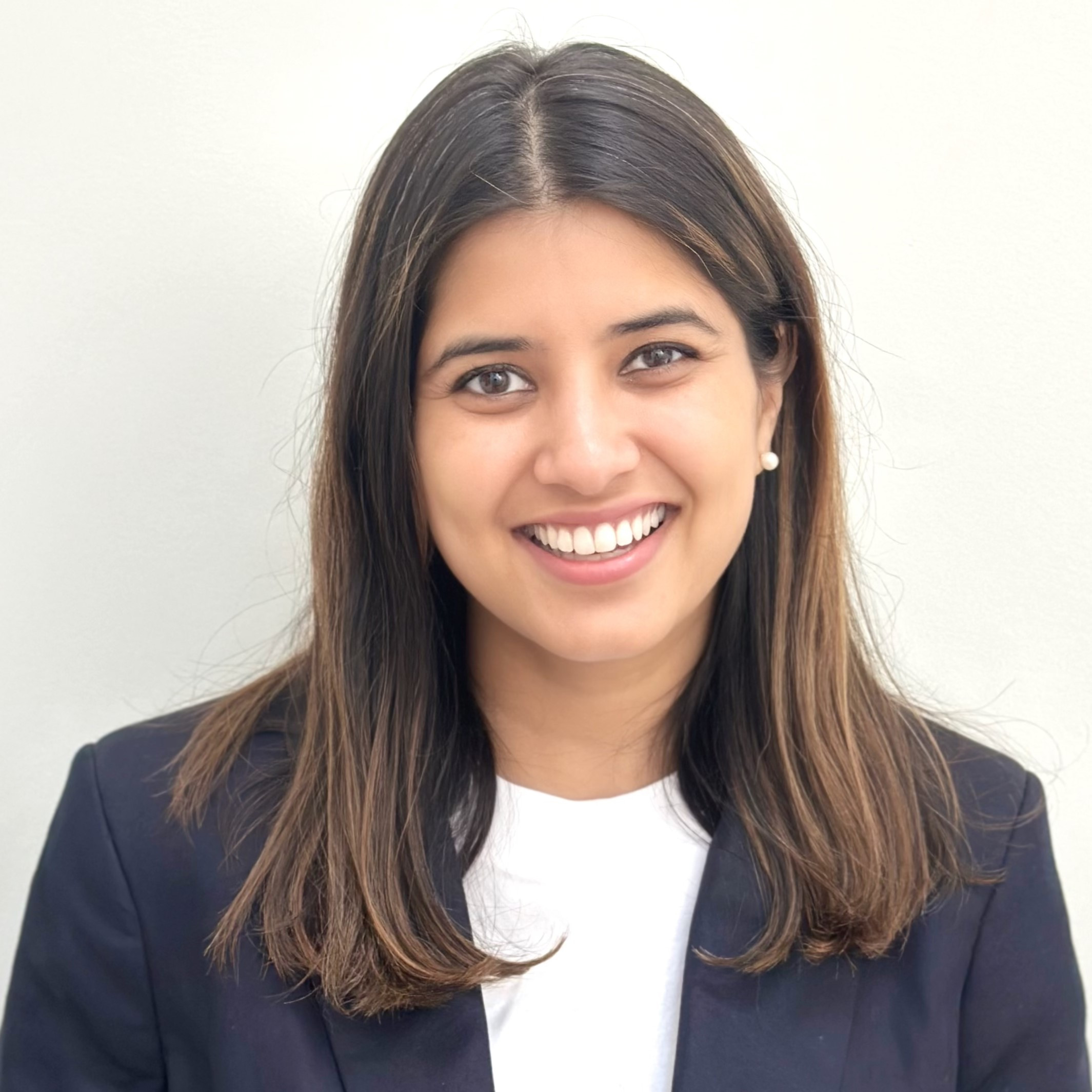
Simmi Singh is the Chief Product Officer at Hook, an AI-powered music platform that enables fans to create and share remixes of their favourite songs while ensuring artists and rights holders are properly compensated. As part of the founding executive team, she leads product, design, engineering, and marketing, driving the platform's development from concept to global launch.
With extensive experience in the music tech space, Simmi previously held leadership roles at Spotify as Director of Strategy & Operations for Podcast Products, where she scaled video podcasts and Spotify Live audio offerings. Before Spotify, she served as Vice President of Strategy & Operations at JioSaavn, India's leading music streaming service, where she helped grow the user base from 20 million to over 100 million monthly active users following a $1 billion merger.
Simmi is passionate about building innovative consumer products that unlock creativity while solving complex business challenges. Her diverse background spans tech, finance, and entrepreneurship, having founded The Crimson Bride, a wedding platform for South Asian couples, and previously working at Intuit and in investment banking.