The global snack boom is often described as a change in eating habits. However, that interpretation misses the point.
Snacking has expanded because it mirrors how decisions are now made: quickly, contextually, and with little tolerance for friction. With compressed time, fragmented attention, and rising mental load, snack choices reveal the decision logic consumers increasingly apply across far larger categories.
Unlike major purchases, snacks are bought often, usually daily, without much thought. This frequent choice offers valuable insights into how people balance speed and value, emotion and function, enjoyment and self-control. When those trade-offs shift, snacking is one of the first places it becomes visible.
Across markets, snacks are no longer secondary to meals. They power mornings, bridge workdays, regulate energy, manage mood, and signal moments of reward. Their success is rooted more in their ability to resolve a specific moment quickly than in price or novelty. The implication extends beyond food: consumers are deciding faster, expecting more from less, and rewarding brands that justify themselves instantly.
How Speed and Discovery Now Shape Choice
As choice expands and attention contracts, most everyday decisions now occur within seconds. In these compressed windows, consumers do not evaluate; they recognise. The options that surface fastest, because they are familiar, legible, or already part of a routine, dominate the outcome.
Snacking makes this dynamic unmistakable. Consumers rarely research snacks in advance. They encounter them in proximity environments, convenience shelves, checkout zones, ride-home kiosks, delivery apps, and algorithmic feeds. By the time they reach a shelf or scroll a product, the consideration set is already narrowed. Visibility and placement create relevance before intent is even formed.
In fast decision environments, brands do not compete on superiority. They compete on clarity. Products that communicate purpose instantly, through format, cues, and repetition, compress decision time and reduce mental work. Those that require interpretation rarely enter the frame at all.
What is often labelled “impulse” is better understood as efficiency: consumers reward brands that respect limited attention, reduce friction, and resolve the choice quickly.
How Environment Shapes the Decision Before It Begins
The modern snack ecosystem is built around proximity, both physical and digital. Convenience stores, mini-formats, last-mile delivery apps, personalised feeds, and micro-occasions have become the primary stages for discovery. These environments favour products that are simple, recognisable, and adaptable to multiple contexts.
Availability shapes choice more than preference when consumers shop while on the go, between tasks, during commutes, in checkout lines, or while scrolling. The products they repeatedly see become the ones they repeatedly choose. Distribution, placement, and algorithmic surfacing now function as silent influencers, narrowing the field long before conscious intention appears.
This is why snacks reflect broader consumer behaviour because the available choices (the environment) limit what consumers can select.

How Emotional Payoff Has Overtaken Rational Evaluation
As decisions accelerate, emotion increasingly closes the gap that rational evaluation once filled.
Snacking makes this shift particularly visible. Consumers do not choose snacks by weighing nutritional panels or calculating price per gram. Instead, they choose based on how the product is expected to make them feel in that moment. Emotional payoffs such as energy, comfort, reassurance, focus, or reward arrive faster than analysis, and in fast-moving contexts, speed outweighs precision.
Better-for-you attributes, such as protein, reduced sugar, or gut health, now function as permission structures. They establish acceptability. Emotion, for the most part, determines the final choice.
Rational evaluation has not disappeared, but its role has narrowed. Price, quality, and ingredients set the boundaries of acceptability. Once those conditions are met, emotional resolution does the work. Products that promise a clear outcome outperform those that rely solely on superiority claims.
How Value Is Being Redefined in Everyday Purchases
Value is no longer defined by how much consumers receive. It is determined by how easily a purchase can be justified. Consumers are not uniformly defaulting to the cheapest option or the largest pack; they are choosing products that feel appropriate for the moment. A smaller, higher-quality snack can deliver stronger perceived value if it aligns with personal standards around balance, intention, or restraint.
Rational evaluation still exists, but only as a boundary. Price, ingredients, and quality set the floor of acceptability. Once those conditions are met, the decision shifts immediately to emotional resolution.
Snacks sit at the centre of this decision-making because they are frequent, visible, and personal. Each choice reinforces a sense of control and discernment, which becomes part of the value itself.
Case Study: KIND Snacks and the Logic of Justifiable Indulgence
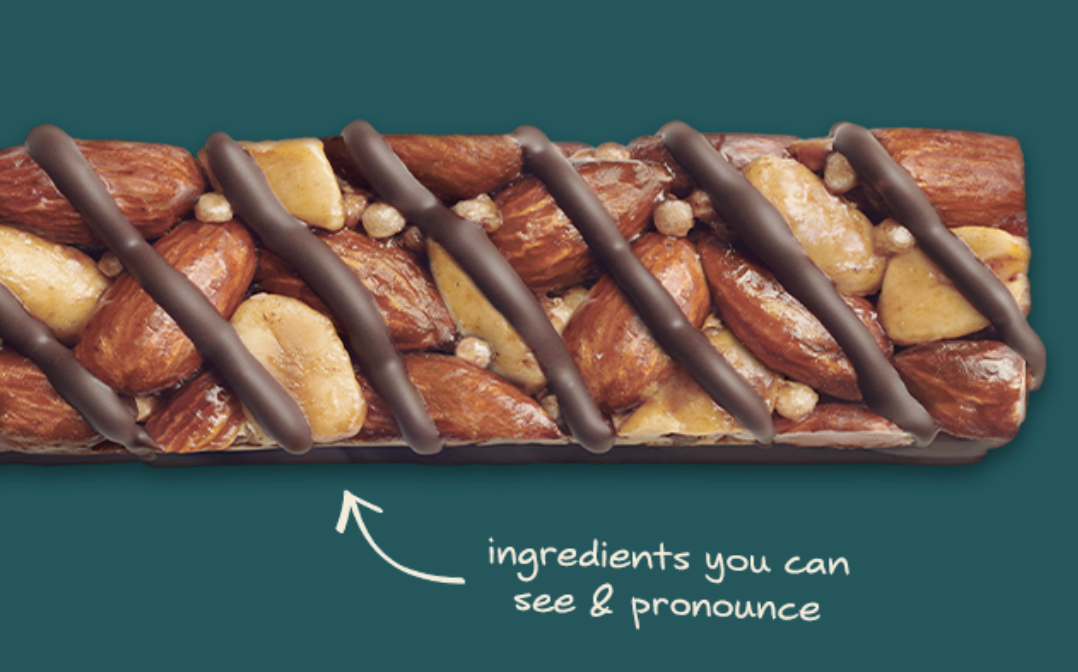
Image credit: KIND snacks
Brands like KIND Snacks operate inside this new decision logic with unusual clarity. From the beginning, KIND positioned itself not as a healthier alternative or a guilt-free treat, but as a product designed to eliminate internal negotiation. Its value proposition is not anchored in health claims or flavour innovation. It is anchored in defensibility, the sense that the consumer can reach for it repeatedly without feeling careless, excessive, or conflicted.
KIND’s bars were engineered around a principle that anticipated the shift toward high-frequency, low-attention decisions: make the product easy to justify before the consumer even thinks to question it. Transparent packaging communicates the entire proposition at a glance: visible whole nuts, minimal processing, recognisable ingredients. The consumer does not need to compare, as the bar declares its acceptability instantly.
This strategy resolved a friction that plagued many early “better-for-you” brands. They relied on explanations (nutrition panels, claims, multi-attribute lists) precisely when consumers had the least patience for them. KIND went the other direction: rather than arguing its case, it made the argument irrelevant.
Portion control, restrained sweetness, and consistent textures reinforced this logic. Consumers are not choosing KIND because it is the most nutritious option, the cheapest, or the most indulgent. They choose it because it closes the internal debate fastest.
This is why KIND scales across contexts more smoothly than many competitors. It works mid-morning, mid-afternoon, post-workout, on-the-go, or as a late-night stabiliser. A product that only works in one scenario makes the consumer reconsider it in all others. KIND avoids that trap by effortlessly fitting into multiple moments.
KIND also benefits from consistency. Even as the brand expanded into new flavours and formats, it preserved its legibility: the same design language, whole-ingredient transparency, and portion profile. This repetition builds trust faster than messaging ever could. After enough cycles of successful use, the consumer no longer evaluates KIND at all. The bar becomes the default; not through loyalty, but through habitual resolution.
This is the new form of loyalty in snacking categories: the disappearance of the decision.
KIND’s success reveals something that goes beyond its category: products that collapse the inner dialogue thrive in environments of rushed, repeated decisions. Those that require consumers to engage in self-monitoring, rationalisation, or guilt-management may win attention once but struggle to win the 50th choice.
The obstacle for brands is not inferior positioning, but the burden of negotiation. KIND succeeded by erasing that burden at the source.
When Utility and Pleasure No Longer Compete
Consumers increasingly expect everyday products to deliver functional benefits without compromising enjoyment. Better-for-you snacks are expected to taste good; indulgent snacks are expected to justify themselves through portion size, ingredient quality, or added benefits. The products that win absorb trade-offs consumers no longer want to manage, allowing responsibility and enjoyment to coexist without negotiation.
Why Modern Consumers Buy Moments, Not Products
Snacking has shifted from a category organised around hunger to one structured by time, context, and routine. Products are chosen to support early mornings, dragging afternoons, or evenings that call for comfort. The decision is not about what to eat, but when and why.
As traditional meal patterns weaken, consumption increasingly occurs in moments rather than at mealtimes. Snacks win when they fit seamlessly into these gaps.
Dependability becomes a structural advantage in this environment. When products are designed to be easily incorporated into everyday life, repeat behaviour is reinforced through familiarity rather than persuasion. Growth comes from becoming a default choice, rather than from outperforming competitors on features or claims.
What Snacking Reveals About Trust and Habit
Snacking shows how trust now forms through repetition, not promises. Consumers return to brands that deliver consistently and work every time. Frequency accelerates this process: after enough successful uses, evaluation disappears, and default behaviour takes over.
This is what brand strength looks like now. Not attachment or advocacy, but unthinking repeat purchase. Once a product becomes part of a routine, it no longer competes on messaging as it simply reappears at the right moment and resolves the choice before alternatives enter the frame.
What the Snack Boom Signals About the Future of Consumer Decision-Making
In environments where decisions must be made repeatedly, under pressure, with limited attention, brands built on comparison, education, or complexity struggle to hold ground.
Snacks sit at the edge of this shift because tolerance for friction is lowest there. What fails in snacking rarely fails dramatically. It simply stops being chosen. Over time, missed repetitions do more damage than lost attention ever did.
The signal is not that consumers want fewer options. It is that consumers wish to make fewer decisions. The brands that succeed will not be the ones that convince consumers most strongly. They will be the ones consumers repeatedly choose without thinking. In categories like snacking, the strongest advantage is becoming the default choice, not just the preferred one.