
Consumer priorities have reorganised, and the shift is reshaping how people evaluate brands across categories. Wellness is no longer a niche or lifestyle marker. It is a decision filter, one that influences choices in banking, beauty, nutrition, retail, travel, and work. This integration has accelerated as younger consumers treat physical, mental, and financial health as interconnected drivers of stability. For them, a product or service must contribute to overall well-being, not complicate it.
The result is a market where credibility depends on the ability to deliver benefit, show evidence, and reduce friction. Claims without proof invite scrutiny. Features without function lose relevance. And brands across sectors are finding that well-being has become an organising principle, not a marketing message.
Workplace Wellness Is Now an Operating Requirement
Employee well-being has shifted from a benefits line item to a structural expectation. Global burnout patterns, highlighted by the McKinsey Health Institute’s recent study of over 30,000 workers in 30 countries, reveal persistent strain in sectors such as healthcare, education, and public service. The concern is no longer limited to morale; it affects productivity, talent retention, and quality of output.
Companies are responding by redesigning work models. Microsoft Japan’s 2019 four-day workweek pilot, which reported a 40% increase in productivity measured by sales per employee, became a reference point for flexible scheduling and workload reform. Large employers, including Salesforce and Goldman Sachs, have expanded access to mental health support and financial wellness tools, aligning benefits with the rising demand for preventive care and real-time assistance.
These changes extend into managerial culture. Organisations are redefining productivity metrics, allowing flexible hours, and prioritising sustainable performance over constant availability. For employers competing for high-skill talent in tight labour markets, wellness has moved from a differentiator to a baseline indicator of organisational credibility.

Product Development Is Being Rebuilt Around Proof and Function
Wellness expectations now influence how products are formulated, tested, and positioned. The clean-label movement has evolved into a demand for validated function, shaping categories from hydration to skincare to household goods.
Functional hydration illustrates the shift. Liquid I.V., acquired by Unilever in 2020, expanded the category with electrolyte mixes positioned for daily energy, recovery, and immune support. Consumers expect benefits grounded in science, not lifestyle positioning, and brands that rely on vague claims are losing ground.
Skincare is undergoing a similar shift. Shiseido’s investment in skin biology—researching circadian rhythms, oxidative stress, and long-term dermal resilience—reflects a broader pivot from “anti-ageing” to longevity science. Products are being designed for measurable repair and protection, backed by transparent ingredient disclosures and third-party testing.
In supplements, demand has expanded beyond general wellness to encompass specific health concerns. Cognitive performance, stress regulation, and gut-brain balance now drive formulation trends, and consumers expect evidence. Adaptogens and nootropics have moved mainstream, but brands must substantiate claims through clinical data or independent lab results to maintain trust.
Co-creation is also emerging as a way to accelerate credibility, and the recent collaboration between Lululemon and Erewhon demonstrates how wellness-first brands are combining performance and mindful living in ways that strengthen cultural relevance.
The collaboration was built on more than overlapping audiences. It united two forces that have shaped the modern wellness economy. Lululemon contributed its reputation for technical performance, community-led retail, and design precision. Erewhon brought its influence within Los Angeles’ wellness culture and its status as a symbol of conscious living. Together, they created a capsule collection that merges performance with lifestyle in a way that reflects how wellness now operates as both practice and identity.
The limited-edition capsule featured 19 pieces, priced between approximately US$34 and US$248, encompassing both women’s and men’s apparel and accessories. Early access was granted to Lululemon app members before global release across digital channels and select stores. The design language drew inspiration from Los Angeles neighbourhoods and lifestyle cues, grounding the collection in Erewhon’s cultural roots while retaining Lululemon’s technical aesthetic.
What set this collaboration apart was its credibility. Both brands have built trust through communities rather than trend cycles—Lululemon through performance and movement, Erewhon through food culture and premium wellness. By meeting at the intersection of apparel and lifestyle, they extended their relevance without diluting identity. For brands, the partnership offers a blueprint for cross-category collaboration centred on shared values, showing how wellness-led brands can expand into culture, lifestyle, and emotional identity without losing authenticity.
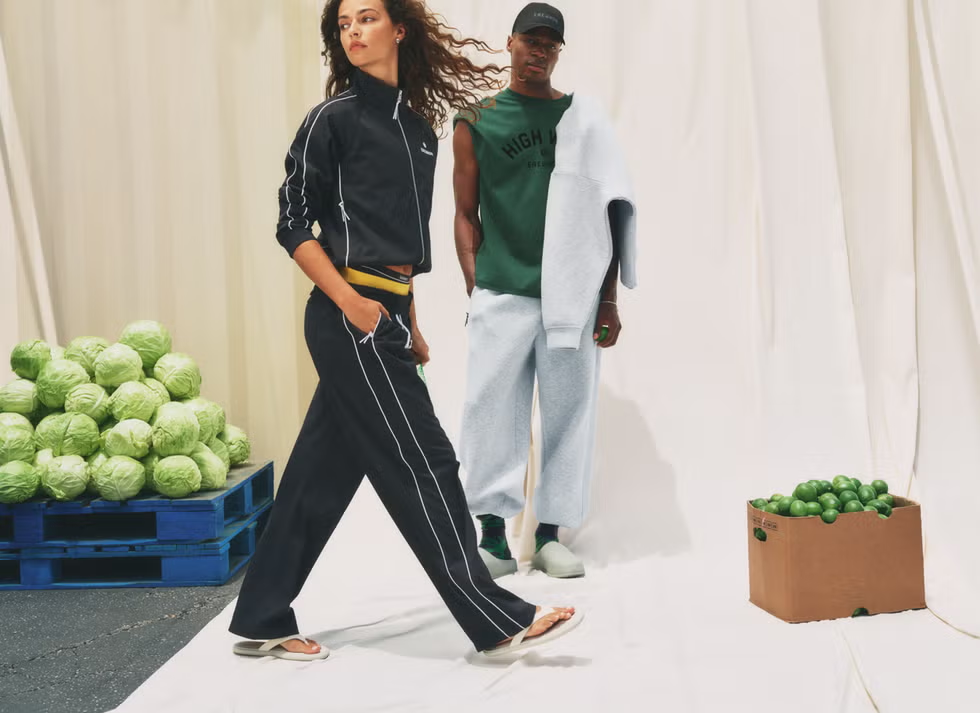
Image Credit: Lululemon
Even household products are adapting. Shoppers expect non-toxic, skin-safe ingredients and credible sustainability credentials. Regulatory pressure is also growing. The US Federal Trade Commission’s ongoing review of the Green Guides aims to tighten oversight of environmental and health-related marketing claims.
Predictive Wellness Technology Is Reshaping Daily Behaviour
Wearables and health-tech platforms have matured into everyday infrastructure. Devices track heart rate variability, sleep efficiency, and recovery, enabling users to anticipate fatigue or illness rather than react to it. Oura and WHOOP have built global followings by transforming biometric data into personalised daily recommendations that inform exercise, rest, and scheduling plans.
Technology is also democratising early detection. Google’s AI-enabled dermatology assistant, rolled out through its Health division, helps users identify potential skin conditions using a smartphone camera, offering guidance without functioning as a medical diagnosis. Apple’s Health app continues to expand its passive monitoring capabilities, providing notifications related to heart rhythm irregularities and long-term health trends.
Mental wellness is part of the same ecosystem. Digital cognitive-behavioural platforms, such as Woebot, offer immediate, stigma-free support while expanding access in markets constrained by practitioner shortages.
Across categories, consumers have grown more comfortable outsourcing elements of their self-care to technology, provided the output is actionable, accurate, and privacy-responsible. Products that translate data into clear guidance, not generic dashboards, are winning adoption.
Wellness Expectations Are Rewriting Retail and Hospitality Design
Retailers and hospitality groups are redesigning physical environments to meet rising expectations for calm, recovery, and cognitive ease. The shift is visible across markets.
Lululemon has expanded its experiential retail offerings, integrating breathwork, mindfulness sessions, and recovery programming into select locations. The model reframes stores as multi-sensory wellness touchpoints. Sephora has expanded its clean beauty offerings while highlighting ingredient transparency, reflecting consumer demand for assured safety and ethical sourcing.
In hospitality, Six Senses has developed longevity-centred programs focused on sleep, breathing, nutrition, and stress reduction, supported by biometric assessments and personalised interventions. Major hotel groups and airlines are adopting circadian lighting, improved air-quality systems, and menus developed for recovery and digestion, particularly for business travellers.
Premium coworking spaces exhibit a similar course. Biophilic design, ergonomic layouts, and on-site wellness services have become common, where companies pay a premium for an enhanced employee experience.
These changes share a unifying principle: consumers gravitate toward spaces that reduce cognitive load and support regulation. Environments that anticipate human needs, rather than treat wellness as an add-on, earn repeat engagement and trust.
Ethical and Sustainable Wellness Is Becoming a Trust Contract
Wellness branding now extends beyond product and experience. Consumers expect the organisations behind these offerings to demonstrate responsible production, labour practices, and environmental stewardship. Sustainability is no longer a premium feature; it is an expectation.
The IBM Institute for Business Value study found that nearly eight in ten global consumers consider environmental responsibility essential, and more than half would be willing to pay more for sustainable products. This shift has elevated the importance of verified claims and independent certification.
Industry leaders have built credibility through transparent action. Patagonia’s circularity initiatives, Aesop’s recyclable packaging and responsible sourcing, and Stella McCartney’s push toward plant-based and alternative textiles demonstrate how ethical commitments reinforce brand strength. Fenty Beauty’s inclusive product design and representation raised new standards for diversity in beauty, one of the clearest indicators that wellness must be culturally and demographically expansive.
Consumers now expect substantiated progress rather than performative messaging. Brands that fail to align operations with their wellness positioning risk rapid erosion of trust.
The Next Wave: Precision, Longevity, and Integrated Ecosystems
The most significant developments in wellness are moving toward precision and long-term health. Longevity science, supported by research initiatives such as those pursued by Altos Labs, is starting to influence how brands position products in skincare, nutrition, and recovery. Terms such as “cellular repair,” “resilience,” and “long-term function” are replacing outdated anti-ageing language.
Digital wellness ecosystems are growing quickly. VR platforms like TRIPP blend gaming environments with mindfulness protocols, creating immersive sessions designed to regulate mood and focus. Personalised health-coaching systems, powered by biometric feedback, are evolving beyond chat interfaces and becoming adaptive lifestyle frameworks.
Personalisation remains the most transformative force. Advances in microbiome testing, continuous glucose monitoring, and genetics are enabling hyper-specific recommendations for nutrition, supplementation, and lifestyle choices. Companies like Viome are beginning to anchor commercial models around individualised wellness protocols shaped by biological insights.
Across all these developments, the expectation remains the same: wellness solutions must be precise, evidence-based, and tailored to individual needs, rather than mass-market approximations.
For brands, understanding where to invest—and how consumers across regions, segments, and income groups define “wellness value”—requires disciplined market research. Robust segmentation, product testing, and category demand mapping enable companies to avoid misalignment and develop offerings that meet genuine needs rather than trend-driven assumptions.
Wellness has become structural to how people make decisions. It shapes perceptions of safety, value, and trust across categories. The companies that will stay relevant are those that embed wellness into product design, workplace culture, service environments, and supply chains, and validate those decisions with credible insight. Evidence, transparency, and operational discipline (not slogans) will determine who leads in a wellness-first economy.
Work with us to understand where wellness value is shifting, and how to design offerings that meet it with precision.