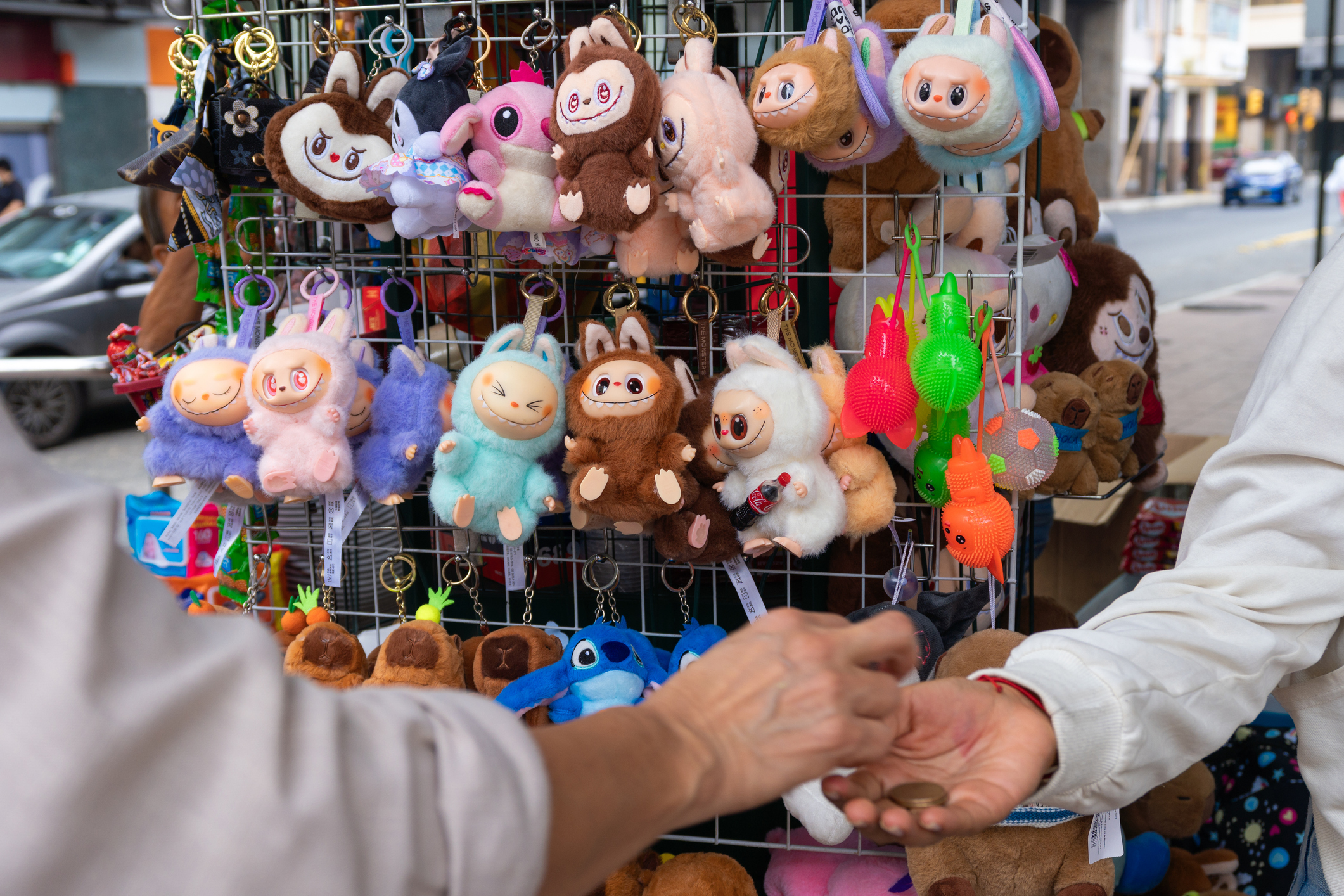

You may find it charming, unsettling, or simply strange. Either way, Labubu has become difficult to ignore.
The elf-like character, with pointed ears and a wide, toothy grin, was created by artist Kasing Lung and turned into a global collectible by Chinese toy company Pop Mart. Limited releases, blind boxes, and celebrity fans helped it spread quickly across markets.
But the more important story begins after the first burst of attention.
Consumers kept buying, new releases attracted queues, and rare figures appeared on resale platforms at several times their original price. Pop Mart continued placing the character in new products and settings without allowing it to become entirely predictable.
Many brands now spend heavily for attention that lasts little longer than the campaign that created it. Labubu shows how a cultural hit can keep generating demand when the company builds something around it that consumers want to revisit.
China’s collectible-toy boom also arrives at a revealing moment. Consumers remain cautious about larger purchases, yet they are still spending on affordable products that offer identity, surprise, and a sense of belonging. The question for brands is how much of that demand they can keep once the excitement around a release begins to fade.
Small purchases carry more emotional weight
China’s collectible toy market is expanding amid cautious consumer spending. Households remain selective about major purchases, yet demand continues to grow around products tied to hobbies, fandom, and personal identity. These purchases are relatively easy to justify and offer pleasure without a large financial commitment.
Chinese policymakers have started to treat this behavior as an economic opportunity. Interest-led categories, including trendy toys and anime merchandise, are being promoted as potential sources of domestic consumption growth. China’s designer toy market is projected to exceed RMB110 billion (about US$16.2 billion) in 2026.
Economic caution does not remove the desire for pleasure, identity, or social connection. It changes the size of the purchase that meets those needs.
The categories most likely to hold demand are those tied to interests people continue to protect when household budgets come under pressure.

Every generation has its collectible craze
Labubu belongs to a much longer history of products that turned limited supply into public competition. Cabbage Patch Kids drew chaotic queues in the 1980s. Beanie Babies created a resale market built around retired designs in the 1990s. Tamagotchi made ownership feel like an ongoing relationship by asking consumers to care for a virtual pet.
A relatively affordable product becomes difficult to find, ownership becomes socially visible, and demand begins to reinforce itself. People want the object partly because other people want it too.
What happens after the peak varies sharply. Cabbage Patch Kids lost momentum as availability increased and novelty faded. Beanie Babies became increasingly dependent on the belief that scarce editions would rise in value. Tamagotchi survived through repeated reinvention, giving new generations different ways to interact with the same central idea.
Labubu’s future will be determined by the same divide. Scarcity and celebrity attention helped accelerate the craze. However, staying power will depend on whether consumers remain attached to the character once buying it becomes easier and owning it becomes less remarkable.
Collecting turns one purchase into an unfinished story
Collectibles change the meaning of the next purchase. Once consumers own one figure, they begin to see the wider set. Missing designs become more noticeable, and each release creates another opportunity to move closer to completion.
Limited supply adds urgency, while visible demand provides social proof that the object is worth pursuing. Blind boxes introduce uncertainty into the purchase itself. Buyers anticipate discovering what is inside, followed by either the satisfaction of finding a wanted figure or the motivation to try again.
The collection can also become part of how people present themselves. A figure displayed at home or attached to a bag signals taste and membership in a community. The object gains meaning through the people who recognize it.
These motivations help explain why inexpensive toys can lead to repeat purchases. They also expose the weakness in the model. A company may be creating a habit around acquisition without building lasting attachment to the character. Demand becomes more durable when the story, design, and community remain compelling after the set is complete and scarcity begins to ease.
Pop Mart keeps building on what consumers already recognize
Pop Mart rarely treats a successful character as a finished product. It keeps changing the context around it. New editions and partnerships allow the same character to feel current without asking consumers to learn a new story each time.
Recognition accumulates. Each release benefits from the interest generated by the previous one, reducing the work required to make the next launch matter.
Competitors can quickly reproduce the mechanics of a drop. The recognition behind it takes years to build.
A breakout character can distort the whole business
Pop Mart’s 2025 results showed how far Labubu had moved beyond a successful product line. Revenue rose 184.7% to RMB37.12 billion (about US$5.4 billion), while The Monsters franchise generated RMB14.16 billion (about US$2.1 billion). That meant one character universe accounted for about 38% of the company’s revenue.
Pop Mart has other established properties, including Molly, Skullpanda, and Crybaby. Molly generated RMB2.9 billion (about US$428 million) in 2025, although its performance fell short of some analysts' expectations. None has yet approached the scale of The Monsters.
Pop Mart’s shares fell sharply after the results as investors focused on the company’s dependence on The Monsters.
As one franchise contributes a growing share of revenue, investment, and management attention tends to follow it. The business may direct more resources towards sustaining current success, thereby narrowing the investment available for another franchise.
When one character becomes more recognizable than the company that owns it, loyalty may remain attached to the character itself. That makes any slowdown harder to absorb because the wider portfolio has not built the same level of meaning.
Pop Mart now has to show that its success came from a repeatable ability to develop characters with lasting appeal. Investor confidence will depend in part on whether another franchise can become a substantial source of revenue.
Scarcity creates signals, risks, and distortions
The secondary market has become part of the collectible-toy economy. Rare figures can sell for several times their retail price, creating a visible market price long after the original sale.
Resale prices provide unusually rapid market feedback. Buyers reveal which designs they are willing to chase and how much more than the retail price they will pay. Changes in those prices can also show when enthusiasm begins to weaken, often within days of a launch.
A sharp resale premium can show that demand exceeded expectations or that supply was set too low. Heavy trading by a small group of resellers may present a different picture from demand among consumers buying at retail.
Sell-outs and rising resale prices can overstate a franchise’s strength. Broader demand becomes clearer when interest endures as supply increases, spreads across several product formats, and reaches consumers who have no intention of reselling what they buy.
Pop Mart must judge how much scarcity the market will tolerate before frustration begins to damage demand. Persistent shortages around particular releases may raise desirability for a time, but they also push genuine buyers into secondary markets.
Scarcity also creates risks beyond lost sales. Persistent shortages can push buyers towards counterfeits, while the blind-box mechanic has attracted regulatory scrutiny in China, particularly where younger consumers are involved. Brands borrowing the model would need to consider how quickly excitement can become a question of consumer protection and brand control.
Slower full-price sales may reveal weakening demand before social attention falls. A poor response to new formats or growing reliance on promotions would suggest that demand is becoming overly dependent on scarcity and publicity.
Labubu remains a major global consumer franchise. Sales are still substantial, although growth has slowed from its earlier pace. Wider availability has reduced some resale premiums, even as rare releases continue to command high prices. The next test is whether full-price demand can hold once scarcity and publicity are doing less of the work.

Stores can help brands test cultural appeal early
Pop Mart’s store network could give it an early view of how shoppers respond to unfamiliar characters. Consumers often struggle to explain why one design feels distinctive while another is easy to ignore. Their behavior in a real shopping environment may reveal differences before production and marketing commitments increase.
That insight becomes useful only when it reaches product and marketing teams quickly enough to influence what is produced next.
A successful franchise can travel across a portfolio
Large companies often keep product lines separate, trapping recognition in silos. A recognizable character creates a shared reference point across different categories.
A new product can then draw on recognition built elsewhere in the portfolio. Every extension adds to the meaning consumers attach to the franchise.
International growth can alter the character’s relationship with both new and established fans. A character that once signaled membership in a niche community may feel different once it appears across mass retail and global licensing deals. Local teams need enough freedom to make it relevant without removing the features that made it recognizable.
Every new category creates another chance for the character to feel overused or out of place. An extension is more likely to work when consumers can see why it belongs in the new category without needing a campaign to explain the connection. A forced extension borrows recognition without adding anything to the character or the wider brand.
A large fan base is less valuable when the relationship sits elsewhere
A character can generate enormous attention while much of the consumer relationship remains with social platforms, marketplaces, and resellers. The owner may see sales rise without gaining a clear view of who is buying or what brings them back. Public enthusiasm does not give the company direct access to the consumers driving it.
Pop Mart’s own stores and digital channels give it more direct contact with buyers than many campaign-led brands have. When customer data from those channels is connected, the company can see how interest moves between characters and releases.
Direct contact allows the company to recognize returning buyers and understand which releases bring them back. Without that connection, the next release remains dependent on platforms and intermediaries that control access to the audience.
What remains after the chase matters most for collectibles
Labubu became visible across markets, attracted repeat purchases, and developed a recognizable world around the character.
As scarcity eases, demand will depend more on the character itself, the quality of new releases, and the relationship Pop Mart has built with buyers.
Some collectible crazes remain tied to the thrill of finding and owning something rare. Others continue to matter after the product becomes easier to buy and the social signal begins to weaken.
Attention can create the opening. Lasting demand depends on whether consumers still value the idea once rarity stops carrying it.
A viral hit can create attention overnight. Sustaining demand requires a clearer view of what keeps consumers returning and where the next opportunity is likely to emerge. Talk to Kadence about understanding the shifts shaping your category.

FAQs
Why is China’s collectible toy market growing despite cautious consumer spending?
Collectible toys offer an affordable source of pleasure, identity, and social connection. Consumers may delay major purchases while continuing to spend on smaller products tied to interests they value.
What does Labubu’s success reveal about brand growth?
Labubu shows how repeated releases, scarcity and recognizable intellectual property can turn initial attention into continuing demand. It also reveals the risk posed when a single franchise accounts for a large share of the company's growth.
How can brands tell whether a viral product has lasting appeal?
Full-price demand should continue after supply increases and publicity begins to fade. Interest across new formats and purchases by consumers outside the resale market also provides stronger evidence of broader appeal.
What can brands outside the toy industry learn from Pop Mart?
Brands can use familiar ideas to support new launches and strengthen their direct relationship with buyers. They also need a clear process for developing unexpected demand after the original campaign ends.