
I recently came across an AI-generated model on Instagram with millions of followers. To me, she was obviously artificial. Apparently, not everyone agreed. Thousands of comments asked about her skincare routine, where she'd bought her handbag, and weirdly, some people fawned over her, wishing they looked like her. Whether people recognized her as AI or not, they engaged with her as much as they would with a human influencer.
It's easy to see why consumer brands are interested.
When H&M partnered with virtual influencer Kuki, Meta reported that ads combining her content with the campaign video generated 11 times the ad recall of the video alone, at a 91% lower cost per person recalling the ad. Impressive figures, although they tell us more about campaign performance than whether consumers formed a stronger connection with H&M.
The influencer business model hasn't changed. The influencer has.
Virtual influencers can attract followers, entertain audiences, showcase products, and secure brand partnerships, much like their human counterparts. What changes is how brands create, manage, and control the personality behind the content.
There are several ways to approach it. Brands can work with established human creators, partner with independent virtual influencers, create digital versions of real people, or develop synthetic personalities they own outright. Each offers distinct advantages, costs, and credibility questions.
Yet marketers appear more comfortable using AI behind the scenes than putting it in front of consumers. Linqia's 2026 State of Influencer Marketing report found that 74% of surveyed marketers used AI for ideas, briefs, and workflow efficiency, while 89% had no plans to work with virtual influencers or digital avatars.
That hesitation makes sense to me. Using AI to help produce a campaign is one thing. Asking consumers to develop an ongoing relationship with an artificial personality is another.
Three routes into virtual influence, three different business cases
Not every brand needs to create its own virtual influencer. The campaigns already in market show three quite different approaches, each with its own commercial considerations.
H&M × Kuki: Partner with an established virtual influencer

H&M partnered with Kuki, an established virtual personality with her own identity and audience. The arrangement gave H&M access to a synthetic influencer without having to create a character, develop its personality, or build a following from scratch. It was a way to experiment with virtual influence within an existing campaign rather than commit to developing a long-term brand asset.
Vaseline × Febby Rastanty: Extend a human influencer

In Indonesia, Vaseline took a different approach, creating an AI-powered avatar of actress and influencer Febby Rastanty for its #BebasHealing campaign. WARC reported reach exceeding 71 million, a 14% increase in awareness, and 15% sales growth across the campaign. Febby brought an existing audience and credibility, while the avatar enabled interactive experiences at scale.
Magazine Luiza × Lu do Magalu: Build an owned character
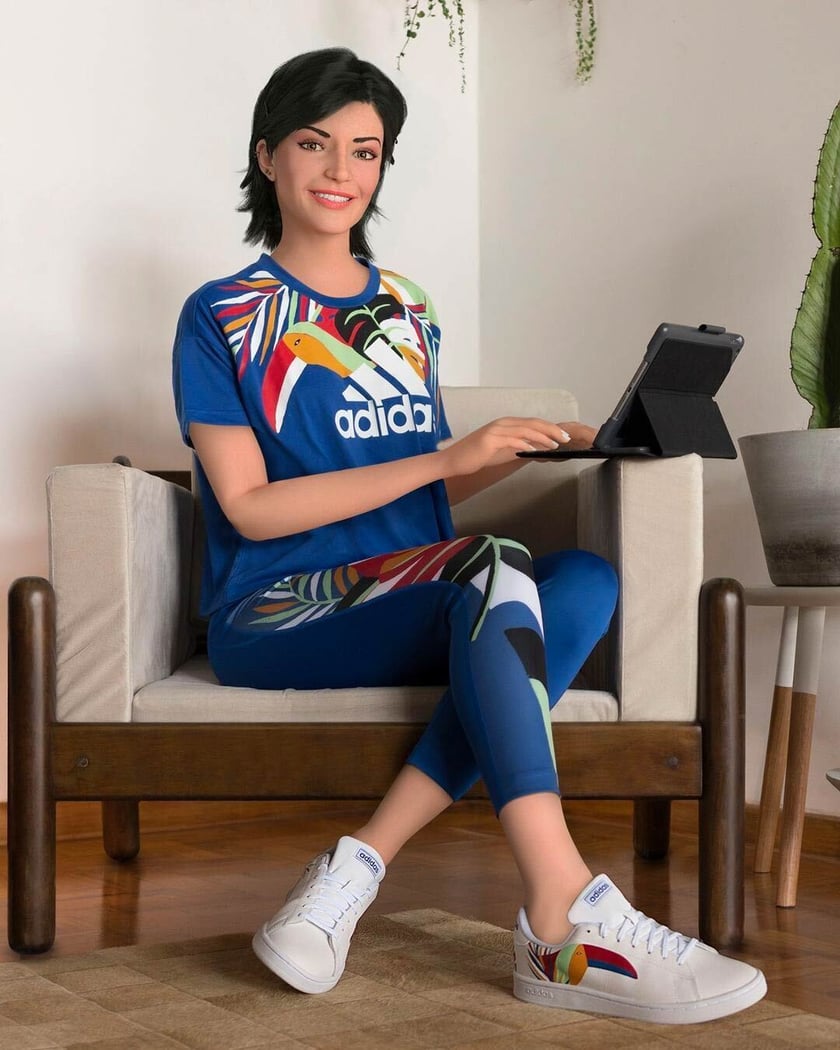
Brazilian retailer Magazine Luiza has spent more than two decades developing Lu, its proprietary virtual personality. A 2026 collaboration with Wella reportedly generated 130 million video views, along with an 82% increase in product-page visits and a 98% increase in hair-color unit sales during the campaign period. These are company-reported outcomes, not proof that Lu alone caused the sales increase.
Lu demonstrates what sustained ownership can achieve. But few brands have twenty years to develop a character before expecting a return. Partnering with an existing personality may be a more sensible way to gauge consumer response before committing to one of their own.
What does an AI influencer actually influence?
A 2026 meta-analysis by Mojtaba Barari, Martin Eisend, and Alicia Kulczynski, published in the Journal of the Academy of Marketing Science, examined 210 experiments across 110 papers. Virtual influencers generated engagement comparable to that of human influencers but performed worse on perceived credibility, attitudes toward brands and advertising, and consumers' stated intentions to act.
A second 2026 meta-analysis, published in the Journal of Advertising, offers a somewhat different perspective. Drawing on 46 experimental studies, it also found that consumers viewed virtual influencers and their messages less favorably, but the differences were less pronounced when researchers examined behavioral intentions and actual behavior.
That uncertainty is worth taking seriously. The AI model I encountered on Instagram had people asking for skincare recommendations and product details. Some may have known she wasn't real and simply enjoyed the content. Others may have believed they were interacting with a person. We cannot assume either from the comments.
From a brand perspective, the more revealing measure is what happens after someone engages. Do they remember who sponsored the content? Does the endorsement make the brand more credible? And does that interest eventually influence what they buy?

Where authenticity becomes a commercial problem
A virtual influencer doesn't need to be human to be entertaining or useful. A fictional character can showcase a handbag, explain product features, or introduce a new collection. The credibility problem begins when a synthetic personality claims experiences it cannot possibly have.
Would you trust an AI influencer who claimed a restaurant meal was delicious? Or one who said a skincare product had transformed her complexion? These are personal endorsements built on experiences that require a real person.
The 2026 meta-analysis published in the Journal of the Academy of Marketing Science found that effectiveness varied according to how human a virtual influencer appeared and how well the character suited the brand, product, and message. A highly realistic character may invite expectations of personal experience that a visibly fictional one does not.
As synthetic faces and voices become harder to distinguish from real people, disclosure becomes more important. Consumers should know whether they're engaging with a real person or an artificial character. Advertising rules already address misleading endorsements and commercial relationships, although the specific requirements vary by market.
Personally, I see little long-term value in disguising a character's artificial identity. If a brand needs consumers to believe its virtual influencer is human, I'd question what that says about the strength of the idea itself.
What happens when the novelty wears off?
I've watched enough marketing innovations come and go to be cautious about their early promise. Email transformed how businesses reached customers. It was fast, inexpensive, and effective. Then inboxes filled with spam, phishing attempts, and messages nobody wanted. Email survived, but earning someone's attention became considerably harder.
Social media followed a similar path. The early days of MySpace and Facebook were full of enthusiasm about connecting people and building communities. Today, conversations about those platforms are just as likely to involve misinformation, fake accounts, and the effects of algorithm-driven content.
Neither disappeared. But our relationship with them changed.
I suspect virtual influencers will follow a similar trajectory. Their novelty and relatively accessible production costs will encourage brands to experiment, and probably to overdo it. Eventually, consumers may become more selective about when they're happy interacting with a synthetic personality and when they want a real person.
Research already suggests novelty and credibility play different roles as audiences become familiar with virtual influencers. But whether today's curiosity can sustain years of engagement remains uncertain.
Yes, the tech will keep improving. I'm less convinced that making virtual influencers indistinguishable from humans will necessarily make people want to follow them in the long term.

Before investing, test the proposition … not just the character
Measuring influencer marketing ROI is already difficult. Linqia's 2026 State of Influencer Marketing report found that 79% of surveyed marketers struggled with it. For virtual influencers, the challenge is separating the character's appeal from the value it creates for the brand.
For me, any investment in a brand-owned virtual influencer would start with understanding the audience. Who would welcome it, and who might find it off-putting? What would the character offer that existing creators or conventional brand content couldn't? And would people respond differently if the same message came from a human?
There's no reason to commit to building a character before testing those assumptions. Brands can compare an established virtual influencer, a human creator, a digital twin, and conventional branded content against the same campaign objectives.
I'd want to know whether people remembered the brand as well as the character, whether the content increased consideration, and whether enthusiasm persisted after repeated exposure. Equally important is understanding who might find the character unappealing or even lose trust in the brand because of it.
An impressive launch might justify the initial investment, but what happens six months or two years later? A brand-owned virtual influencer needs a steady stream of content, ongoing promotion, and continual development to remain relevant. Those costs don't disappear once the character has been created.
Personally, I'd rather find out whether the investment makes sense before spending years building a character that consumers might not particularly want.
Should your brand create a virtual influencer?
Possibly. Virtual influencers have already found a place in entertainment, storytelling, and personalized experiences. But whether they become lasting brand assets will depend on what consumers want from them and whether brands can continue giving people a reason to engage.
I expect virtual influencers to become an accepted part of marketing, much as email and social media have. But acceptance won't be universal. Consumers may happily interact with an artificial personality for convenience or entertainment while continuing to prefer real people for advice grounded in personal experience.
For brands considering ownership, I'd start by testing whether an existing virtual creator can achieve the intended results. Building a character comes with years of potential investment, not just the cost of launching one.
The tech may be new, but the investment decision isn't. Novelty alone isn't a business case.
At Kadence, we help brands understand how consumers respond to emerging technologies, from trust and authenticity to brand perception and purchase decisions. If you're considering virtual influencers, speak with our team about the research that can help you make an informed investment decision.
FAQs
Are virtual influencers as effective as human influencers?
Research suggests virtual influencers can generate comparable levels of engagement, but their effectiveness varies by audience, product category, and campaign objective. A 2026 meta-analysis found they generally performed worse on perceived credibility and brand attitudes. Other studies have found more comparable results for purchase intentions and behavior.
What are the benefits of creating a brand-owned virtual influencer?
Ownership gives brands greater control over a character's identity, messaging, appearance and availability. A successful character can also become a long-term brand asset. However, companies must fund ongoing content creation, audience development and management, making ownership a different investment from hiring an established influencer.
Do brands have to disclose when an influencer is AI-generated?
Disclosure requirements vary by market, but brands must avoid misleading consumers about endorsements and commercial relationships. Clearly identifying synthetic personalities can help protect consumer trust, particularly when realistic AI-generated faces and voices could be mistaken for real people.
Can virtual influencers genuinely influence purchasing decisions?
Potentially. Virtual influencers can attract attention, introduce products, and influence brand perceptions. However, engagement alone does not establish an effect on purchasing. Brands need to distinguish between interest in the character, recall of the sponsoring brand, purchase consideration, and actual sales.
How should brands test a virtual influencer before investing?
Start by understanding which audiences would welcome a virtual character and what role it could credibly play. Compare its performance against human creators, existing virtual influencers, or conventional branded content. Measure brand recall, trust, purchase consideration, and response after repeated exposure before committing to a long-term investment.