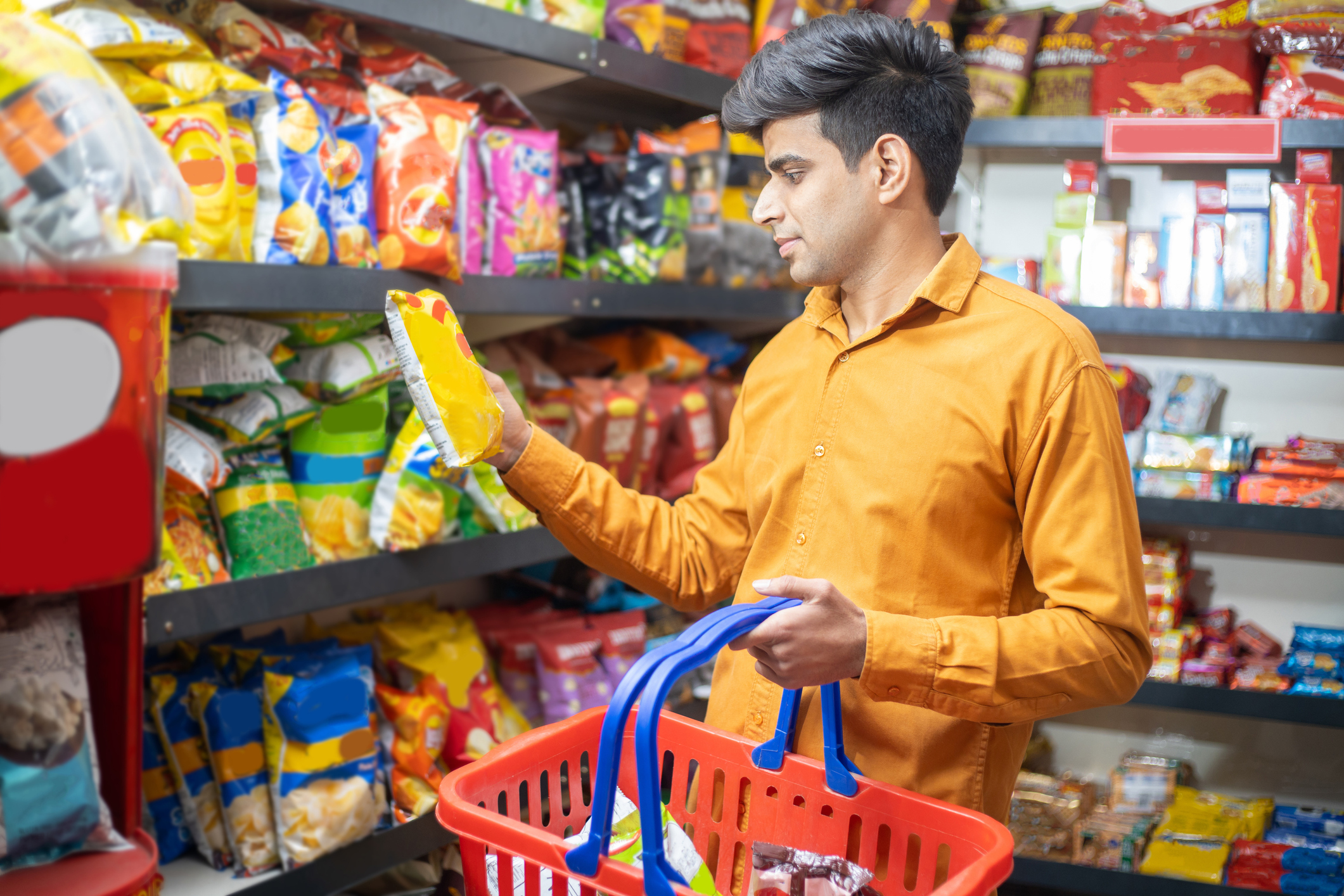

Premiumization is usually imagined as a climb: incomes rise, consumers trade up, and bigger, more expensive products enter the basket. The numbers from rural India describe something less orderly.
Rural consumers are buying more premium goods without necessarily spending more money each time they shop. In 2025, rural India accounted for 51 percent of the country’s affordable-premium fast-moving consumer goods (FMCG) volume, up from 45 percent four years earlier, as reported by The Economic Times. Rural consumers also represented a striking 42 percent of the market for products priced at more than one and a half times the category average.
Premium-product volumes in rural India grew 9 percent, faster than the 6 percent recorded in urban markets. Average rural spending on premium FMCG also rose more quickly over the preceding five years, while some of the products carrying that growth arrived in very small packs.
Parle Products has sold Milano, one of its premium biscuit brands, in rural India at ₹10, rather than relying solely on the larger ₹40 format. Hide & Seek biscuits and ITC’s premium Dark Fantasy cookies have also appeared at ₹10, while Dabur has widened access to premium products through smaller formats.
₹10 is roughly US$0.10 at August 2026 exchange rates, although its significance lies in the cash decision rather than the currency conversion. This ₹10 price point is popular in India because it lets shoppers buy premium products without paying the high cost of a standard, larger package.
The sales figures show demand for premium products, but not how households are paying for them. A higher-priced purchase may come from a larger category budget, a smaller quantity, a cut elsewhere, or a one-time trial. Household spending diaries and discrete-choice research can separate those behaviors before companies commit to pack sizes, pricing, production, and distribution.

The ₹10 pack may be the destination
Small packs are often treated as recruitment devices: a consumer tries the premium version at a lower price, discovers its value, and eventually moves toward a larger format. The economics can improve as the pack gets bigger, which makes that progression attractive to manufacturers, but it should not be built into the forecast before it is observed.
For some rural households, the small premium pack may be the format that enables repeat purchase. A shopper can accept a higher price per serving while keeping the amount spent per transaction tightly controlled, giving a premium brand pricing power without permission to increase the size of the purchase.
If consumers reliably migrate upward, a ₹10 SKU can be judged partly by the customers it recruits. If they remain at ₹10, the format has to earn its place through its own margins, manufacturing efficiency, retailer economics, and repeat rate.
In June 2026, The Economic Times reported that sales of smaller packs of everyday products across India were growing four to ten percentage points faster than larger packs as households managed higher costs. The data is national rather than rural-specific, but it reinforces the resilience of manageable cash price points and the risk of assuming that premium growth will automatically pull consumers into larger packs.
One household can occupy three price tiers
A household may buy premium toothpaste, an economy detergent, and a mainstream cooking product in the same shopping cycle. A more expensive biscuit may be accepted because a child wants it, while a hair-care product commands a premium because the results are visible, and household cleaning remains intensely price-sensitive. The purchase, rather than the household, becomes a more useful unit of analysis.
Consider two households that each buy the same premium shampoo sachet four times a month. One absorbs the extra cost without changing other spending; the other funds the shampoo by buying another product less often or choosing a cheaper alternative elsewhere.
Both generate the same premium volume, but only one has clearly expanded the amount of money available to the category. A premium SKU funded by incremental spending has more room to withstand a price increase than one competing continually with another household purchase, where demand may be more exposed to inflation, promotions, changes in cash flow, and competitors offering a lower immediate price.
The person consuming a product may also have little control over whether it enters the household. A parent can support a higher price for a child’s health product and reject the same premium for an indulgence, while a functional benefit may win approval from the person managing spending, where a vague quality claim does not.
“Rural premium consumer” is too broad a category for decisions this specific. The more useful questions are which purchases win a premium, under what circumstances, and at whose insistence.
Follow the money after the trade-up
Household spending diaries can show what happens to the rest of the budget when a premium product enters the basket. Following purchases over several weeks can show whether a premium biscuit adds to household spending, displaces cheaper snacks, or is bought mainly when more cash is available.
A premium detergent may displace a cheaper product but be bought in smaller quantities. A more expensive personal-care item may return reliably after payday and disappear at other points in the month, exposing a pattern that a single survey response would miss.
Trial and incorporation into the household budget can look identical in a one-time survey. A consumer can buy a product once, enjoy it, and express every intention of returning, while six weeks of spending behavior show that it never returns.
Another household may alternate between premium and economy packs with considerable consistency. That pattern can be more commercially useful than a simple conversion story because it shows when demand rises and whether a portfolio designed to accommodate switching may outperform one built around permanent migration.
The same diaries can establish whether a premium purchase creates new category value. If expenditure rises and stays higher, the household has expanded the category budget; if another purchase contracts, the brand has won a share of existing spending; if consumers buy less and stretch usage, the revenue effect may be weaker than the premium positioning implies. Aggregate sales data can record all three as premium growth.

Test the point where the premium breaks
Discrete-choice research can test the choices companies still have time to change by placing realistic alternatives against one another. A study might put a larger economy pack against a smaller mainstream option and a premium pack at several cash prices, then vary the product benefit, purchase frequency, and availability.
A consumer might repeatedly choose a ₹10 premium pack despite its higher per-gram price, only to abandon the product when the required transaction amount rises to ₹20. Some products are valuable enough that shoppers will pay more for larger sizes, making it more important to identify this specific price limit than to guess how much people might pay in general.
A premium that works for an occasional snack may fail when consumers must fund it every week. A health claim may support a wider price gap than a status cue, while removing the smallest pack can show whether buyers move upward, switch brands, or return to the economy offer.
Spending-diary behavior can make those choice results more precise. A repeat premium buyer whose total category spending has increased is a different commercial prospect from a trier who repeatedly funds the purchase by cutting elsewhere, while a household that alternates between price tiers may respond to a larger pack very differently from one that has incorporated the premium product into routine spending.
The result is a decision boundary brands can use: the pack, cash price, and benefit that can survive repeated competition for the household’s money.
Premium growth may require more packs, not fewer
Rural premiumization may frustrate companies expecting demand to migrate neatly toward larger, higher-value SKUs. A ₹10 premium pack might justify long-term production if customers keep buying it repeatedly without switching to larger sizes, whereas other products might work better at ₹20 or ₹30 price points.
A premium variant may justify its price only when tied to a specific functional benefit, and the economy SKU may remain essential even among households that regularly buy premium products. That creates a portfolio in which different price tiers coexist because they solve different purchasing constraints rather than representing different consumer classes.
A premium brand can achieve a broad rural reach and still underperform if local stores receive the wrong pack sizes. Distributing only the smallest format can be just as costly when consumers are willing to commit more, leaving revenue on the table even as penetration rises.
Small packs also carry packaging and handling costs that are easier to justify when brands know whether the format is a recruitment tool, a permanent purchase, or an occasional one. Forecasting eventual migration without evidence can leave the production model dependent on a customer behavior that never materializes.
The most valuable brand opportunity in rural India may lie within a household that pays more for biscuits this week, remains firmly with an economy detergent, and upgrades in personal care only when the benefit is clearly visible. The signal worth following is the purchase that survives when another demand is made on the same money.
Kadence’s experience across India’s rural markets can help brands trace these decisions inside real household budgets, combining spending diaries with discrete-choice research to identify the pack, price, and proposition that can sustain repeat purchase.
FAQs
Why are small packs important in rural India?
Small packs reduce the amount consumers need to spend at one time, making branded and premium products more accessible without requiring a larger upfront purchase. This has made low-unit-price packs particularly important for FMCG companies trying to expand trial and repeat purchase in rural markets.
Are rural Indian consumers buying more premium FMCG products?
Yes. In 2025, rural India accounted for 51 percent of affordable-premium FMCG volume and 42 percent of super-premium volume, while rural premium-product volumes were growing faster than those in urban India.
Does premiumization in rural India mean consumers are moving to larger pack sizes?
Not necessarily. Premium products are increasingly being offered in smaller, more affordable packs, allowing consumers to trade up in product quality or brand while limiting the cash required for each purchase. Recent Indian FMCG data also shows strong demand for smaller pack sizes more broadly.
How can FMCG brands tell whether rural premium demand is sustainable?
Household spending diaries can show whether a premium purchase is repeated, adds to household spending, or displaces another purchase. Discrete-choice research can then test how pack size, price, product benefits, purchase frequency, and availability affect choice. Together, they help distinguish sustainable premium demand from trial or promotion-led switching.