

Japan’s housing market is not transforming through sharp cycles or sudden surges. Its shifts are quiet and cumulative, shaped by practical decisions rather than speculative momentum. Findings from our multi-year study show that renovations are on the rise, pre-owned homes are gaining momentum, and renters are approaching ownership with greater caution. Across the data, households are making choices that reinforce stability, usability, and longevity.
The patterns suggest a country moving from expansion to preservation. Homes are being maintained and improved rather than replaced. Buyers are choosing reliability over novelty. Renters are increasingly treating mobility as a sustained preference rather than a temporary stage before purchasing a home. The pace is measured, but the direction is unmistakable.
Renovating for Function Rather Than Reinvention
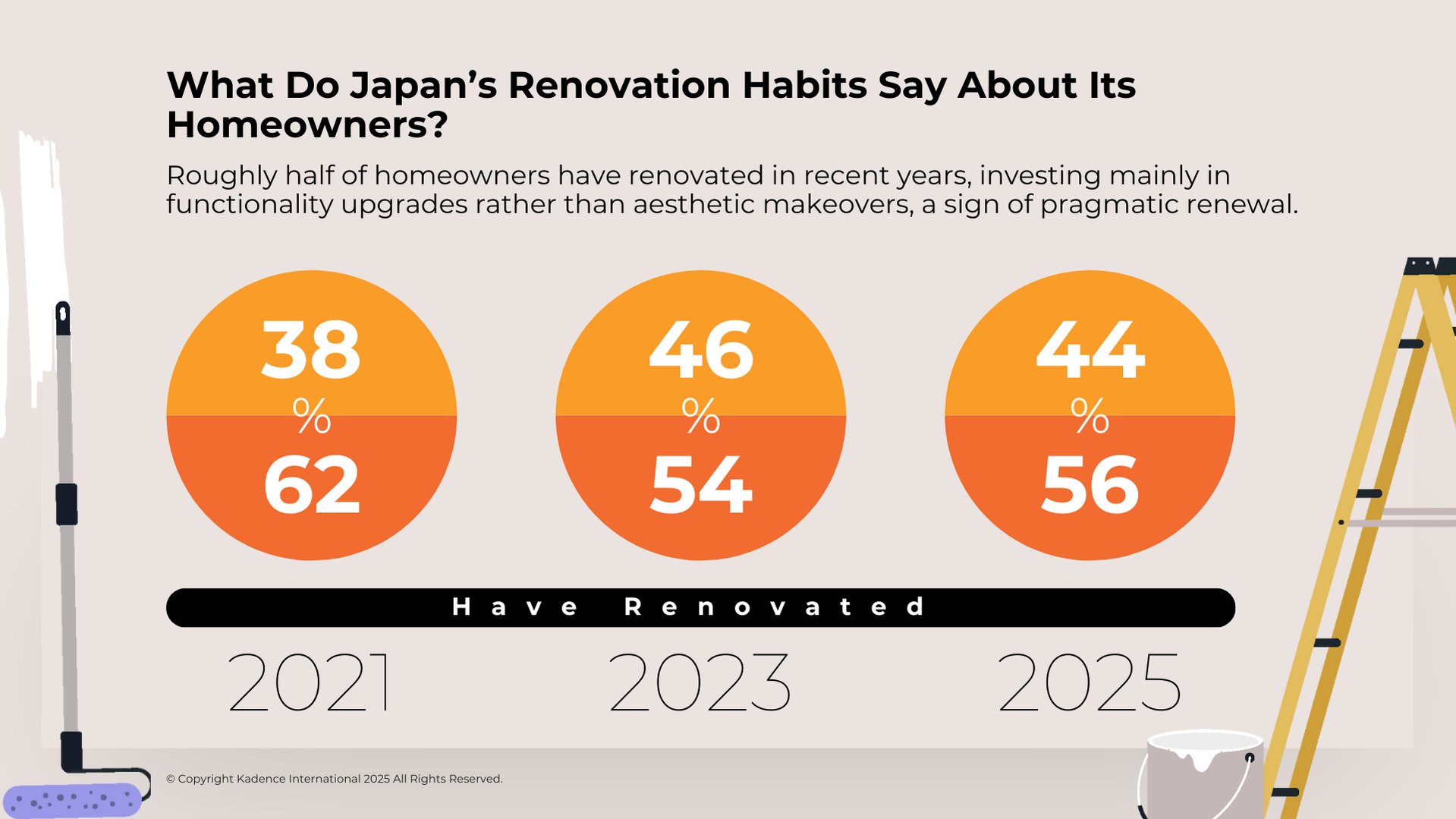
Renovation activity has strengthened over the last five years. The share of homeowners who renovated rose from 38 percent in 2021 to 46 percent in 2023 before stabilising at 44 percent in 2025. The trend reflects ongoing maintenance rather than discretionary redesign.

The type of work being done reinforces this emphasis on structural care. Roof and exterior repairs have increased over the past four years. Kitchen and bathroom improvements have also risen, while interior wall work, floor replacement, and storage installation remain steady but secondary.
These choices align with the realities of an ageing housing stock built during periods of rapid expansion. Upkeep is essential for maintaining safety, improving energy performance, and ensuring everyday usability. With material and labor costs elevated, households are prioritizing improvements that extend a property’s working life. Japan’s renovation economy is therefore defined by preservation and functional renewal rather than reinvention.
Aspiration to Buy Weakens, Even Among Younger Renters
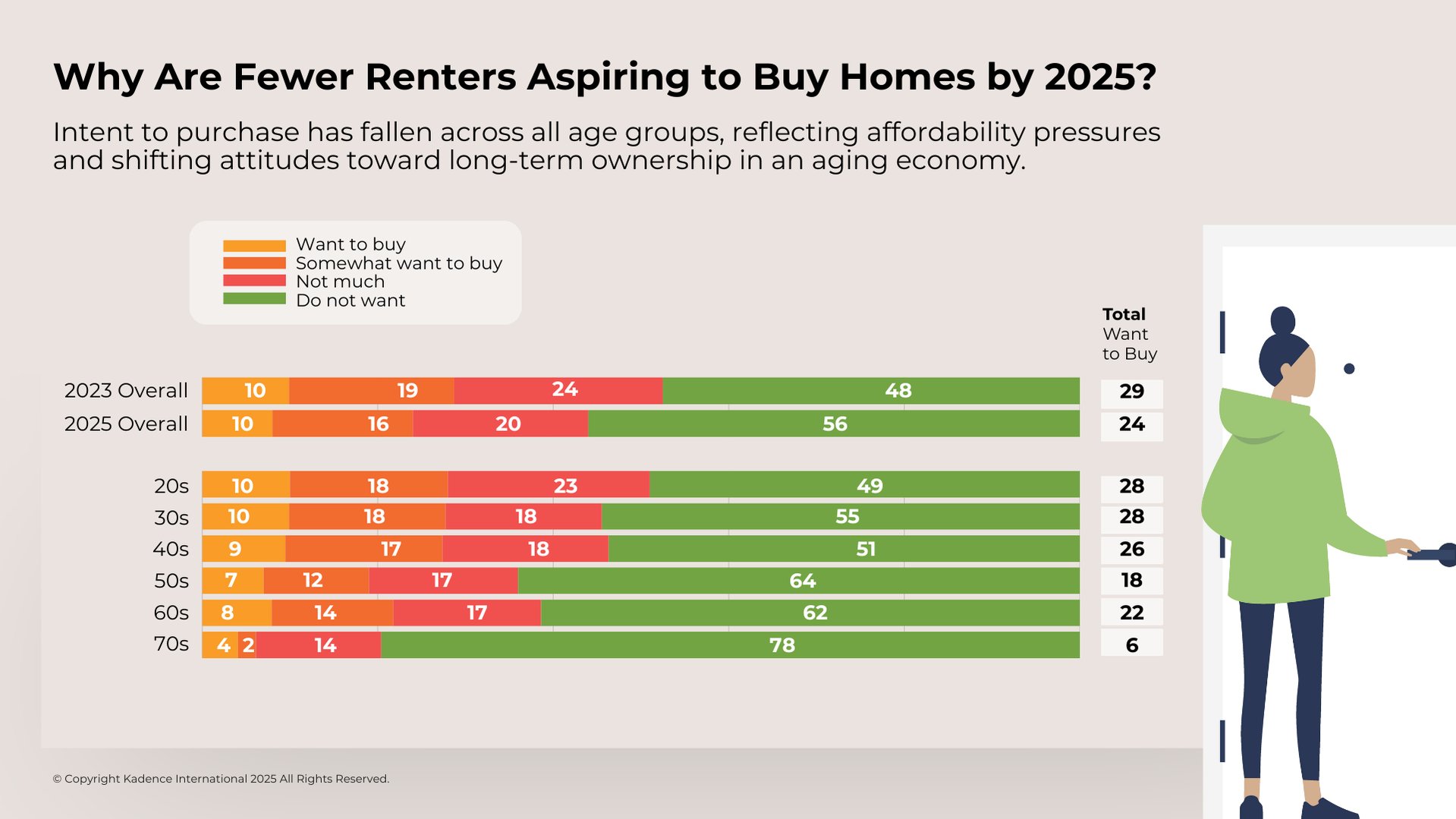
Interest in homeownership among renters shows a gradual yet consistent decline. In 2023, 29 percent indicated they wanted to buy a home; by 2025, that share had slipped to 24 percent. The decline is modest, yet its uniformity across age groups suggests a shift in sentiment that is occurring across the rental market, rather than within any single demographic.
The reasons are both economic and behavioral. Urban land values remain high, and construction costs continue to climb. Wage growth has improved, but has not closed affordability gaps. Renting provides access to major urban centres without the long-term financial weight of ownership.
Changing household structures reinforces these calculations. Single-person households continue to increase, particularly in metropolitan areas. For many, flexibility, proximity to work, and financial agility now outweigh the symbolic value once attached to homeownership.
Homeownership Edges Up While the Rental Ecosystem Holds Its Shape
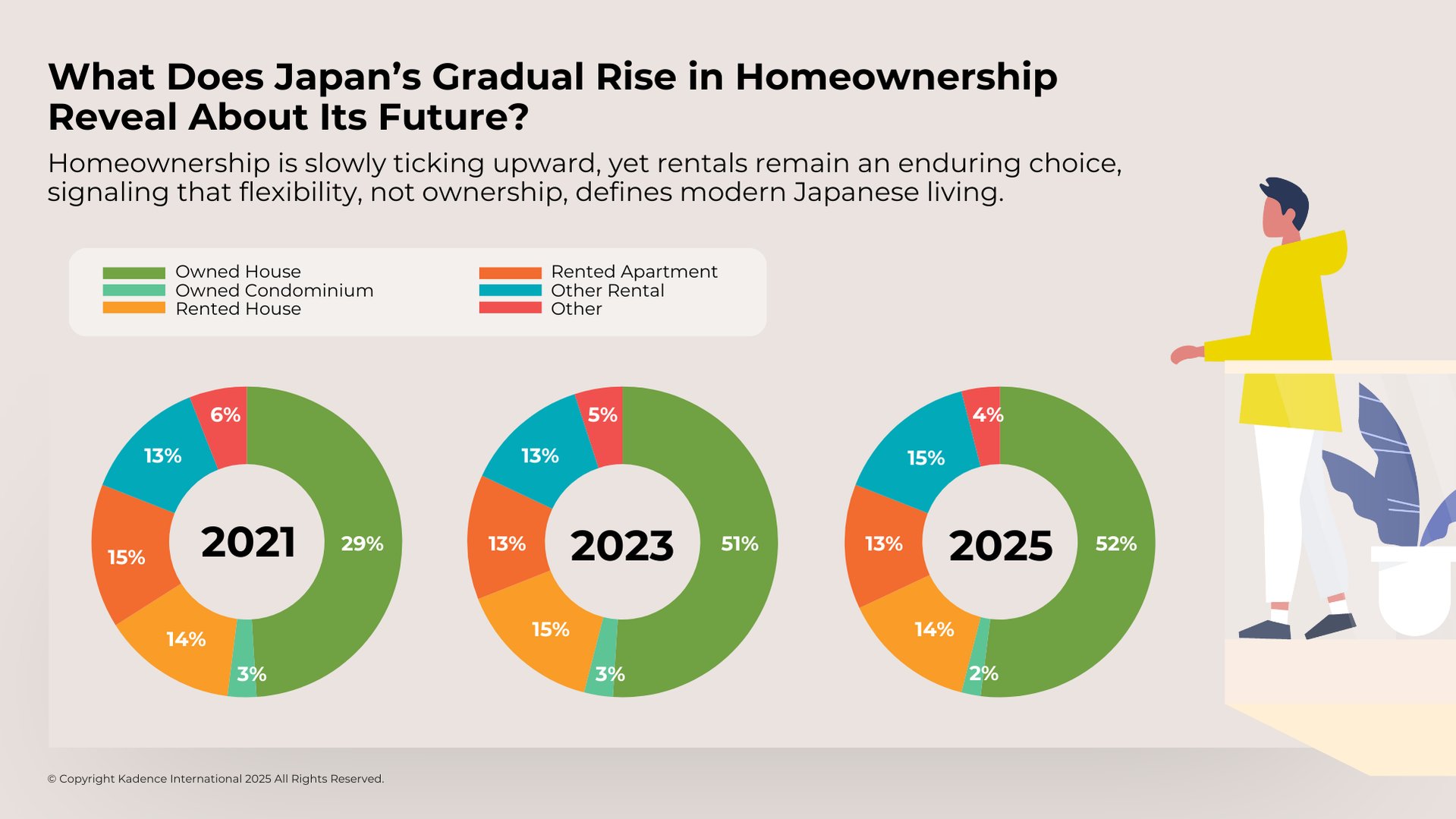
Despite a softening of purchase intent among renters, overall homeownership continues to rise gradually. The number of owned detached houses increased in the last four years. Owned condominiums remain a small share of the market, declining by one percentage point over the period.
Rental patterns remain steady. The mix shifts slightly among housing types, but the overall share of renters holds firm, reflecting continued demand for flexible living arrangements.
Japan’s demographic profile supports this dual movement. Younger and older single-person residents rely on rentals that deliver convenience and mobility. At the same time, favorable mortgage conditions and supportive national policies encourage ownership among households that are well-positioned to buy. The result is a balanced market in which both paths remain viable depending on life stage and financial capacity.
What Buyers Value Most in Their Home Search
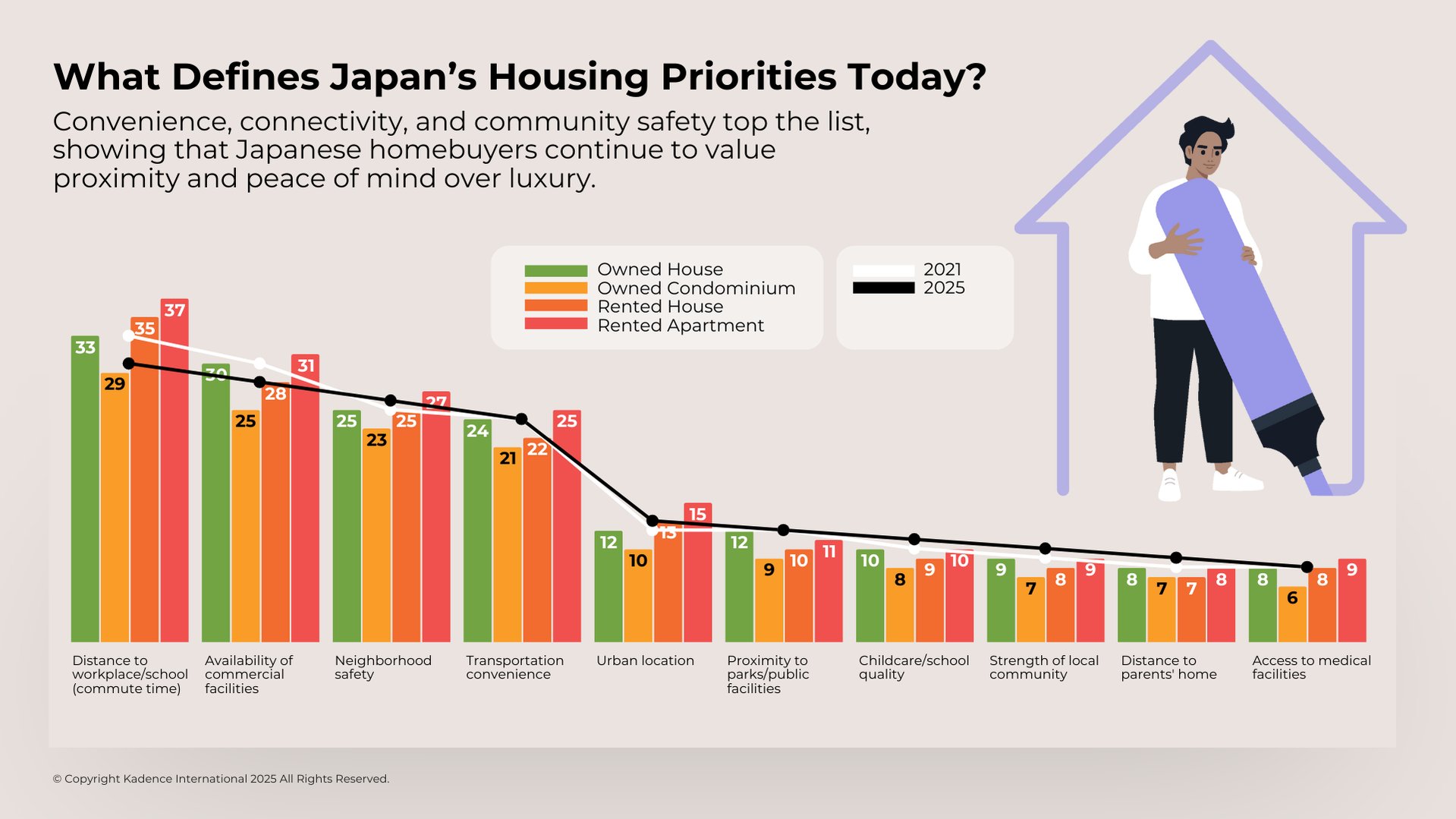
Home-buying priorities remain strikingly consistent. Commute time continues to influence decision-making, with access to everyday services and neighborhood safety following closely behind. The small movements in the data reinforce how firmly these practical considerations shape buyer behavior.
Urban location rises modestly in importance, indicating sustained interest in neighborhoods with reliable infrastructure. Access to medical services remains consistent, reflecting the needs of an ageing population.
These stable preferences underscore a market guided by practicality. Households are opting for environments that minimize friction and facilitate predictable routines. Every day convenience often outweighs lifestyle repositioning or speculative upgrades.
The Dream Home Is Being Redefined Through Pre-Owned Choices
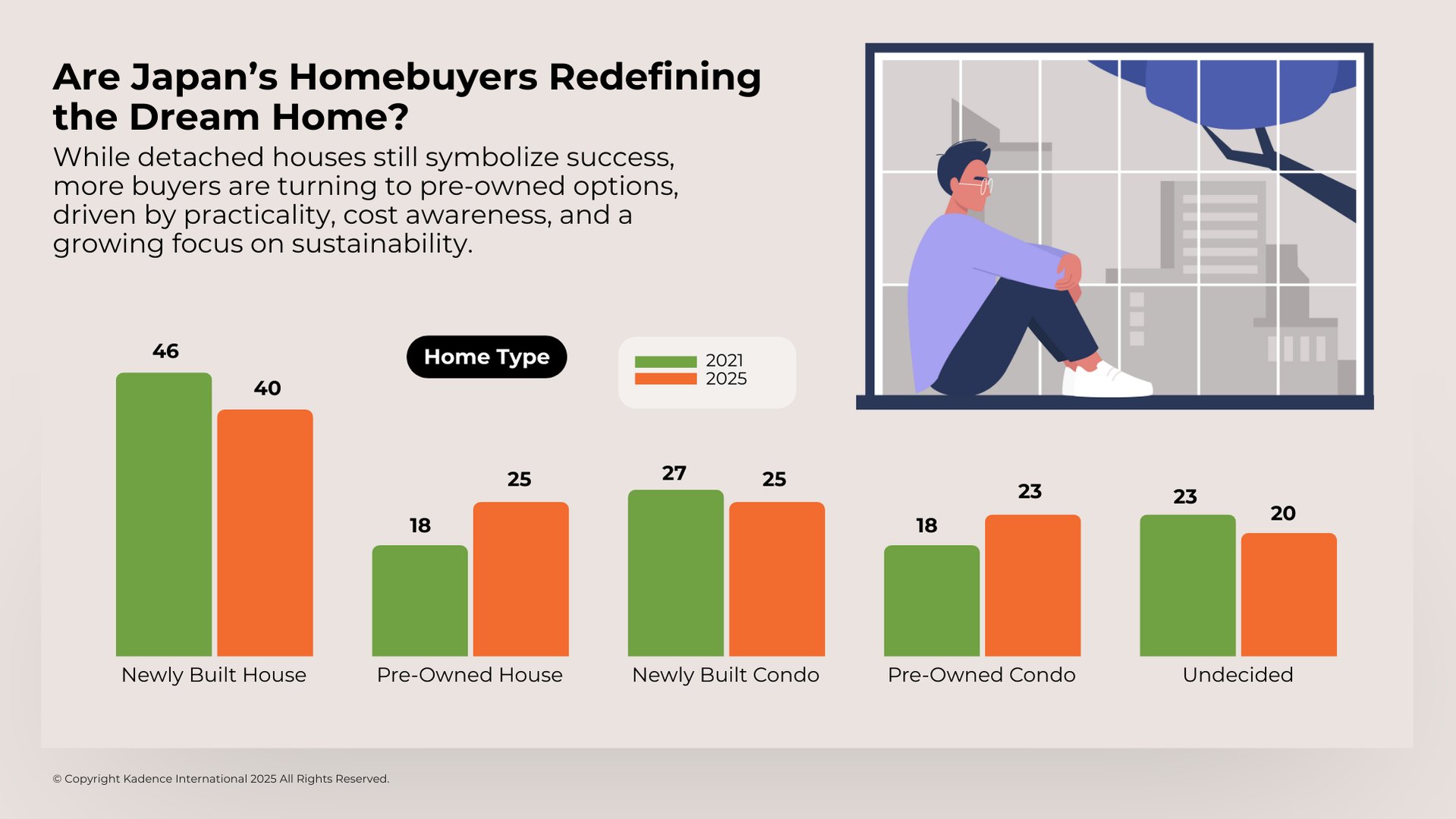
The data highlights a turning point in housing preferences. Appetite for new builds cools, and interest gravitates toward pre-owned homes that can be customized in stages. Cost pressures and growing comfort with renovation underpin this shift toward stock that balances price, control, and long-term usability.
Pre-owned homes offer affordability, adaptability, and control over the pace of improvement. They align with a renovation culture that focuses on extending the lifespan of existing structures.

How These Patterns Are Reshaping Housing Supply and Demand
Japan’s housing system is becoming increasingly reliant on preservation as a source of value creation. Rising renovation activity strengthens sectors tied to maintenance, structural resilience, and energy performance. Demand for essential materials and services grows steadily rather than cyclically.
The pre-owned market expands as buyers seek homes that can evolve with their needs. This supports new service models, including bundled renovation packages, retrofit financing, and advisory services centred on assessment and risk reduction. Transparency around condition, repair history, and upgrade potential becomes a decisive factor for buyers evaluating older stock.
Stable rental levels highlight the enduring relevance of flexibility. As households choose renting for mobility, competitive rental stock must maintain higher standards for safety, upkeep, and access to services. Well-managed rentals become a stable asset class rather than a transitional segment.
Japan’s housing shifts also point to broader structural changes. As renovation becomes the primary means of maintaining livability, neighborhoods with older stock may experience gradual renewal rather than disruptive redevelopment. This protects community identity while improving comfort and resilience over time.
The rise of the pre-owned market deepens the importance of the property lifecycle. Homes move through cycles of acquisition, customization, and maintenance, forming a more circular housing economy. Builders, lenders, and renovation providers are increasingly assessed by how well they support this lifecycle, from transparent inspections to financing options that align with phased upgrades.
Land-use patterns may evolve as households concentrate in areas with strong everyday utility. Regions that offer efficient commuting, local retail, and accessible services tend to maintain resilience even as their populations decline. These choices reflect grounded decision-making, anchored in daily life, rather than aspirations for larger or newer properties far from urban centres.
The rental market will shift as expectations rise. If renting becomes a long-term preference, tenants will seek greater clarity on safety standards, structural maintenance, and the quality of management. Property managers who invest in predictable upkeep and responsive support services will stand apart.
Together, these movements point to a housing environment characterized by informed decision-making, steady renewal, and efficiency throughout the lifespan of a property.
Why Demographics and Regional Patterns Matter More Than Ever
Japan’s demographic trajectory adds an important layer to the housing shifts observed in the study. As the population ages and the number of single-person households increases, the distribution of housing demand becomes more uneven. Metropolitan areas attract residents who prioritize commute efficiency and access to services, sustaining demand for both high-quality rentals and pre-owned properties that can be updated over time. Suburban and regional markets move at a slower pace, making maintenance and incremental improvement more important than new development.
These demographic realities influence how households assess value. Homes are increasingly evaluated for their ability to support ageing in place and how easily they can adapt to evolving needs. Lifecycle performance, therefore, becomes a more meaningful differentiator than architectural novelty.
Financial structures are also adjusting. Banks are beginning to evaluate the viability of older properties through lenses such as seismic resilience, upgrade potential, and neighborhood infrastructure. Buyers seek financing that supports staged improvements rather than large, immediate commitments. Public incentives tied to energy efficiency, retrofitting, and accessibility accelerate investment in existing stock.
As demographic patterns reshape where and how people live, Japan’s housing market rewards properties and services that align with these emerging expectations.

What Japan’s Housing Shifts Mean for Businesses and Policy Makers
These shifts have significant implications for organizations shaping Japan’s housing market. Developers may need to balance fewer new-build opportunities with a rising demand for renovation-ready stock and mixed-use neighborhoods that support ageing residents. Banks and insurers can differentiate by developing financial products tailored to staged upgrades and by recognizing the structural value of well-maintained older homes. Municipalities can guide neighborhood stability by investing in transit, local retail, and public infrastructure that aligns with long-term residential patterns.
For brands across adjacent categories, from building materials to home technology, the opportunity lies in enabling households to improve performance, safety, and comfort without major reconstruction. Companies that help residents extend the useful life of their homes, reduce uncertainty, and plan improvements over time will be better positioned to serve an economy anchored in preservation.
A Housing Future Built on Longevity and Measured Investment
Japan’s housing market is shifting away from expansion as a primary engine of growth. Renovation levels rise because older homes require sustained investment. Pre-owned properties gain momentum because they meet cost and adaptability needs. Purchase intentions soften as households assess their commitments with greater care. Rental patterns persist because flexibility holds structural value.
These movements point to a housing culture centred on durability and thoughtful planning. The future is shaped not by rapid building cycles but by making existing homes work better for the people who live in them. These dynamics are gradually reshaping how homes are built, improved, and lived in across Japan.