
The next battleground for snack brands is no longer the supermarket shelf. It's social media.
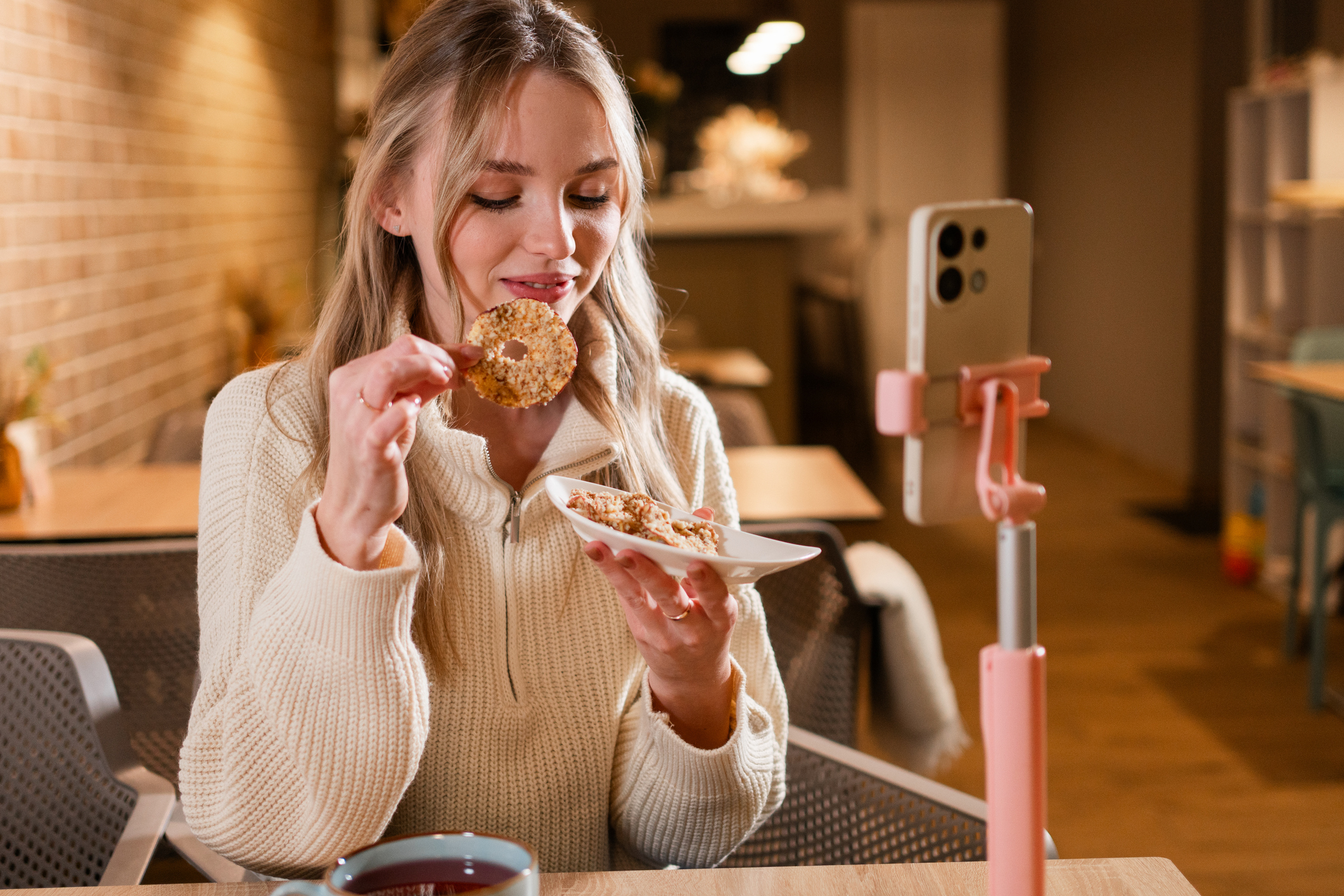
Across major markets, the fastest growth in snack discovery is now occurring inside environments built for entertainment rather than retail. New flavours increasingly debut through creator-led broadcasts, real-time reactions, and timed purchase windows that resemble digital product drops more than traditional promotions.
Livestream shopping is now mainstream across Asia, where a substantial share of viewers also buy. In China, for example, about 69 % of urban consumers who have watched a livestream shopping event in the past six months report having made a purchase. That pattern highlights how entertainment and commerce converge in livestream formats, where viewing and purchasing are increasingly part of the same consumer behavior loop.
Momentum is also building in Western markets. In the United States, livestream commerce remains smaller in absolute terms, but adoption is accelerating in food and everyday categories through platforms such as Amazon Live.
The shift matters because it changes where snack consideration begins. Discovery is no longer anchored solely to shelf presence and is increasingly shaped before retail even comes into play.
Why Snacks Move First When Discovery Goes Live
Livestream commerce has expanded across categories, but snacks provide one of the clearest early signals of how consumer behavior shifts when entertainment and purchase converge.
The reason is structural. Snacks sit at the intersection of forces that livestream platforms amplify particularly well. Taste itself cannot be digitised, but the cues consumers rely on to infer taste can be. Livestreams offer a trustworthy alternative to trying snacks in-store, with close-up views and descriptions of texture to help people decide. This makes it faster and easier to evaluate and feel confident about a purchase.
Immediacy completes the equation. Crunch, spice, aroma, and novelty convey their persuasive impact more effectively in real-time than through static listings. Hosts can demonstrate, react, and respond as attention peaks, strengthening persuasion at the moment of decision.
In China, the world’s most mature livestream commerce ecosystem, food and beverage rank among the most reliable sales categories across major platforms.

From Shelf Logic to Entertainment Logic
Livestream commerce is not simply a new sales channel. It represents a reorganisation of how discovery works.
Historically, shelf visibility determined which snacks consumers encountered first. Placement, packaging, and promotion governed product trial. Livestreams have reversed this sequence. Discovery now depends on attention mechanics: the credibility of the host, the pace of the reveal, the energy of the chat, and the format’s ability to generate urgency.
In this system, influence shifts away from aisle position and toward presence within high-attention moments.
Who Loses When Snack Discovery Goes Live
Livestream discovery does not disadvantage all snack brands equally. It creates a specific kind of loser.
Brands built for shelf logic struggle most. Their strengths lie in packaging clarity, incremental line extensions, and retail optimization that unfolds over weeks or months. Those advantages depend on being seen repeatedly, compared slowly, and reconsidered over time. Livestream discovery removes those conditions.
When the first moment of consideration happens live, there is no neutral shelf. Products appear once, framed by a host, inside a compressed window of attention. If the format does not generate immediate interest, there is rarely a second chance to correct it. Packaging cannot rework the pitch. Trade spend cannot buy back the moment. Optimization arrives after the decision has already been made.
This is where familiar playbooks break. Brands accustomed to launching quietly, monitoring early sales, and adjusting positioning over time find that livestream formats punish hesitation. The cost of a weak debut is not slow uptake. It is invisibility. Missed livestream moments do not compound later. They are simply gone.
Livestream environments reward products that can be understood, demonstrated, and reacted to instantly. They penalise products that rely on context, education, or cumulative exposure. A snack that needs explanation is not argued with. It is skipped. The feed moves on.
This creates a widening gap between brands designed for immediacy and those designed for endurance. Shelf-led brands once benefited from the patience built into retail. Livestream-led discovery removes that buffer. Performance is judged in real time, in public, and at speed. Products either generate momentum immediately or fail quietly without feedback.
The consequence is not that these brands disappear overnight. It is that their influence erodes upstream. They arrive in retail already filtered out of consideration, competing for attention that has already been allocated elsewhere. In a category driven by impulse and repetition, losing the first moment increasingly means losing the category conversation altogether.
When Viewing Becomes Buying
The most consequential change is structural. Livestreams integrate checkout directly into the broadcast. When a host introduces a new flavour or bundle, the purchase option appears instantly, often under time pressure.
Limited-time drops, creator-led bundles, and live-only SKUs consistently outperform static listings because they collapse persuasion and purchase into a single sequence. Categories driven by impulse benefit most, making snacks a natural fit.
How Digital Sampling Is Taking Shape
Augmented reality is emerging as a second driver of snack discovery. AR overlays allow viewers to assess texture, portion size, seasoning density, and ingredient cues in ways product photography cannot.
Early deployments suggest that these tools outperform static formats in terms of engagement. They do not replicate taste, but they substitute for the cues consumers use to judge it, reducing uncertainty and strengthening trial intent.
When Packaging Becomes Media
Packaging is also being redefined. QR codes and NFC tags are increasingly acting as gateways to livestream replays, sourcing stories, or upcoming flavour launches. This reconnects physical consumption with digital discovery, creating continuity across once separate moments.
Discovery no longer ends at checkout, and physical retail no longer operates in isolation.
Where Snack Brands Are Already Shifting Attention
Advertising data indicate that many leading snack brands in the United States are already reallocating their attention toward streaming environments, where discovery and engagement are increasingly overlapping.
Cheez-It led the category across both formats, accounting for a significant share of national linear TV impressions and an even higher share on streaming, driven by investment around major tentpole events. The pattern suggests that reach-led snack brands no longer treat streaming as secondary, but as a parallel arena for cultural visibility.
More tellingly, chip brands showed a consistent bias toward streaming. Lay’s, Frito-Lay, and Tostitos all generated a larger share of ad impressions on streaming than on national linear television. In categories driven by impulse and sensory appeal, streaming is where attention is first won.
Taken together, the data reinforce a broader shift already visible across the category: snack brands are following consumers into environments where entertainment, discovery, and persuasion converge.
Case Study: Lay’s and the Power of Being There Live
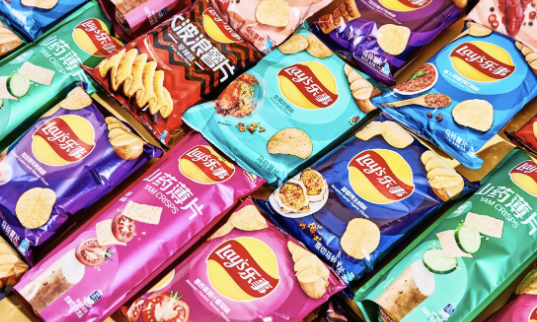
Image Credit: Eater
Lay’s China demonstrates how livestream formats can turn a routine flavour launch into an event.
Rather than releasing new variants quietly into retail, the brand shifted discovery into a 30-minute livestream on Taobao. Each flavour was revealed live, with hosts reacting in real time, viewers voting in polls, and mystery options unlocked during the broadcast.
Scarcity was structural, not cosmetic. Once the stream ended, the purchase window closed. Each flavour sold 50,000 units within hours, and engagement across Lay’s owned channels rose 27 percent the following week.
What the Behavior Shift Signals for Snack Brands
The rise of livestream-driven discovery reflects a broader change in how everyday decisions are made.
Discovery is moving upstream. Consumers are increasingly encountering new snacks before they reach the shelves. Brands absent from these early moments risk losing consideration before physical retail plays a role.
Urgency outperforms prolonged promotion. Timed windows and limited runs are more effective at converting than extended discount cycles. In a category defined by impulse, immediacy accelerates action more reliably than repetition.
Global Signals, Different Speeds
This behavior is not confined to one market, but adoption varies.
China operates as the most advanced test bed, not because its consumers are unique, but because its platforms integrated entertainment and commerce earlier at scale. Singapore shows habit formation through recurring livestream deals. The US remains ahead of the curve. Still, livestream formats are gaining traction through Amazon Live and retailer-led streams, where snack brands utilise creator demonstrations and real-time offers to support seasonal launches and limited-edition products.
While volumes remain modest compared to Asia, these formats consistently outperform static product pages in terms of engagement and conversion, signalling growing consumer comfort with live-led discovery. The pattern is consistent, even if the pace is not.
Where Snack Discovery Is Headed
Snack discovery is shifting toward a model in which launch, evaluation, and purchase increasingly occur simultaneously. Livestreams are not replacing retail. They are redefining where consideration begins.
The brands that adapt fastest will not be those with the broadest assortments, but those that master the moment when attention turns into action. In a category defined by speed and impulse, advantage increasingly starts there.